Jinan Weihua Machinery & Equipment Co., Ltd · Jinan Shandong China
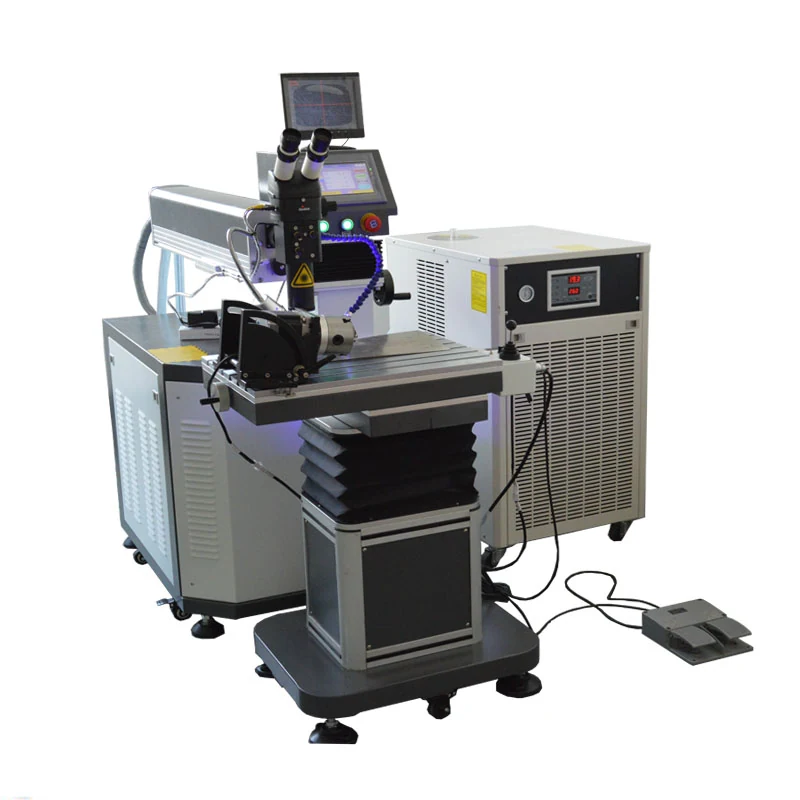
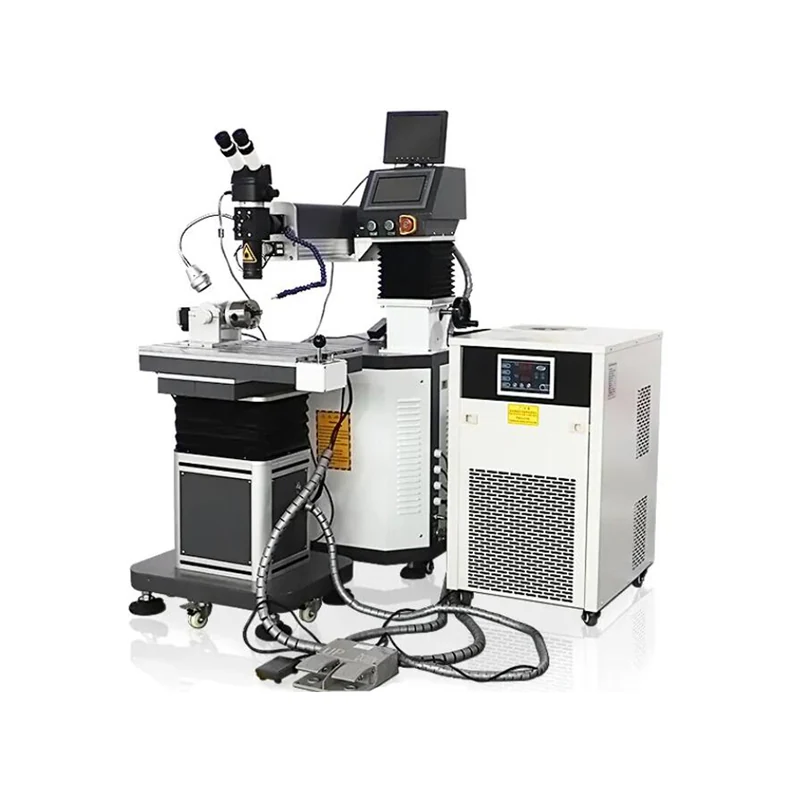
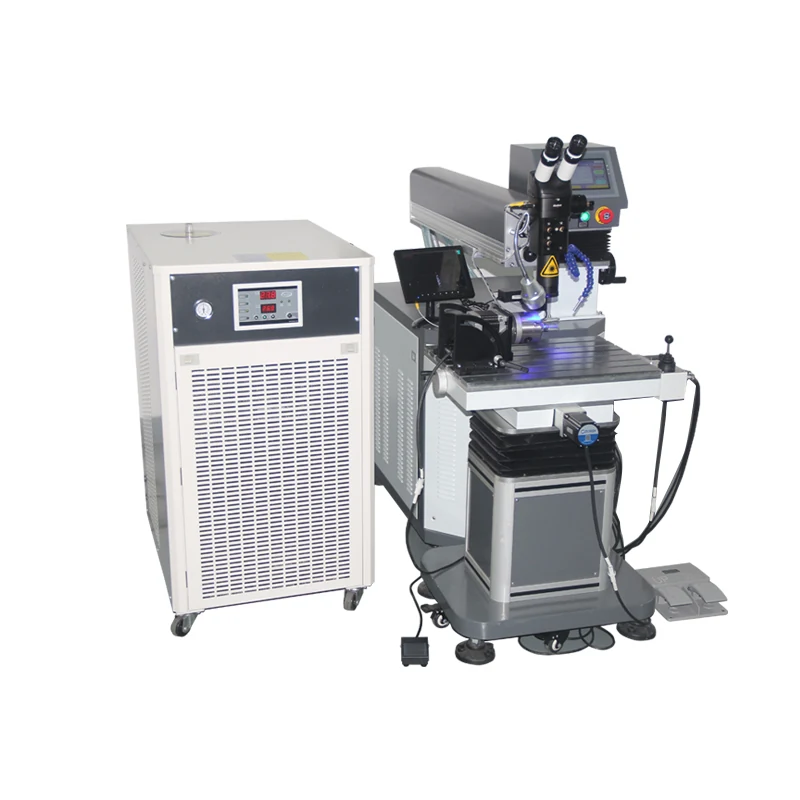
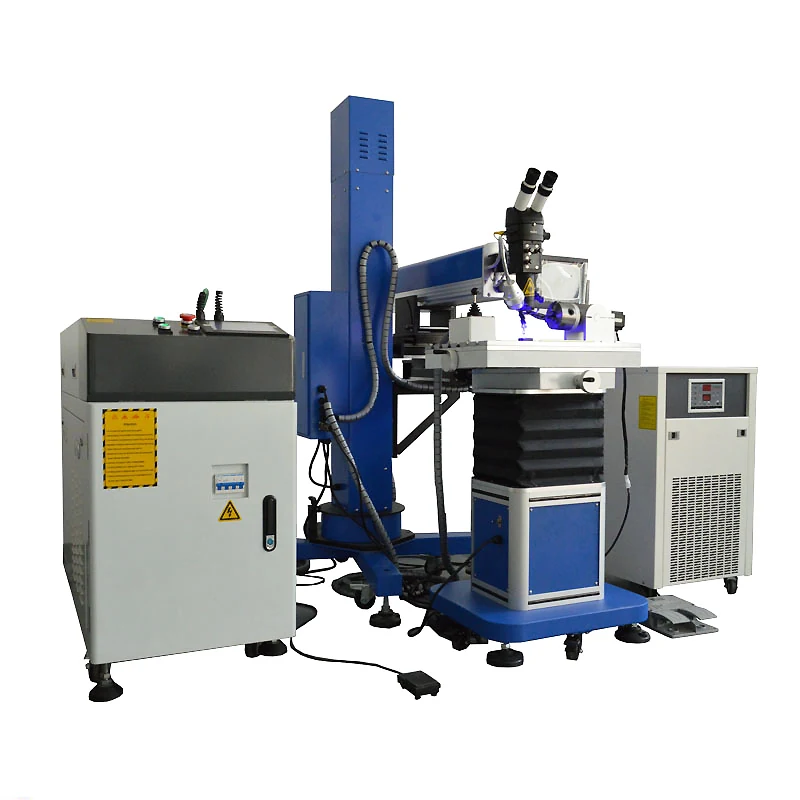
YAG laser mold repair welding machine with microscope
Laser Welding Machines

Mold Repair Laser Welding Machine

The WH-MW series is a YAG laser mold repair welder available in 200 W, 300 W, 400 W and 500 W output power. At 500 W it delivers up to 140 J single pulse energy and welds depths from 0.1 mm to 3 mm on thin-walled and fine metal parts.

Product Overview

What This Machine Is Built To Do

The WH-MW series is a YAG laser mold repair welder available in 200 W, 300 W, 400 W and 500 W output power. At 500 W it delivers up to 140 J single pulse energy and welds depths from 0.1 mm to 3 mm on thin-walled and fine metal parts. The system uses a digital control interface with a capacitive touchscreen and a 10X stereo microscope with CCD camera display for precise observation. With a focal diameter adjustable between 0.3 and 3.0 mm, it minimizes thermal deformation and oxidation, making it suitable for repairing complex-shaped moulds without preheating.
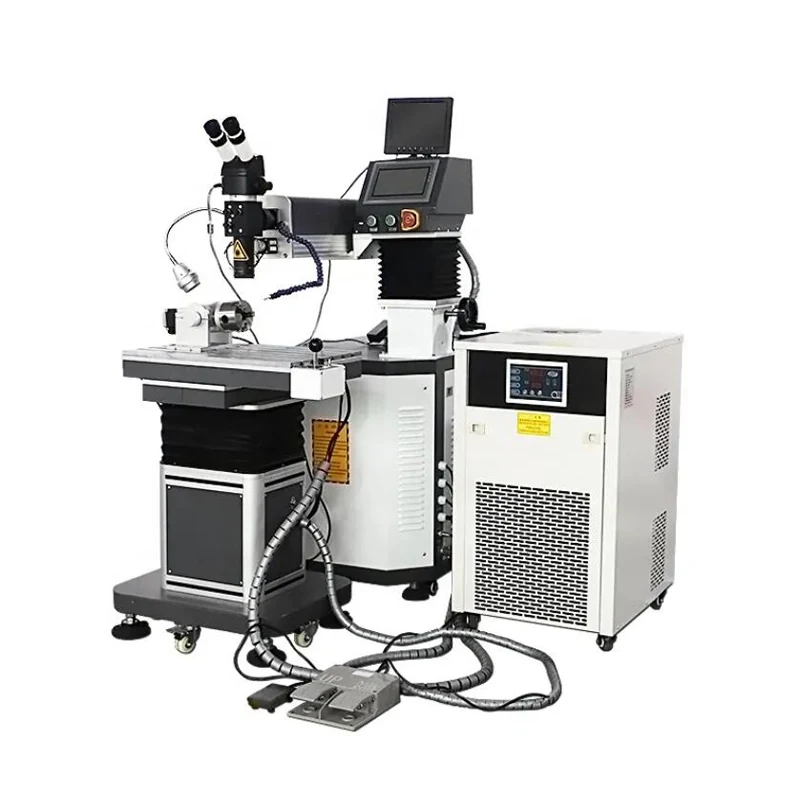
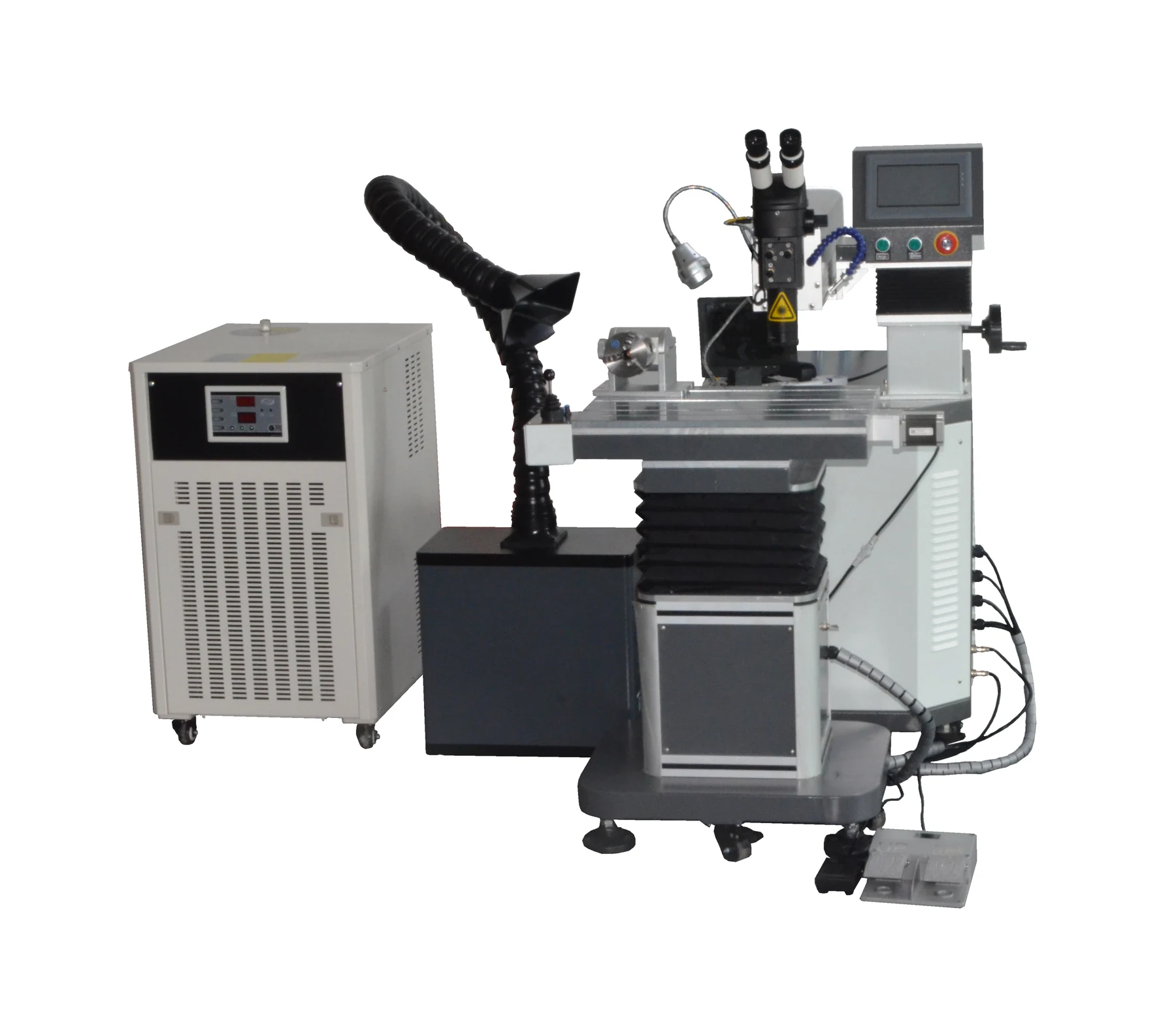
  • Welds depths up to 3 mm on the 500 W model, covering most mould repair thicknesses
  • Small heat-affected zone prevents deformation of the mould base during localized repairs
  • 10X stereo microscope with CCD camera allows clear observation of fine weld seams
  • Digital control system with capacitive touchscreen simplifies parameter entry for operators
  • Ceramic condenser cavity in lower power models offers 8 to 10 year chamber life
  • Welding head rotates 360 degrees to access difficult angles on complex moulds
  • No preheating required reduces cycle time for urgent mould repairs
Where It Is Used

Application Scenarios

  • Repairing thin-walled metal moulds where traditional welding causes distortion
  • Fixing wear and damage on high-hardness or special material mould components
  • Performing spot, butt, overlay and sealing welding on mould cavities
  • Restoring fine details on complex-shaped mould parts without disassembly
  • Localised heat treatment and welding of small-sized industrial components
Buyer Fit

Who It Is For

  • Mould and die repair shops handling high-value tooling
  • Injection moulding facilities needing in-house maintenance for production continuity
  • Hardware manufacturers repairing fine metal parts with minimal thermal impact
  • Machine dealers serving the mould repair and maintenance sector
Process Problems

Problems It Solves

  • Traditional welding causes excessive heat spread, warping the mould base
  • Fine details on moulds are lost when using coarse welding methods
  • Preheating requirements slow down urgent repair turnaround times
  • Oxidation during welding weakens the repair seam and requires rework
  • Complex geometries are inaccessible to standard fixed-angle welding heads
Engineering

Technical Features

  • YAG laser source with 1064 nm wavelength
  • Digital control system with capacitive touchscreen and multi-language interface
  • 10X stereo microscope with high-speed liquid crystal light valve and optional CCD camera display
  • Rotating welding head offering 360-degree angle adjustment
  • Ceramic or metal condenser cavity depending on power model
  • External water cooling system with 1P to 3P chiller options
  • Xenon lamp life exceeding 8 million pulses
Specifications

Published Figures For Mold Repair Laser Welding Machine

Every value below is taken from the machine data sheet. Where a range is given the exact figure depends on the model and power you order.

ModelWH-MW200 / WH-MW300 / WH-MW400 / WH-MW500
Max Output Power200 W / 300 W / 400 W / 500 W
Laser TypeYAG
Wavelength1064 nm
Max Single Pulse Energy100 J / 110 J / 120 J / 140 J
Peak Power8 KW / 12 KW / 18 KW / 24 KW
Max Pulse Frequency<=30 Hz / <=30 Hz / <=40 Hz / <=50 Hz
Pulse Width0.1-6 ms / 0.1-6 ms / 0.1-8 ms / 0.1-10 ms
Welding Depth0.1-1.5 mm / 0.1-2 mm / 0.1-2.5 mm / 0.1-3 mm
Focal Diameter0.3-3.0 mm
Worktable TravelX: 200 mm, Y: 100 mm, Z: 200 mm
Work RangeX: 400 mm, Y: 200 mm, Z: 700 mm
Loading Ability<=200 kg
Power SupplyAC220V/50Hz-60Hz / AC380V/50Hz-60Hz
Materials

Materials It Handles

  • Metal moulds
  • Thin-walled parts
  • High melting point materials
  • High hardness materials
  • Special materials
Working Process

From File To Finished Part

Mount the mould or part on the worktable within the 200 x 100 mm travel range

Adjust the 10X stereo microscope and CCD camera to focus on the repair area

Select welding mode and parameters on the digital control touchscreen

Rotate the welding head to the required angle for the joint

Execute spot, butt, overlay or sealing weld with minimal heat input

Inspect the seamless weld result through the microscope

Quality Control

Quality Control Before Shipment

  • Ceramic condenser cavity ensures consistent laser output and long chamber life
  • Xenon lamp life is rated for more than 8 million pulses
  • External water cooling maintains stable laser temperature during operation
  • Digital control system provides repeatable parameter settings for consistent welds
Options

Customisation Options

  • Choose output power from 200 W to 500 W based on required welding depth
  • Select ceramic cavity for 200 W and 300 W models or metal cavity for 400 W and 500 W
  • Opt for CCD camera display for enhanced visual monitoring
  • Configure power supply for AC220V or AC380V input
  • Select water chiller capacity from 1P to 3P based on ambient conditions
Comparison

How It Compares With The Alternatives

TIG weldingLaser welding offers a much smaller heat-affected zone, reducing the risk of mould deformation and the need for preheating
SolderingLaser welding creates a metallurgical bond suitable for high-hardness and special materials, whereas soldering is limited to lower strength joints
Manual arc weldingThe 10X microscope and digital control allow for precise repair of fine details that are impossible to achieve with manual arc welding
Operating Notes

Use Guide

  • Ensure the external water chiller is filled and running before starting the laser
  • Clean the lens and microscope optics regularly to maintain clear visibility
  • Use the 360-degree rotating head to position the laser for optimal access to the weld seam
  • Select the appropriate pulse width and frequency for the material thickness to avoid burn-through
  • Allow the machine to cool down after extended operation to preserve lamp life
Buyer Questions

Mold Repair Laser Welding Machine FAQ

What is the maximum welding depth?
The 500 W model can weld depths up to 3 mm. The 200 W model is rated for 0.1 mm to 1.5 mm, and the 300 W model for 0.1 mm to 2 mm.
Does the machine require preheating?
No, the laser welding process does not require preheating, which speeds up the repair cycle for moulds.
What materials can be welded?
The machine is designed for metal moulds, including high melting point, high hardness, and special materials.
How large is the work area?
The worktable travel is X: 200 mm, Y: 100 mm, Z: 200 mm, with a total work range of X: 400 mm, Y: 200 mm, Z: 700 mm.
What is the lifespan of the xenon lamp?
The xenon lamp has a life of more than 8 million pulses.
Can I see the weld clearly?
Yes, the system includes a 10X stereo microscope and an optional CCD camera display for high-definition observation.

Related Machines

All machines

Fiber Laser Cutting Machines

Glass Laser Cutting Machine

The Glass Laser Cutting Machine uses a Wuhan Huaray picosecond laser source at 30w, 50w or 70w to cut glass on a 500 x 400 mm marble work table.

Ask For A Quote On The Mold Repair Laser Welding Machine

Send your material, thickness and daily output. We reply with the exact configuration, packing size and shipping route within 24 hours.