
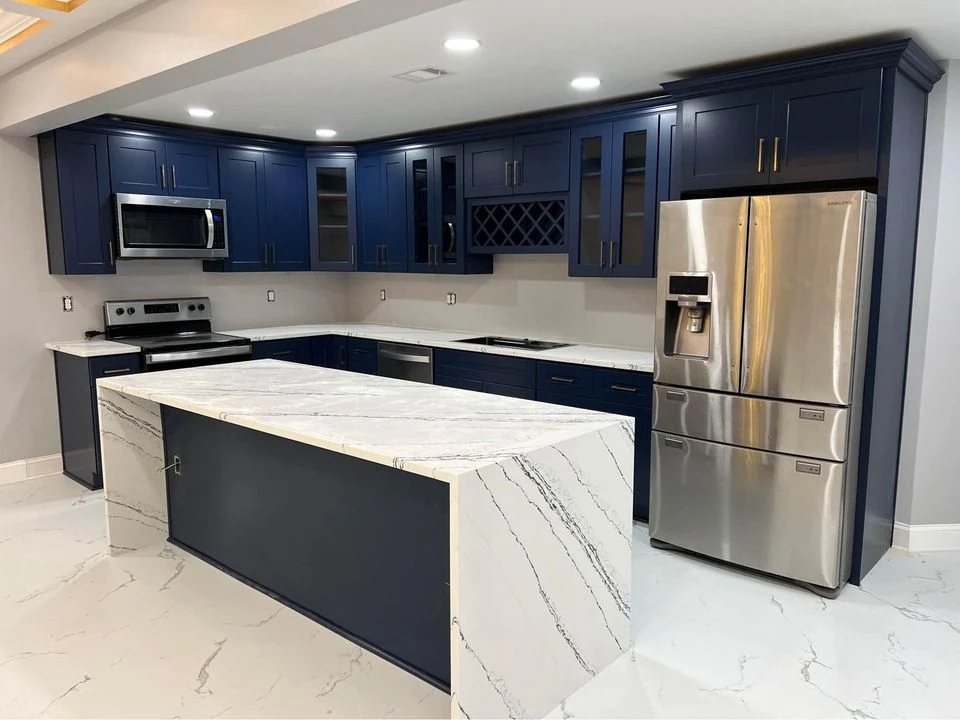
From Room Measurement To Finished Cabinet
How a drawing, a site measurement or a photograph becomes a cut list, a sample and a production run.
Overview
What This Covers
Every unit here is made to order, which means the work starts with a dimension rather than a catalogue number. This is the route a custom cabinet takes from the first message to the packed carton, and what usually goes wrong at each step when it is skipped.
Stage By Stage
Every Step And What Goes Wrong Without It
Brief
The problem. Requests arrive as a photograph, a room dimension or a competitor's page, and each one leaves something out. A photograph does not carry a depth; a dimension does not carry a door style.
How it is handled. The first exchange is a short list of the things a cut list cannot be produced without - opening width, height, depth, door type and the panel material for the carcase and the front.
Drawing
The problem. Verbal specifications drift. Two people picture different cabinets from the same sentence.
How it is handled. A drawing is produced and agreed before anything is cut, showing the carcase divisions, the door layout and the internal fittings. It is the reference for the quote, the production run and any repeat order.
Material Selection
The problem. One material is chosen for the whole cabinet because it is simpler to quote, and the buyer pays for plywood on parts nobody sees or gets particle board on a door that has to hold a crisp shaker profile.
How it is handled. The carcase, the door and the shelving are specified separately from PB, MDF, plywood and solid wood, so the money goes where the loading and the visibility actually are.
Sample
The problem. Colour and profile disagreements surface after the container arrives, when nothing can be done about them.
How it is handled. For a programme order a sample unit or door is produced against the agreed drawing so the finish is confirmed on the real material before the run starts.
Production
The problem. A run started from an unclear cut list produces panels that fit the drawing but not each other.
How it is handled. Cutting works from the approved drawing, with the hardware - slides, casters, rails - already specified on the same order rather than substituted at assembly.
Packing
The problem. Cabinets built assembled arrive with crushed corners, and flat packs with no labelling are a jigsaw on site.
How it is handled. Units are packed knockdown with panels face to face and cartons labelled by unit, so a site can open only what it is ready to install.
Shipping
The problem. Furniture volume, not weight, decides the freight bill, and assembled furniture is mostly air.
How it is handled. Flat packing is what makes the container arithmetic work. Delivery time is quoted against the shipping mode you choose rather than assumed.
Repeat Orders
The problem. A second phase ordered a year later comes back subtly different in colour, profile or hardware.
How it is handled. The drawing and the material specification stay on file, so a repeat is produced from the original reference rather than re-interpreted.
Who It Is For
Buyers This Route Suits
- Importers developing an own-brand cabinet programme
- Developers repeating a layout across a building
- Fit-out contractors working to an architect's elevation
- Retailers commissioning a private label range
Related Products
Models This Applies To
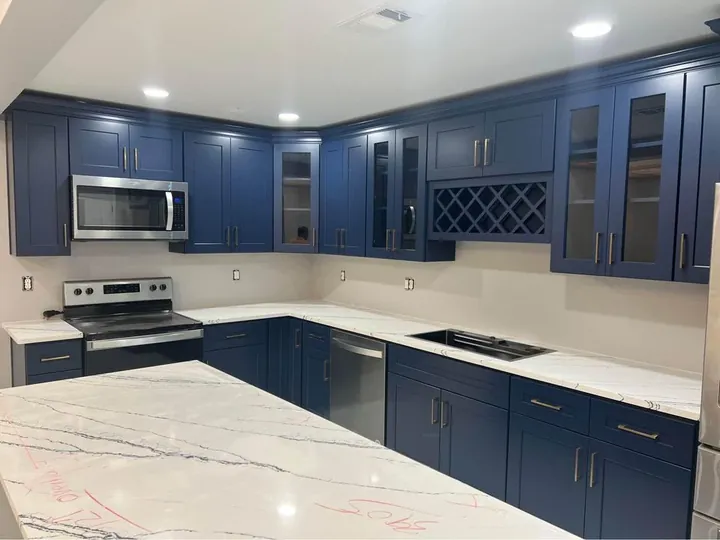 Kitchen Cabinet
White Oak Wood Veneer Shaker Complete Kitchen Cabinet Set
A full modular kitchen quoted as one set - base, wall, tall and island - rather than as a list of separate units.
View Details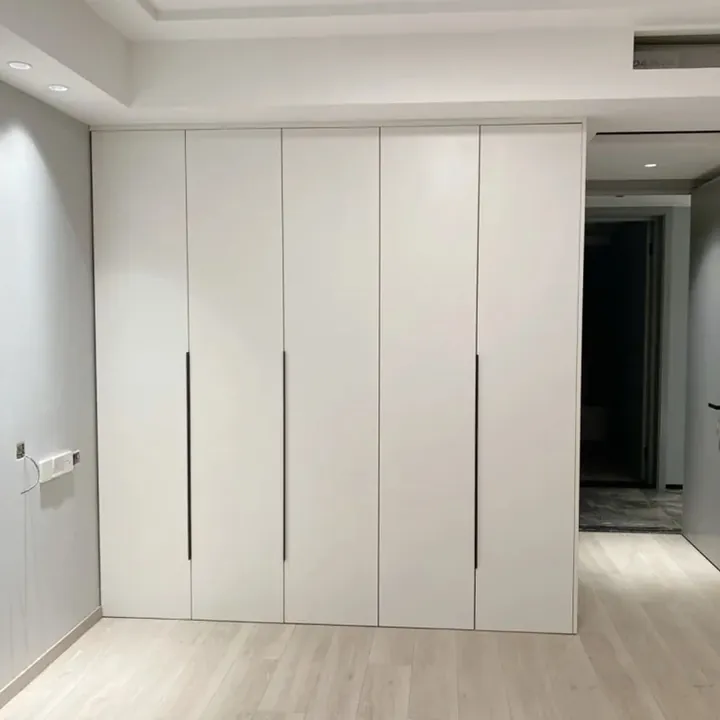 Bedroom Wardrobe
Cloth Cabinet Storage Wardrobes SYW10000
A full height hinged wardrobe run built into the bedroom wall, photographed in completed apartments.
View Details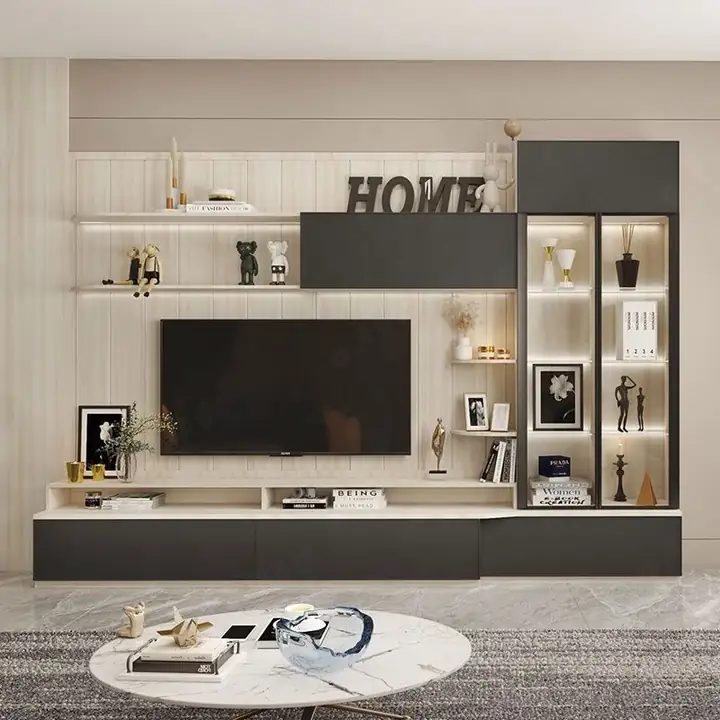 Living Room Cabinet
TV Closet
A modular living room media wall combining closed storage, open display and a screen position, cut to your wall length.
View DetailsQuestions Buyers Ask
Custom Cabinet Development Questions
What do you need to start a quotation?
The opening width, height and depth, the door type, and the panel material you want for the carcase and the front. A photograph or a sketch with those dimensions on it is enough to begin.
Do you produce a drawing before production?
Yes. The drawing is agreed first and everything else - the quote, the cut list, a later repeat order - refers back to it.
Can a sample be made before a full run?
For programme orders, yes. A sample unit or a single door confirms the finish on the real material rather than on a screen.
Can different materials be used in one cabinet?
That is the normal case. An MDF shaker door on a plywood carcase with particle board shelving is a routine specification.
How are repeat orders kept consistent?
By producing them from the retained drawing and material specification instead of re-quoting from scratch.
Start With A Drawing Not A Catalogue Number
Send what you have - a dimension, a sketch, a plan or a photograph - and the first drawing comes back from it.