
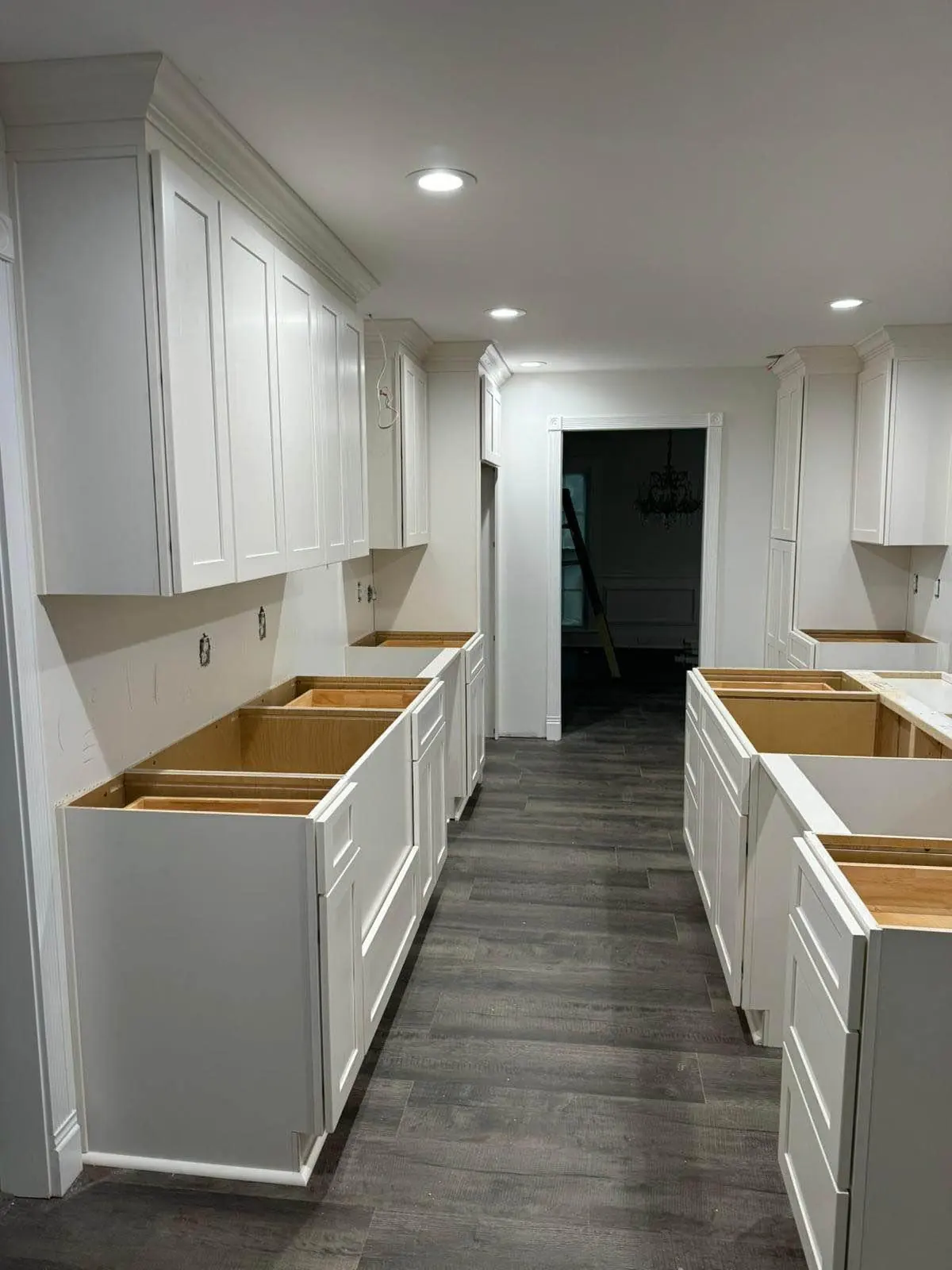
Why Cabinets Ship Knockdown And What It Changes
The construction method behind the range, and what it means for damage rates, container fill and site assembly.
Overview
What This Covers
Knockdown construction is a manufacturing decision with consequences that show up in freight, in damage claims and on site. It is worth understanding before comparing a knockdown quotation against an assembled one, because the two are not the same product delivered differently.
Stage By Stage
Every Step And What Goes Wrong Without It
Panel Cutting
The problem. Panels cut to a generic size need trimming on site, and site-trimmed edges are unfinished edges.
How it is handled. Panels are cut and edged to final size in the factory, so nothing has to be modified at the destination.
Edge And Face Protection
The problem. Panel faces scuff against each other in transit, and edges chip at the corners where the carton is handled.
How it is handled. Panels travel face to face with protection between them and reinforcement at the corners, which is the part of the packing that decides the damage rate.
Hardware Packing
The problem. Fittings packed loose go missing, and a wardrobe with no rail brackets is not a wardrobe.
How it is handled. Fittings are bagged against the unit they belong to and listed on the carton, so a short delivery is obvious before the installer starts.
Container Loading
The problem. Assembled furniture fills a container with enclosed air, and the freight cost per apartment furnished rises accordingly.
How it is handled. Flat panels stack. That is the single largest cost difference between shipping knockdown and shipping assembled.
Site Assembly
The problem. Unlabelled flat packs turn into a sorting exercise in a corridor.
How it is handled. Cartons are labelled by unit so they can be distributed to the right room before anything is opened.
Damage And Spares
The problem. One damaged panel on an assembled unit condemns the whole cabinet.
How it is handled. Because the unit is built from separate panels, a single replacement panel is re-cut from the retained specification instead of replacing the cabinet.
Who It Is For
Buyers This Route Suits
- Importers costing landed price per unit
- Developers receiving furniture into an unfinished building
- Student housing contractors working in short refit windows
- Retailers selling flat pack to end customers
Related Products
Models This Applies To
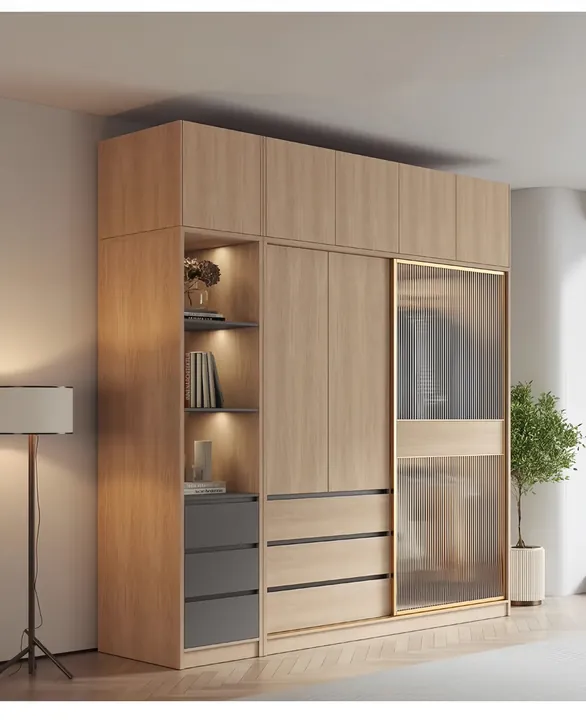 Bedroom Wardrobe
Cloth Cabinet Storage Wardrobes SYW10001
A sliding door wardrobe in a light oak finish with a frosted glass door and a lit open display bay.
View Details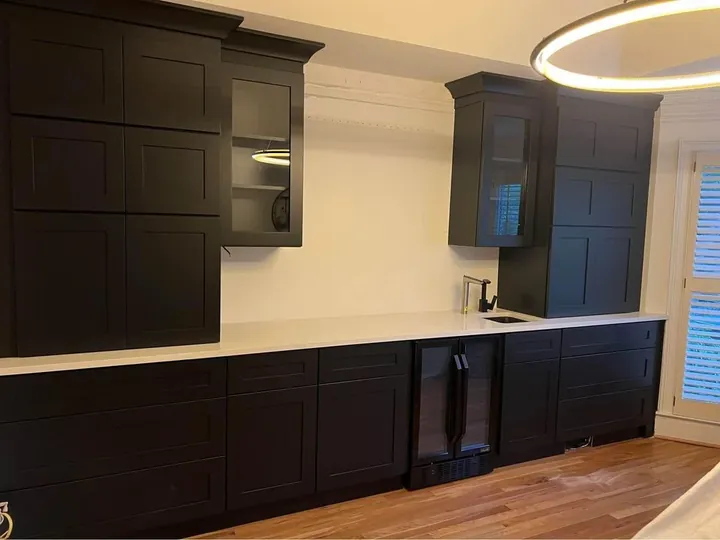 Kitchen Cabinet
RTA Modular Shaker Kitchen Cabinet Door
Shaker door fronts on their own, for buyers who already build or source their carcases.
View Details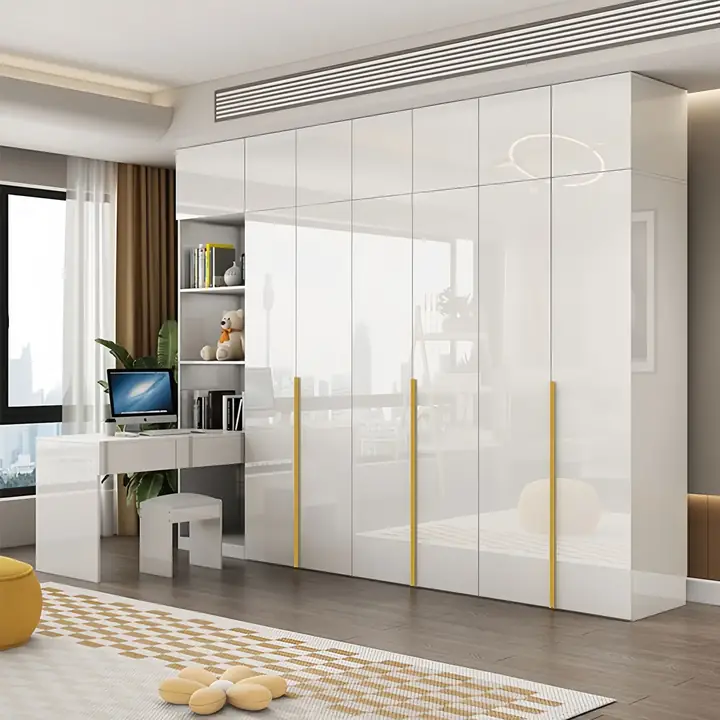 Bedroom Wardrobe
Cloth Cabinet Storage Wardrobes SYW10008
A high gloss cream wardrobe with gold vertical inlays a mirrored end and an integrated desk.
View DetailsQuestions Buyers Ask
Knockdown Flat Pack Export Questions
Is knockdown furniture weaker than assembled furniture?
The construction is the same; what changes is where it is assembled. The practical difference is that a knockdown unit arrives undamaged more often, because the fragile stage - a large hollow box in a container - is skipped.
How much container space does flat packing save?
Enough that it usually decides the landed cost comparison. The exact figure depends on the unit, so it is worked out per order against the packing list rather than quoted as a general percentage.
Are fittings included in the flat pack?
Yes, bagged against the unit they belong to and listed on the carton.
What happens if one panel is damaged in transit?
A replacement panel is cut from the retained specification. The rest of the unit stays in use.
Can cartons be labelled for a phased site?
Yes. Labelling by unit or by apartment is what makes a floor-by-floor handover workable.
Start With A Drawing Not A Catalogue Number
Send what you have - a dimension, a sketch, a plan or a photograph - and the first drawing comes back from it.