
Brass Bronze And Stainless Steel In Marine Hardware
Why marine deck fittings are specified in brass, where stainless is the better answer, and how to avoid the galvanic pairing that quietly destroys a fitting.
Published 2026-06-18 · Suzhou GY Marine Equipment Co., Ltd
Why Brass Turns Up Everywhere On Deck
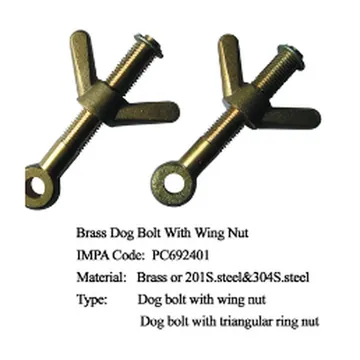
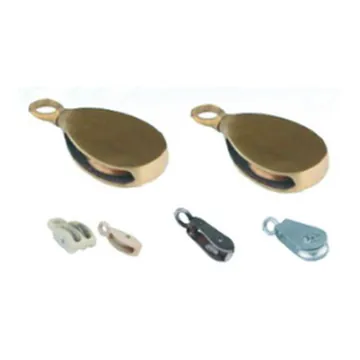
Brass is used for deck fittings for a practical rather than a decorative reason: it stays operable. A steel dog bolt on a weather deck will still be structurally sound long after it has become impossible to turn by hand. A brass one keeps working. On any fitting where the value is in being able to operate it — dogs, wing nuts, padlocks, flag blocks, small deck fittings — that is the whole argument.
Where Stainless Is The Better Answer
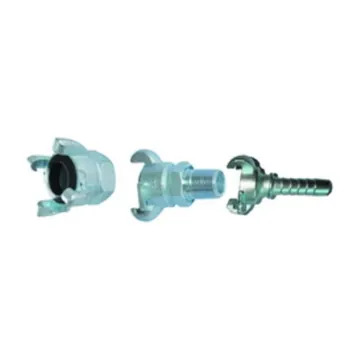
Stainless earns its place where load, wear or pressure dominate. Quick connect couplings on a pressurised service air line are a good example: the catalogue lists them in SUS304 stainless and in #45 steel, and the stainless body is the one specified for exposed, washed down positions.
Stainless is not automatically superior in a marine environment. In crevices and under deposits, in still salt water with limited oxygen, austenitic stainless can pit where a simpler material would not. Detailing matters as much as grade.
The Galvanic Trap
The commonest self-inflicted failure is pairing dissimilar metals in a wet, salty joint and letting the less noble one carry the load. A steel bolt through a brass fitting on a wet deck will corrode preferentially at the bolt. The fitting looks fine and the fastener fails.
The practical rule is to keep the fastener and the fitting in compatible materials, or to isolate them. This is why brass dog bolts are supplied complete with brass wing nuts rather than as a body to be paired with whatever is in the store.
Thread Standards Matter As Much As Material
The brass dog bolt sheet lists both metric coarse and Whitworth sizes — metric from M8 x 60 mm through to M24 x 200 mm, and Whitworth from 3/8" x 60 mm through to 1" x 180 mm. An older vessel may well be Whitworth throughout. Ordering metric because it is the modern default produces a bolt that is the right material and the wrong thread.
A Simple Specification Habit
- State the material as well as the size on the requisition line
- Keep fastener and fitting materials compatible, or isolate them deliberately
- Record the thread standard, not just the diameter, for anything on an older vessel
- For couplings and pressure fittings, state the body material explicitly — the code differs
Products In This Article
Catalogue Items Referenced Above
Answers
Questions On This Topic
Why are dog bolts brass rather than steel
Is stainless always better than brass at sea
How do I avoid galvanic corrosion
Next Step
Still Not Sure Which Code To Order
Send a photo of the part on board. We will identify it against the catalogue and quote the correct line.