
Pneumatic Vs Electric Descaling Tools On Board
How to decide between pneumatic and electric versions of the same scaling tool, and the supply checks that decide whether the tool ever goes into service.
Published 2026-06-18 · Suzhou GY Marine Equipment Co., Ltd
The Same Tool In Two Forms
Most of the scaling families on this catalogue exist in both a pneumatic and an electric version — portable scaling machines, needle scalers, deck scalers and chain machines. The head does the same work. What changes is what has to be run to the working area and what the tool is allowed to be used near.
When Pneumatic Makes Sense
- Service air is already run to the working area, so there is no new supply to arrange
- The space or the work makes an electrical tool inappropriate
- The tool will be stalled or overloaded regularly; a pneumatic motor tolerates that better than a small electric one
- The working area is wet, or being washed down at the same time
When Electric Makes Sense
- There is a suitable supply at the working position and no air line
- The compressor capacity is already committed to other work
- A long run of air hose would be needed, with the pressure drop that implies
- The job is intermittent and setting up an air line is disproportionate
The Two Checks That Decide Everything
For an electric tool, confirm voltage and frequency before ordering. The manufacturer sheets in this catalogue list 110-120 VAC and 220-240 VAC options at 50/60 Hz against separate codes. Ordering the wrong one is the single most common reason a machine arrives on board and never goes into service.
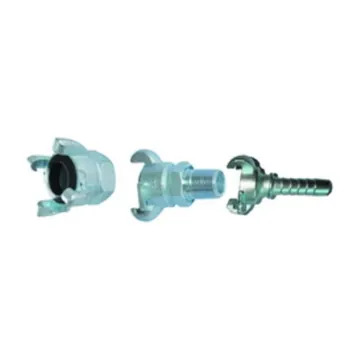
For a pneumatic tool, confirm the coupling standard and the supply pressure. The sheets state the supplying source for each tool — for example 100 PSI at 0.6 to 0.8 MPa on one of the scaling families. Then confirm whether the ship's couplings are the SUS304 or the #45 steel family and whether the end type is A or B, because the manufacturer states that different types cannot be mated.
Air Consumption Is A Real Constraint
A pneumatic tool that the compressor cannot feed will run slowly, hit fewer blows per minute than the sheet states, and take longer to do the same job than an electric tool would. The manufacturer sheets publish estimated air consumption per model. Compare that against what the ship's compressor can actually deliver at the working position, not at the receiver.
Products In This Article
Catalogue Items Referenced Above
Answers
Questions On This Topic
Which is faster
What voltage options are listed
What supply pressure do the pneumatic tools need
Next Step
Still Not Sure Which Code To Order
Send a photo of the part on board. We will identify it against the catalogue and quote the correct line.