
How IMPA Codes Work For Marine Store Ordering
What the numbered marine store groups mean, how a six digit code is structured, and why ordering by code instead of description raises fill rate.
Published 2026-06-18 · Suzhou GY Marine Equipment Co., Ltd
Why A Store Code Exists At All
A ship's store list is written in one place, quoted in another and received in a third. Every time the item is described in words rather than identified by a number, someone has a chance to interpret it differently. A chief officer writes “safety helmet”, a purchaser quotes a polyethylene shell helmet, and a polyester resin helmet arrives. Both are safety helmets. Only one matches what the ship was replacing.
The numbered marine store system exists to close that gap. It gives every item in a ship's store a stable identifier that means the same thing to the vessel, the buyer, the chandler and the supplier.
How The Numbering Is Structured
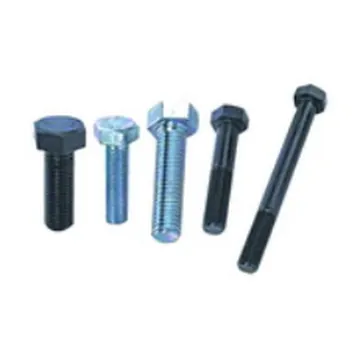
The first two digits are the store group. Group 15 is cloth and linen, 17 is tableware and galley utensils, 33 is safety equipment, 59 is pneumatic and electrical tools, 69 is screws and nuts, 81 is packing and jointing. A purchaser who knows the group number already knows roughly what section of the catalogue they are in.
The digits that follow narrow it down to the family and then the individual item. So a code beginning 3307 sits inside safety equipment and lands on fire hose, while 3301 in the same group lands on life jackets. On our catalogue sheets you will see this in practice: PC330701 through PC330710 are the fire hose sizes and coil lengths, each one a separate line rather than a single hose entry with a note.
What Changes When You Order By Code
- The quotation can be checked against the requisition line by line instead of read as prose
- A size, rating or material that was never stated becomes visible as a missing field rather than an assumption
- The packing list uses the same identifiers, so receiving on board is a tick-off rather than an inspection
- The next order is a repeat of the codes that worked, which is the single biggest fill rate improvement available to most buyers
Where Codes Do Not Solve The Problem
A code identifies an item. It does not tell you whether that item fits your ship. Three checks still have to be made by a human before the order goes in.
First, dimensional fit. A scupper plug code tells you the plug; the scupper internal diameter tells you which plug. Second, electrical supply. An electric scaling machine code tells you the machine; the ship's supply tells you whether to take the 110-120 VAC or the 220-240 VAC version. Third, mating parts. Quick connect couplings are supplied in type A and type B end types and the manufacturer states plainly that different types cannot be mated across.
A Practical Habit Worth Building
When a store item is received on board, write the catalogue code into the ship's inventory next to the item, not just the description. It takes a few seconds at receiving and it turns every future reorder into a single line message. Most of the store friction we see in enquiries traces back to this one habit being skipped.
Products In This Article
Catalogue Items Referenced Above

Answers
Questions On This Topic
What does the two digit prefix mean
Do I have to use codes to order from you
Where do I find the code for an item
Next Step
Still Not Sure Which Code To Order
Send a photo of the part on board. We will identify it against the catalogue and quote the correct line.