
Start With the Market, Not With the Machines
- Demand for custom signage is spread across businesses, public bodies, municipalities and private clients, and each one buys differently. Work out which of those you are actually selling to before you price a single machine.
- Survey the sign shops already working in your area. What do they make well, what do they refuse, and what do they quote long lead times on? The gap in that list is usually where a new shop can start.
- Write down what makes you different in one sentence — a specialisation, a service standard, or a product range nobody local offers. If you cannot write that sentence, you do not yet have a business plan.
- Then put the plan on paper: objectives, target customers, that differentiator, how you will market, and the financial projection. You will need the document again if you ever ask a bank for money.
Register the Business and Get the Permits
- Choose a legal structure — sole trader, partnership, limited company — and take advice rather than guessing; the wrong structure is expensive to unwind later.
- Register a distinctive business name with your local authority.
- Obtain a tax identification number. You will need it to employ anyone and to file returns.
- Check which licences and permits apply locally. In most jurisdictions that means a trading licence, a sales permit, and — this one is often missed — permission to install signage on buildings.
Lay the Workshop Out Before You Fill It
- Find premises with access for material deliveries and enough floor area for both the machines and the stock they consume.
- Divide the space into zones: design, cutting and fabrication, assembly and finishing, and storage. Letters that travel backwards through a workshop get damaged.
- Install ventilation, fire extinguishers and the rest of the safety equipment before the first weld, not after the first incident.
Equipment and Materials
- Design software — CorelDRAW, Adobe Illustrator or Inkscape — is where every job starts, because the cutting file and the customer's artwork are the same file.
- A cutting machine: CNC router, plasma or laser, depending on the materials and thicknesses you intend to offer.
- Finishing tools for grinding, sanding and polishing. This is what separates a professional letter from a homemade one.
- A MIG or TIG welder for assembling built-up letters.
- Paints, powder coatings and lacquers for protection and colour.
- Installation equipment — ladders, access platforms and the safety gear that goes with working at height.
The Skills That Actually Decide Quality
- Design: the software, plus typography, colour theory and layout. Most bad signs are bad before anything is cut.
- Fabrication: running the cutting machines, and knowing how different metals behave at different thicknesses.
- Welding and assembly: this is what makes a letter last outdoors.
- Finishing: grinding, sanding and polishing, then applying paints and protective coatings.
- Installation: fixing methods, substrates, and the local safety regulations that govern work at height.
Where Outsourcing Makes Sense
A new shop rarely needs to make everything in-house from day one. Buying finished letter sets from an established manufacturer lets you win work on design and installation while you build up your own fabrication capacity.
That is the part of the process we supply: letters cut, welded, finished and packed flat with a 1:1 mounting template, ready for your crew to install. Fabrication runs 5 to 7 days, transit 4 to 5 days by express courier.
Related References
Products Covered by This Guide
 Ref 306
Aluminium Sign Letter Ref 306
Sign Letter in aluminium
View reference → Ref 305
Aluminium Sign Letter Ref 305
Sign Letter in aluminium
View reference →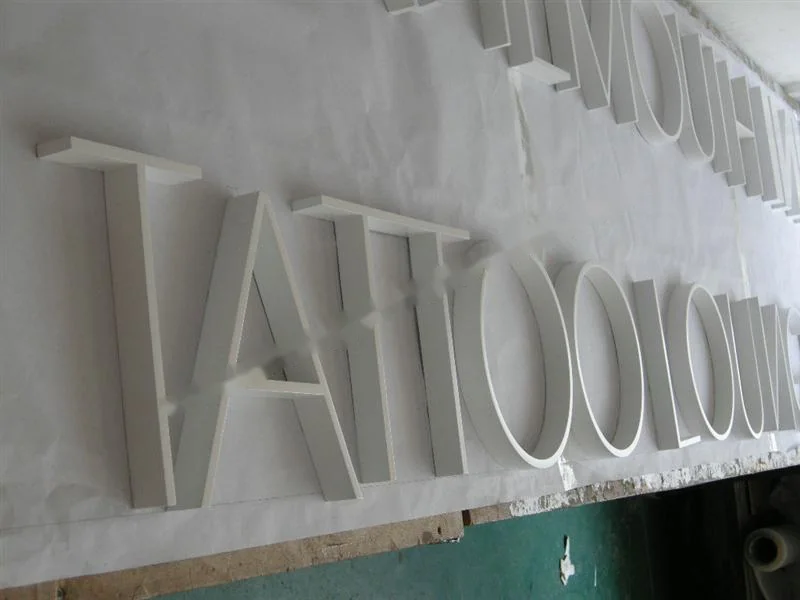 Ref 304
Aluminium Sign Letter Ref 304
Sign Letter in aluminium
View reference →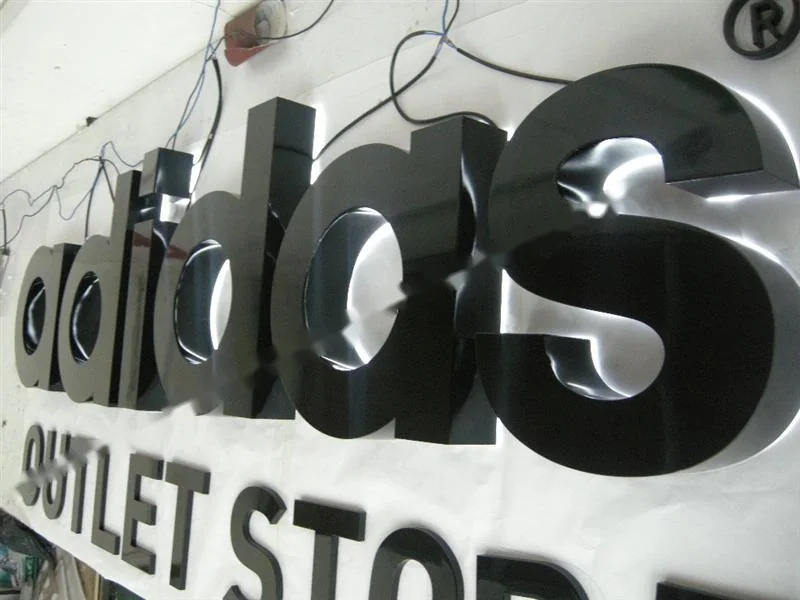 Ref 303
Aluminium Sign Letter Ref 303
Sign Letter in aluminium
View reference →Keep Reading
Other Guides
Stainless Steel 304 vs 316 for Sign Letters
Which grade to specify, and the one question about the site that settles it.
Brushed vs Mirror Polished Stainless Steel Letters
How each finish behaves under daylight, spotlights and dirt — and where each one fails.
Halo-Lit vs Front-Lit Channel Letters
Two ways to light a letter, two very different results at fifty metres.
Answers
Related Questions
What lead time should we plan for?
5 to 7 days for fabrication and a further 4 to 5 days in transit by DHL, UPS or FedEx. Sea and air freight are available for larger orders.
Do you quote installation as well?
We manufacture and ship; installation is carried out by your own fitter or a local sign contractor. The 1:1 template and pre-welded studs are what make that straightforward.
Can you match our brand colour?
Yes. Letters can be lacquered in any colour — send the RAL or Pantone reference and we match to it rather than to a colour name.
Can you supply a mixed set of materials?
Yes. A logo in one material next to lettering in another is built as a single assembly so the alignment is set in the workshop, not on the wall.
Talk It Through With the Workshop
Send the drawing and the site details and we will tell you what we would build and why.