
The Short Answer
We build sign letters in stainless steel 304 or 316, and the grade is chosen per job rather than defaulted. 304 covers ordinary inland exposure. 316 is the grade to ask for where there is salt or chemical load in the air.
Both grades cut, weld, brush and polish the same way, so the decision changes the price and the service life — not the look of the finished letter.
What Actually Separates Them
316 contains molybdenum, which is what makes it resist chloride pitting. Chloride is the mechanism behind most of the rust spots you see on coastal signage, and it is why an otherwise sound 304 letter can start speckling within a couple of seasons near the sea.
Pitting is not a coating failure that can be cleaned off. Once it starts, the only real fix is replacing the character — which is why the grade decision belongs at the quotation stage.
One Question That Settles It
- How far is the sign from salt water, and what else is in the air?
- Within a few kilometres of the coast, on a harbour front, on an exposed elevation that gets wind-driven spray, or anywhere near a pool hall or a chemical process — specify 316.
- Inland, sheltered, or indoors — 304 does the job and costs less.
- If the site is marginal, the cost difference across a single letter set is usually far smaller than the cost of sending a crew back.
What Does Not Change With the Grade
- Thickness still starts at 6 mm and letter height still starts at 40 mm in either grade.
- Both take a brushed grain or a full mirror polish.
- Both can be lacquered to a RAL or Pantone reference if the bare metal is not the brand colour.
- Both ship the same way: individually wrapped, packed flat, with a 1:1 mounting template.
Specifying It on the Order
Write the grade on the artwork, not in an email. We put it on the approval drawing so it is confirmed in writing before anything is cut.
If you are not sure, tell us the site address and the elevation. That is usually enough for us to recommend one.
Related References
Products Covered by This Guide
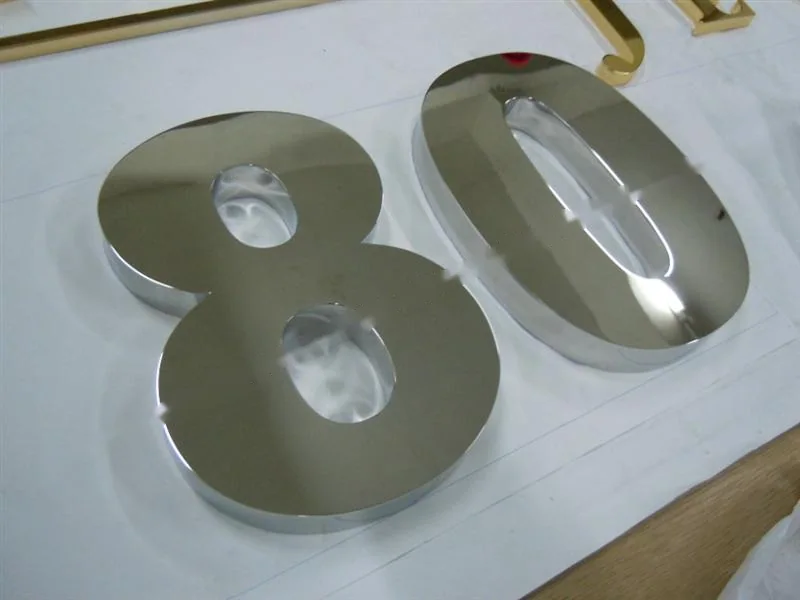 Ref 229
Mirror Polished Stainless Steel Flat-Cut Letter Ref 229
Flat-Cut Letter in mirror polished stainless steel
View reference →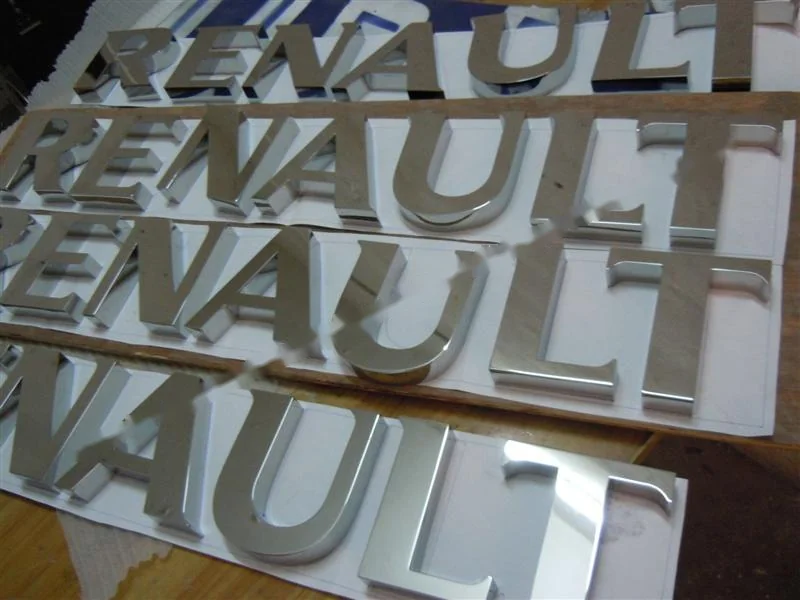 Ref 228
Mirror Polished Stainless Steel Flat-Cut Letter Ref 228
Flat-Cut Letter in mirror polished stainless steel
View reference →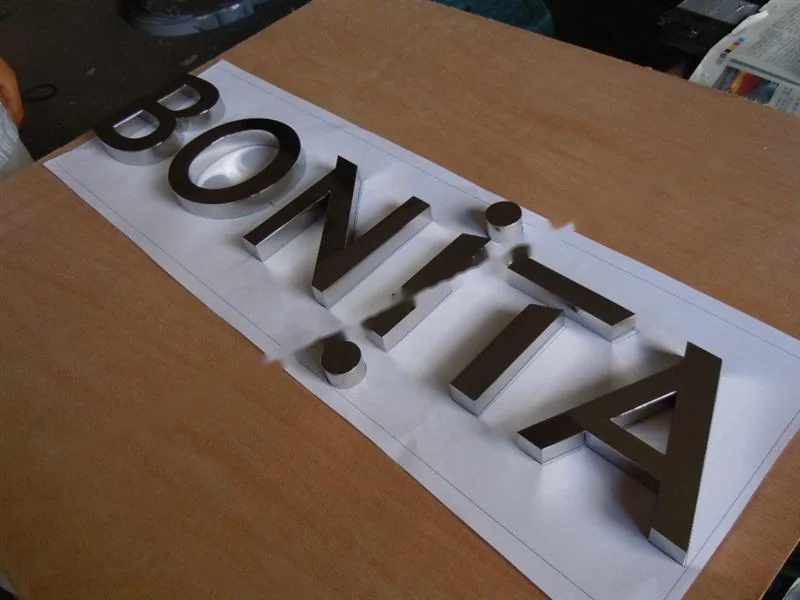 Ref 227
Mirror Polished Stainless Steel Flat-Cut Letter Ref 227
Flat-Cut Letter in mirror polished stainless steel
View reference →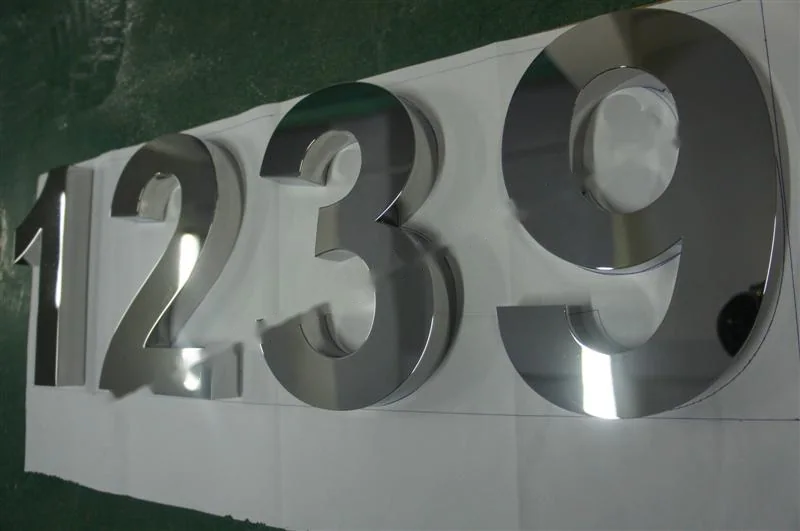 Ref 226
Mirror Polished Stainless Steel Flat-Cut Letter Ref 226
Flat-Cut Letter in mirror polished stainless steel
View reference →Keep Reading
Other Guides
How to Start a Metal Sign Business
Market research, registration, workshop layout, equipment and the skills a metal sign shop actually needs.
Brushed vs Mirror Polished Stainless Steel Letters
How each finish behaves under daylight, spotlights and dirt — and where each one fails.
Halo-Lit vs Front-Lit Channel Letters
Two ways to light a letter, two very different results at fifty metres.
Answers
Related Questions
Can you supply a mixed set of materials?
Yes. A logo in one material next to lettering in another is built as a single assembly so the alignment is set in the workshop, not on the wall.
How thick are the letters?
Material starts at 6 mm and goes thicker on request. The right thickness depends on letter height and how close people get to the sign.
How do you handle payment?
By T/T, PayPal or Western Union.
Can you ship by sea instead of courier?
Yes. We arrange shipping by sea, by air or by courier, chosen against the size of the packed order.
Talk It Through With the Workshop
Send the drawing and the site details and we will tell you what we would build and why.