
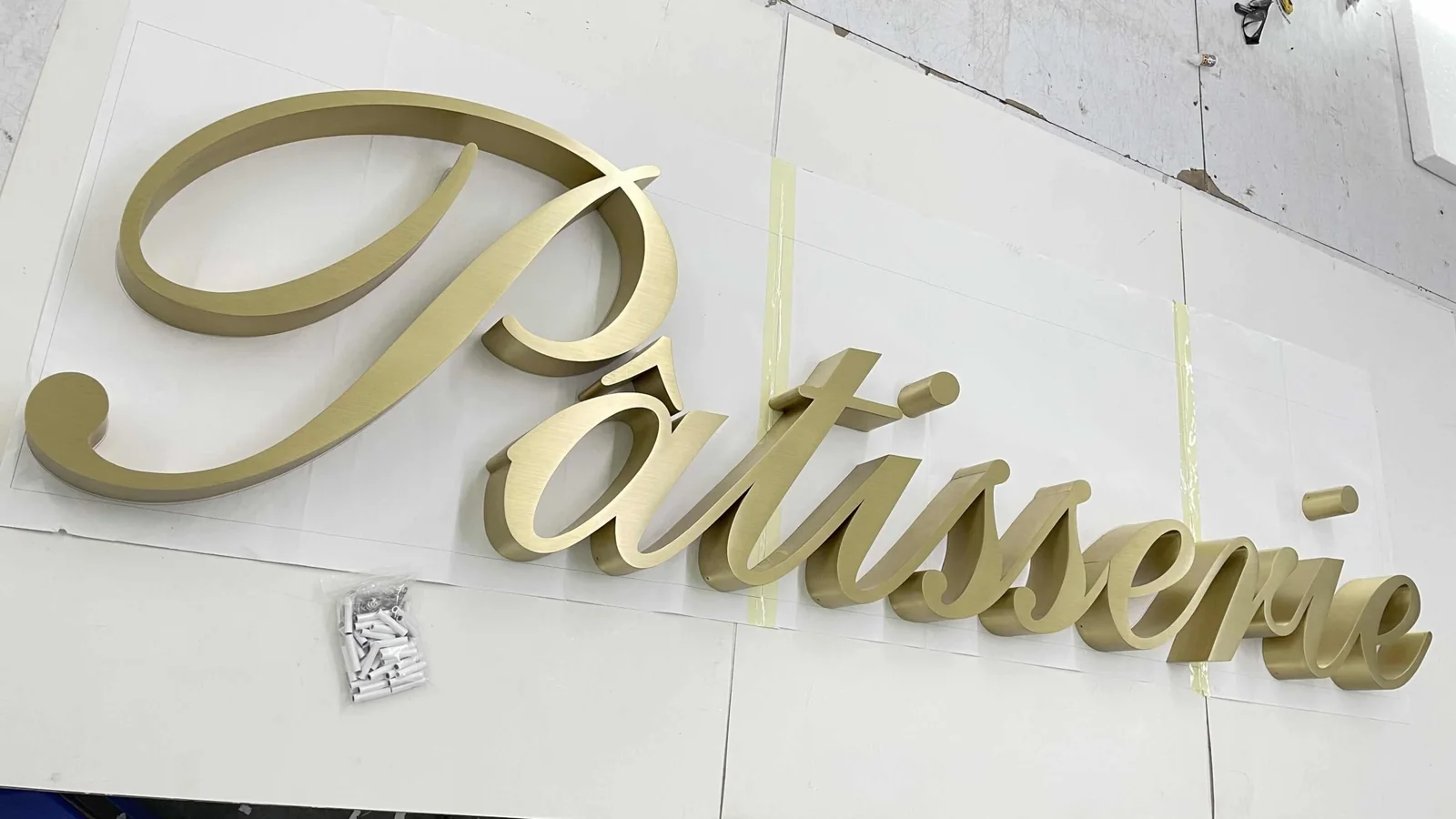
The Two Ways to Light a Letter
Our letters can be supplied with direct or indirect illumination — light through the face, or light thrown behind the letter onto the wall. They look nothing alike at night, and the choice changes how the letter is built, so it has to be made before fabrication.
The LED modules and power supplies we use are CE, RoHS and UL approved in both cases.
Halo-Lit: The Metal Stays Metal
- An indirect, or halo, letter is mounted on stand-offs with the LEDs facing the wall. The letter itself stays solid metal; what you see at night is the outline of the letter against a glowing wall.
- Because the face is never translucent, the brushed grain or mirror polish you paid for is still doing its job after dark. That is the main argument for halo lighting on a premium frontage.
- Two things control the result: how far the letter stands off the wall, and what the wall is. A pale, smooth render gives a clean even halo. Dark, rough brick absorbs most of it — which is a reason to reconsider, not a reason to add more LEDs.
Front-Lit: Legible From the Far Side of a Car Park
- A front-lit letter is a fabricated box with a translucent face and modules inside. At night the letter itself is the light source.
- This is what you specify when the sign has to be read at distance — roadside retail, outlet units, forecourts. A halo is beautiful at ten metres and invisible at eighty.
- The returns are still metal, so the letter reads as a metal letter in daylight. The compromise is on the face, which has to be translucent rather than brushed or polished steel.
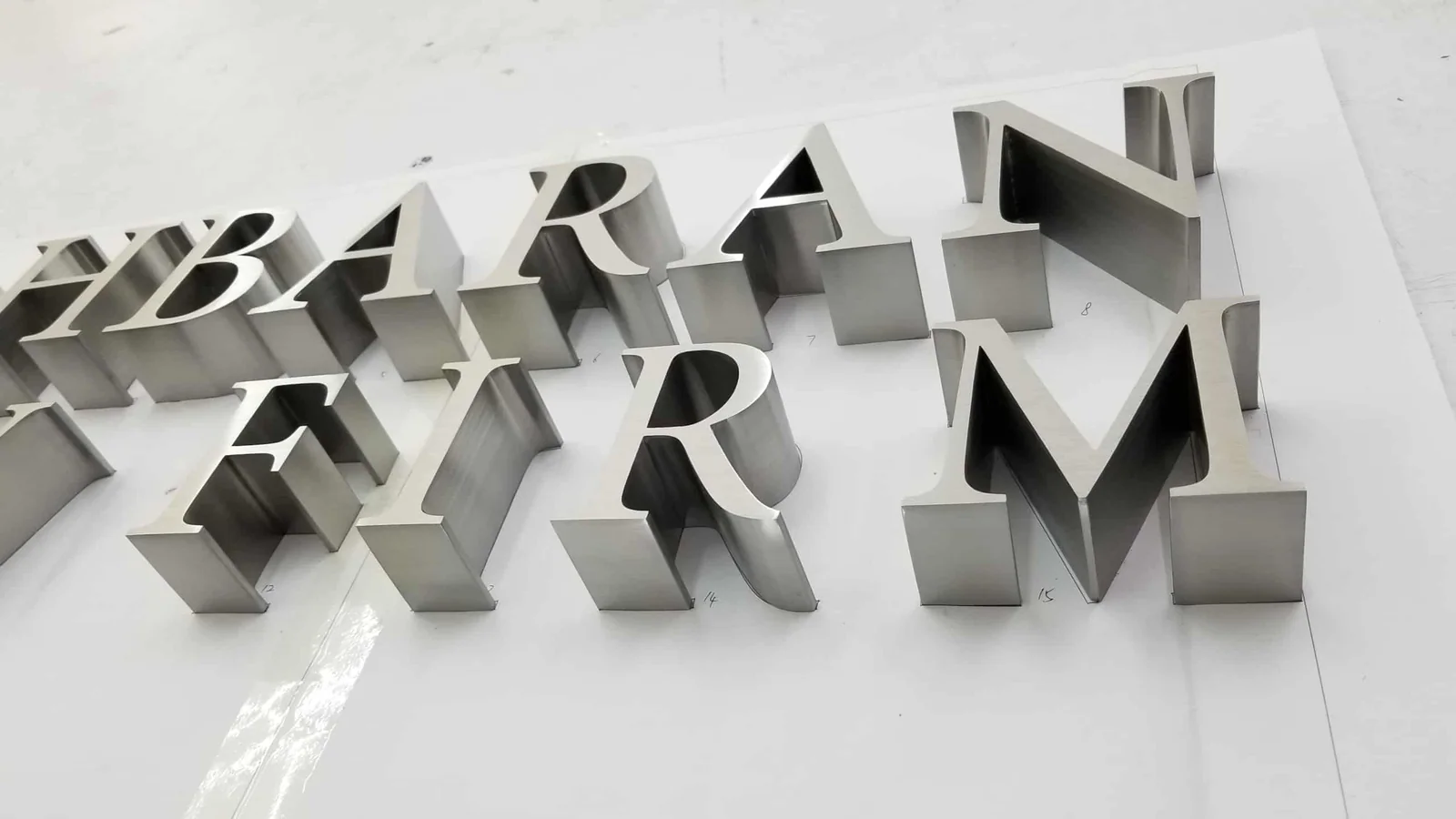
What the Choice Changes in the Build
- Return depth. A front-lit letter needs enough depth for the module pitch to light the face evenly; too shallow and you get visible hot spots.
- The back. Halo letters are built with an open back and stand-offs; front-lit box letters are closed.
- Cable entries, which are positioned before the finish is applied — not drilled afterwards.
- This is why lighting is a question we ask at the quotation stage rather than at the end.
If You Are Not Sure Yet
Tell us the viewing distance and what the letters are mounting onto. Those two facts decide it more often than any aesthetic preference.
It is also reasonable to build unlit now with the return depth and cable entries already sized for lighting later. That costs very little at fabrication and saves a rebuild.
Related References
Products Covered by This Guide
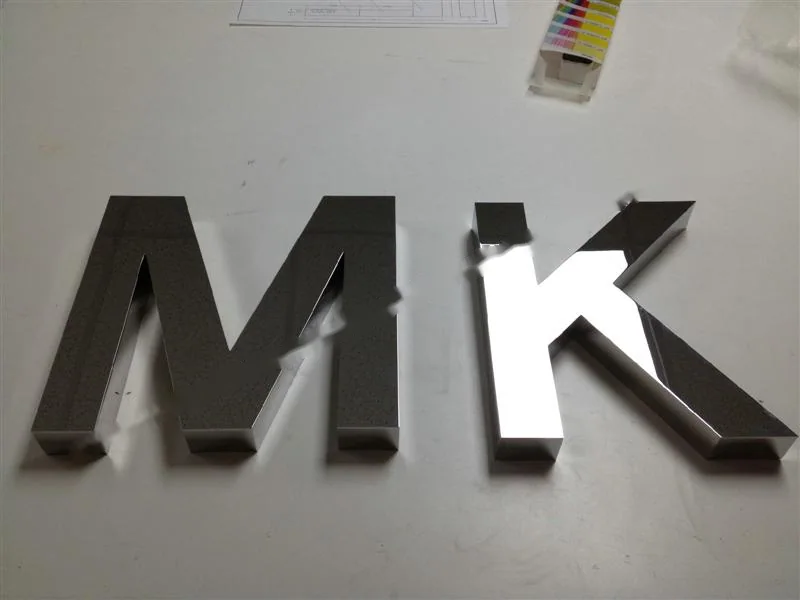 Ref 207
Mirror Polished Stainless Steel Box Letter Ref 207
Box Letter in mirror polished stainless steel
View reference →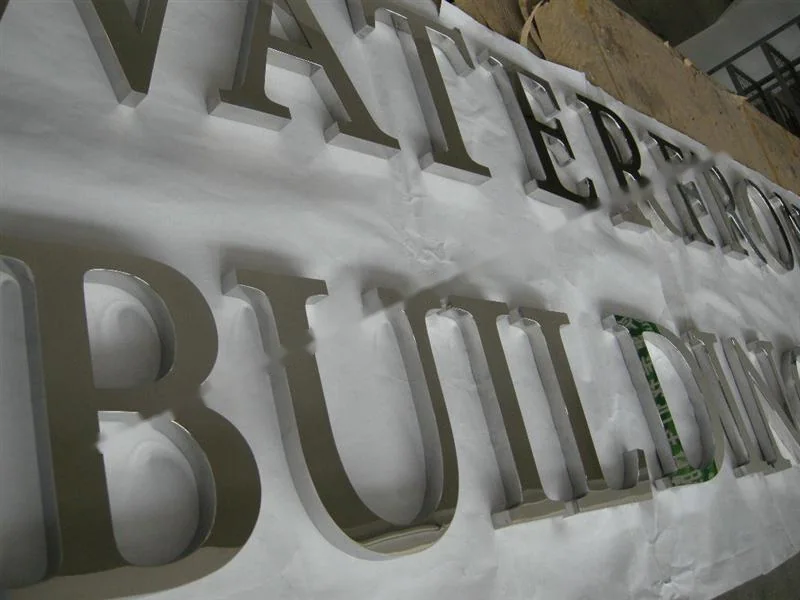 Ref 206
Mirror Polished Stainless Steel Relief Lettering Ref 206
Relief Lettering in mirror polished stainless steel
View reference →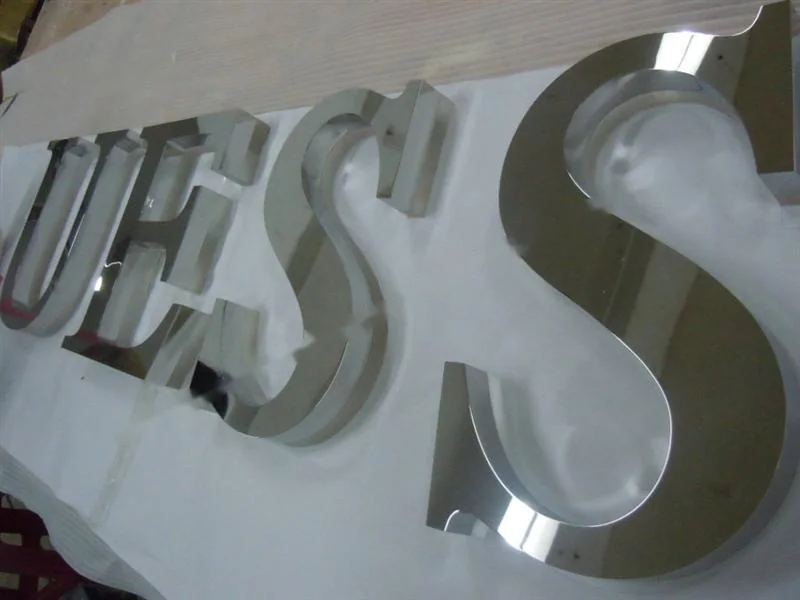 Ref 205
Mirror Polished Stainless Steel Box Letter Ref 205
Box Letter in mirror polished stainless steel
View reference → Ref 204
Mirror Polished Stainless Steel Relief Letter Ref 204
Relief Letter in mirror polished stainless steel
View reference →Keep Reading
Other Guides
How to Start a Metal Sign Business
Market research, registration, workshop layout, equipment and the skills a metal sign shop actually needs.
Stainless Steel 304 vs 316 for Sign Letters
Which grade to specify, and the one question about the site that settles it.
Brushed vs Mirror Polished Stainless Steel Letters
How each finish behaves under daylight, spotlights and dirt — and where each one fails.
Answers
Related Questions
What is the minimum order quantity?
TBC — the source material for this catalogue does not state a minimum order quantity. Send your artwork and we will confirm it with the quotation.
Can these letters be illuminated?
Yes. Direct illumination lights the face and indirect illumination puts the light behind the letter as a halo. Tell us which before fabrication, because it changes the return depth.
How is the set packed for export?
Letters are individually wrapped and packed flat. Mirror-polished faces keep their protective film until the moment of installation.
What is the smallest letter you can make?
Letter height starts at 40 mm. Below that the return depth and the fixing studs stop being practical.
Talk It Through With the Workshop
Send the drawing and the site details and we will tell you what we would build and why.