
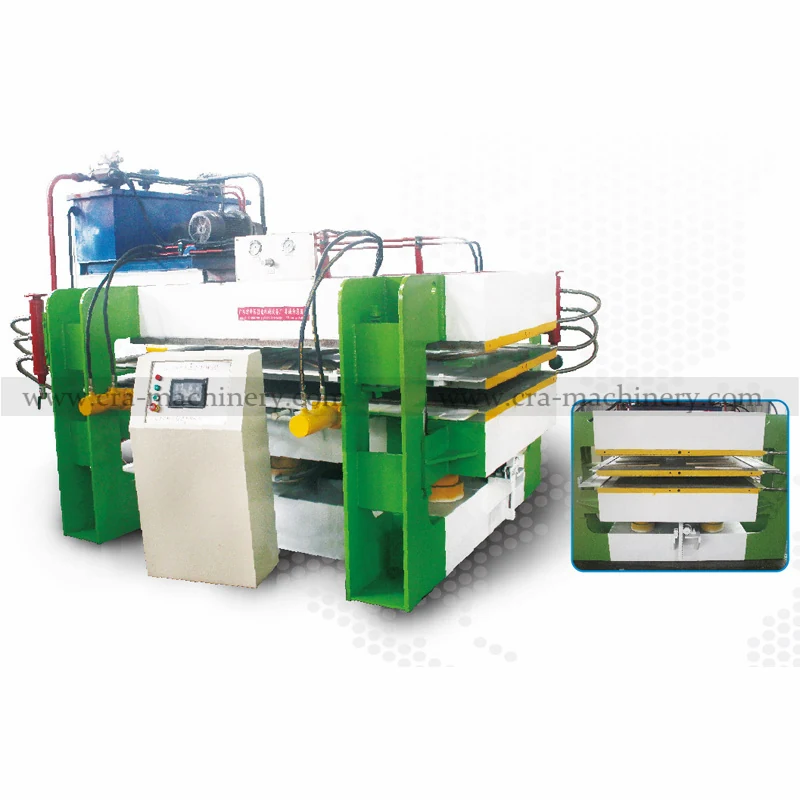
CYMJ-3 2 Wood Panel Heat Pressing Jointing Machine
The CYMJ-3 2 Wood Panel Heat Pressing Jointing Machine joins two wood panels simultaneously using heat and pressure. It is built from three high carbon steel plates for long service life. The machine applies up to 300 tons of vertical pressure and 20 tons of side pressure across four sides to...
Product Overview
The CYMJ-3 2 Wood Panel Heat Pressing Jointing Machine joins two wood panels simultaneously using heat and pressure. It is built from three high carbon steel plates for long service life. The machine applies up to 300 tons of vertical pressure and 20 tons of side pressure across four sides to create a seamless, smooth, and strong joint. It operates at a rated temperature of 120 to 150 degrees Celsius and is suitable for panels between 4 mm and 30 mm thick, with a maximum width of 2500 mm and length of 1300 mm. It supports automatic or semi-automatic operation and is used in wood board production lines.
Key Benefits
- Joins two wood panels at once, increasing throughput compared to single-panel pressing
- Four-side pressing ensures a seamless joint with improved surface smoothness and structural strength
- High carbon steel construction provides long service life under continuous industrial use
- Rated temperature range of 120 to 150 degrees Celsius allows consistent bonding with common wood adhesives
- Up to 300 tons vertical pressure and 20 tons side pressure ensure tight, durable joints
- Automatic or semi-automatic operation reduces manual effort and operator dependency
Application Scenarios
- A wood board plant upgrading from manual clamping to automated jointing for edge-glued panels
- A manufacturer producing high-grade plywood or laminated boards needing consistent joint strength
- A facility expanding panel size capacity to 2500 mm width and 1300 mm length with reliable jointing
- A production line adding heat pressing to replace cold glue joints that fail under stress
Who It Is For
- Wood board and panel manufacturers
- Plywood and laminated wood producers
- Sawmills integrating edge joining into their finishing process
- Wood processing plants producing furniture-grade or construction-grade panels
Problems It Solves
- Manual clamping and drying of panel joints lead to inconsistent glue lines and weak bonds
- Single-side pressing causes misalignment and visible seams in the final panel
- Lack of heat and uniform pressure results in poor adhesive curing and joint failure
- Short machine life from low-grade materials increases downtime and replacement costs
- Inability to join wide panels (over 1200 mm) in one pass limits production scale
Technical Features
- Constructed from three high carbon steel plates for durability and stability
- Four-side pressing system with vertical and lateral pressure applied simultaneously
- Maximum oil pressure of 22 MPa ensures consistent force delivery across the press
- Rated operating temperature between 120 and 150 degrees Celsius for effective adhesive curing
- Automatic or semi-automatic operation mode for flexible integration into production
- Adjustable pressure and temperature settings to match different wood types and glue types
Specifications
| Model | CYMJ-3 2 |
|---|---|
| Max Panel Width | 2500 mm |
| Max Panel Length | 1300 mm |
| Panel Thickness | 4 - 30 mm |
| Up and Down Pressure | 300 T |
| Side Pressure | 20 T |
| Max Oil Pressure | 22 MPa |
| Rated Temperature | 120 - 150 ℃ |
| Power | 10 kW |
| Operation Mode | Automatic / Semi-Automatic |
| Weight | 9000 kg |
| Overall Size | 3000 x 1650 x 2300 mm |
Values taken from the manufacturer data for this model. Anything not listed is confirmed on request before order.
Materials
- Wood panels with thickness between 4 mm and 30 mm
- Common wood adhesives used in panel joining (e.g. urea-formaldehyde, phenol-formaldehyde)
- High carbon steel plates used in machine construction
- Heating elements and hydraulic systems compatible with industrial use
Manufacturing And Process
Step 1
Prepare two wood panels with adhesive applied to the joining edges
Step 2
Place the panels into the machine with the adhesive edges aligned
Step 3
Close the press and apply vertical and side pressure simultaneously
Step 4
Heat the press to 120 to 150 degrees Celsius and maintain for the required cure time
Step 5
Open the press and remove the joined panel with a seamless, smooth joint
Step 6
Inspect the joint for uniformity, strength, and surface finish before moving to next step
Quality Control
- Hydraulic system pressure monitored at 22 MPa maximum to ensure consistent force
- Temperature sensors verify the heating zone stays within 120 to 150 degrees Celsius
- Sample joint panels tested for bond strength and surface smoothness before shipment
- Operator training includes checking alignment, pressure, and temperature settings
- Machine tested under full load before delivery to confirm stable performance
Customization Options
- Voltage and phase configuration available for destination market
- Adjustable pressure and temperature settings to match specific adhesive and wood types
- Optional side guides or alignment fixtures for tighter edge alignment
- Machine can be quoted as part of a larger timber wood processing line
Compared With The Alternatives
| Manual clamping and drying jointing | Manual methods require longer cure times, lack uniform pressure, and produce inconsistent joints |
|---|---|
| Single-side pressing machine | Single-side pressing cannot ensure alignment or strength across both sides of the joint |
| Cold glue joining without heat | Cold glue joints have lower strength and are more prone to failure under load or moisture |
Use Guide
- Ensure adhesive is applied evenly and within the recommended thickness before pressing
- Check that panel edges are straight and free of debris to avoid joint gaps
- Set the temperature and pressure according to the adhesive manufacturer’s specifications
- Use the automatic mode for consistent results; semi-automatic mode allows operator control for testing
- Inspect the joint after pressing for smoothness and absence of gaps or bulges
CYMJ-3 2 Wood Panel Heat Pressing Jointing Machine FAQ
What is the maximum panel size this machine can join?
Maximum panel width is 2500 mm and maximum length is 1300 mm.
Can it press two panels at the same time?
Yes, the CYMJ-3 2 is designed to join two wood panels simultaneously.
What is the operating temperature range?
The rated temperature is 120 to 150 degrees Celsius.
What power supply does it require?
The machine requires 10 kW of power, with voltage and phase configurable for the destination market.
What is the lead time?
5 to 15 workdays if in stock, otherwise 15 to 60 workdays depending on quantity and model.
What are the payment terms?
Orders up to 10000 USD are 100% in advance. Above 10000 USD it is 30% T/T deposit with the balance before shipment.
Can you test my wood and adhesive before I buy?
Yes, free sample testing is available. You cover freight and provide the specific wood and adhesive you plan to use.
Related Products

025A Full Automatic Saw Blade Grinding Machine
View Details
CYMJ-2 1 Wood Panel Heat Pressing Jointing Machine
View Details
2480 Full Automatic Wood Pieces Tenno Connecting Machine
View Details
1825A Semi Automatic Wood Batten Tenno Connecting Machine
View DetailsLines Industries And Guides
Timber Cutting and Board Joining Line
CRATOOLS builds timber cutting and board joining lines using its own machines and saw blades. The line processes logs, round...
Timber and Wood Board Processing
CRATOOLS has produced timber wood cutting machines for 10 years and manufactures saw blades in-house. The company supplies a...
Choosing a Multi Rip Saw for Square Timber or Round Wood
Guide
Get A Price On The CYMJ-3 2 Wood Panel Heat Pressing Jointing Machine
Send the quantity, the diameters and the material you run. We answer with price, lead time and packing within 24 hours.