
AISI 304 vs 316 Stainless Steel for Outdoor Sculpture
When 304 is enough, when 316 earns the extra cost, and why chloride rather than rain is what actually attacks a polished surface.
The Short Answer
Use AISI 304 for inland gardens, parks, campuses and interiors. Use AISI 316 where the piece will stand near the sea, beside a pool, or in a city that salts its roads in winter. Both grades take the same mirror polish, so the choice is about how the surface looks in year ten rather than in year one. AISI 201 is also available and is the lowest cost of the three, which makes it a reasonable choice for sheltered indoor work only.
See Stainless Steel Gazing Ball
What Actually Attacks a Sculpture Outdoors
Stainless steel does not rust the way painted mild steel does. It carries a thin passive oxide layer that repairs itself in air. Chloride is what breaks that layer down, and chloride arrives as sea spray, pool water and winter de-icing salt. Once chloride sits in a scratch or behind a fixing it pits the surface, and pitting on a mirror finish is visible from a long way off because the reflection breaks.
Where 304 Is Enough
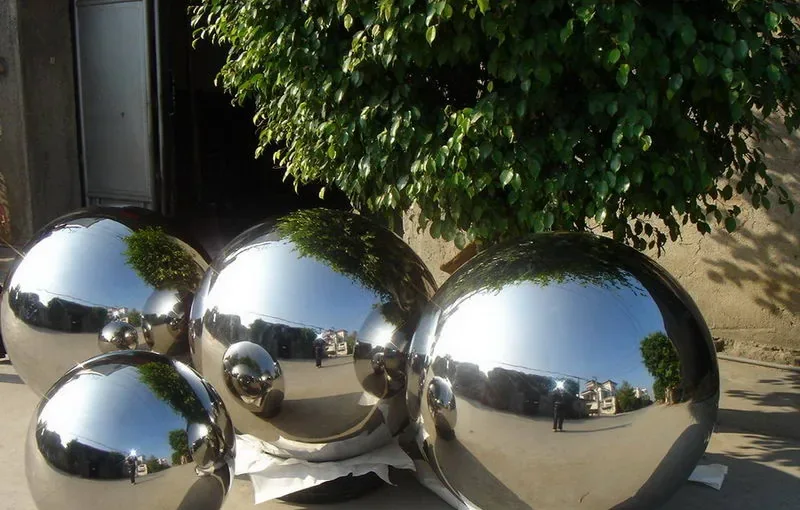
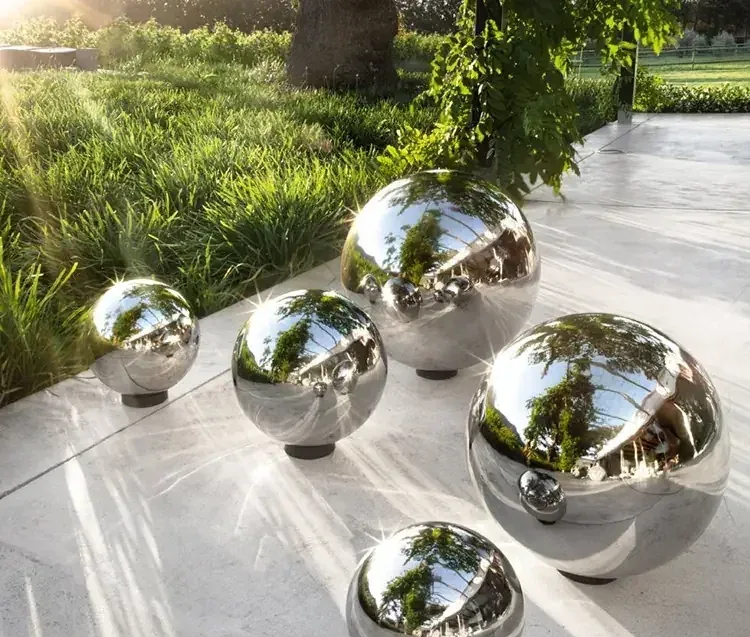
304 is the default across most of our catalogue. Inland parks, private gardens, campus courtyards, hotel lobbies and office interiors all sit comfortably within its range. A mirror polished 304 sphere in a garden needs washing with clean water and a soft cloth and nothing else. It holds its reflection with no repainting cycle, which is the main reason it replaces painted steel and cast resin in landscape work.
Where 316 Earns the Extra Cost
316 is the grade for coastal cities, pool surrounds and acid rain areas. If the piece is within sight of salt water, beside a swimming pool, or on a street that gets salted every winter, the extra material cost is small against the risk of pitting a mirror surface that cannot be repolished in place. Order 316 at the start, because there is no way to upgrade the grade once the piece is welded.
See Steel Sphere Water Fountain
Grade and Wall Thickness Are Separate Decisions
Grade decides how the surface survives. Wall thickness, offered from 1 mm to 6 mm, decides how the form holds its shape and how much handling it can take. A large sphere in a public plaza is normally specified in a heavier wall than the same sphere in a private garden, whichever grade it is made from. Getting one right and the other wrong still produces a piece that disappoints.
What to Send with an Enquiry
Give the site location and exposure, the diameter or overall size, the finish you want, and the fixing you already have. Grade and wall thickness can then be recommended against the real conditions rather than a default. Shop drawings are supplied for large pieces so the groundworks package can be prepared before the crate arrives.
Products Covered in This Guide
 Stainless Steel Spheres
Stainless Steel Gazing Ball
View Details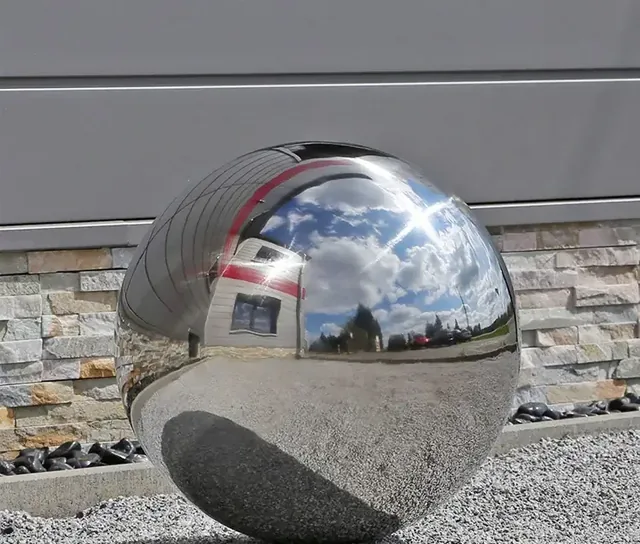 Stainless Steel Spheres
Hollow Stainless Steel Balls Diameter 19 mm to 3000 mm
View Details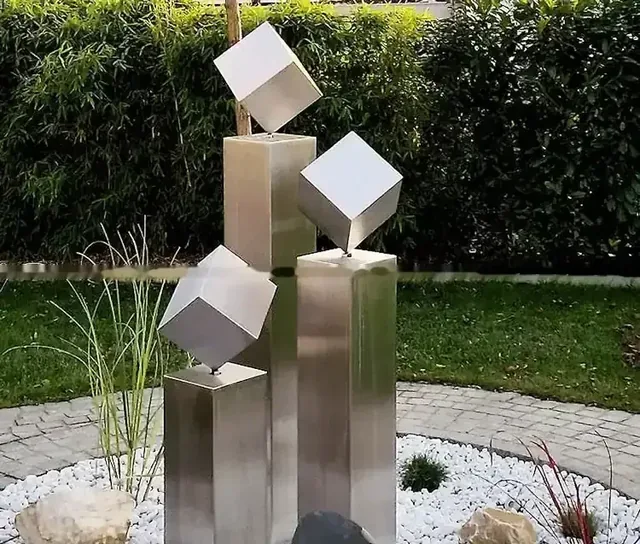 Garden Sculpture
Steel Sphere Water Fountain
View Details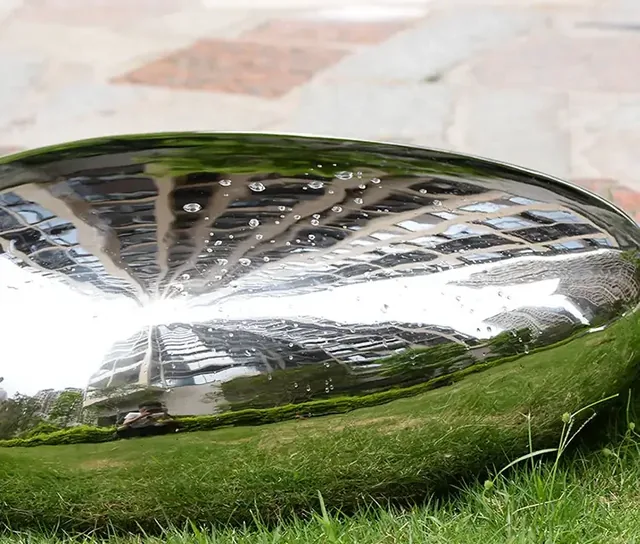 Garden Sculpture
Garden Decorative Stainless Steel Stone & Cobblestone Sculpture
View DetailsQuestions on This Topic
Is 316 stronger than 304?
No. The difference is corrosion resistance, not strength. 316 holds up better against chloride from sea spray, pool water and de-icing salt.
Can I tell 304 and 316 apart by looking?
Not on a finished piece. Both take the same mirror polish. The difference only shows after years of chloride exposure, when 304 may begin to pit.
What is AISI 201 used for?
201 is the lowest cost of the three grades we offer and suits sheltered indoor pieces. It is not the grade for coastal or salted sites.
Does the grade change the lead time?
No. Delivery is 15 to 30 days after the deposit is received regardless of grade, with hollow sphere batches at 20 to 30 days.
How should a polished piece be cleaned?
Clean water and a soft cloth. Avoid wire brushes, abrasive pads and any chloride based cleaner.
Not Sure Which Grade Your Site Needs
Send the location and a photo of where the piece will stand and we will tell you which grade we would build it in.