
- Home
- Knowledge Center
- How to Choose a Wall Panel by the Room It Goes In
How to Choose a Wall Panel by the Room It Goes In
Eight wall panel ranges, one decision tree. The room condition decides the material, and the finish is the last thing to pick, not the first.
Why the room comes before the panel
A wall panel does one of four jobs: it decorates a dry interior wall, it survives a humid room, it clads an exterior elevation, or it controls echo. Those are different materials, and a supplier who sells you the same panel for all four has not asked what the room is. Start by describing the room in those terms and most of the catalogue disappears.
Dry interior walls
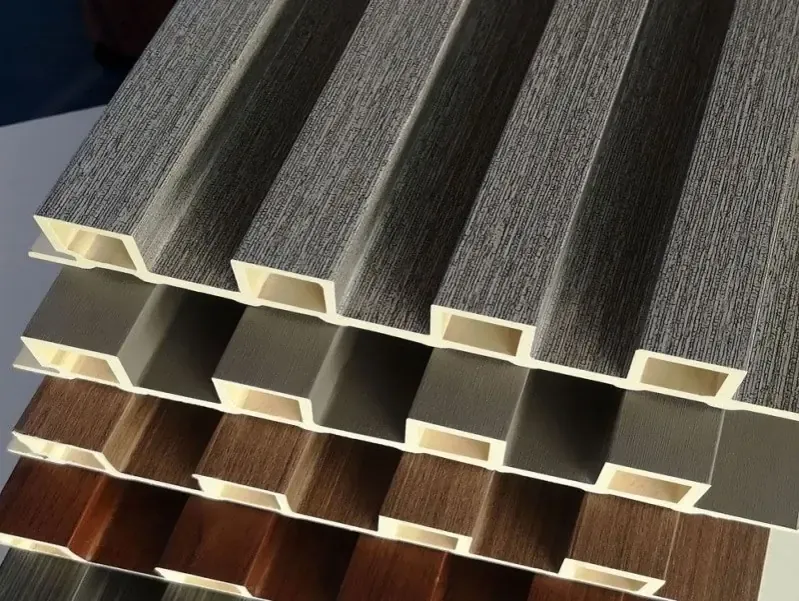
Interior WPC panels and PS panels live here. Interior WPC comes in 160mm, 195mm, 196mm and 210mm modules at 2900mm length, with depths from 10mm to 23mm, and a smooth wood veneer finish. PS panels run 150x12mm and 160x10mm at 2.9m in polystyrene, lighter and cheaper per metre, cut with a hand saw. Both arrive finished, so there is no staining or sealing on site.
Humid rooms and wet areas
Bamboo charcoal panels are formaldehyde-free and VOC-free with a charcoal core that absorbs odours, and they are water and mildew resistant, which is what keeps them flat where paint blisters. PVC wall panels give a fireproof, waterproof, scratch resistant board with a service life exceeding 15 years. For the ceiling above a shower or a cooker, PVC ceiling panels weigh about a third of ceramic tile.
Exterior elevations
Outdoor WPC cladding is a different board: 219x26mm or 156x21mm, 60% wood fibre with recycled HDPE, and a co-extruded skin that is laid down with the core rather than bonded on afterwards. That skin is the reason it resists fading, and it is the reason an interior panel does not belong outside.
Rooms with an echo problem
A fluted panel looks acoustic and does nothing measurable. A wood slat acoustic panel works because sound entering the gaps between the slats meets a felt made of recycled plastic behind them, and friction and vibration consume the energy. If the complaint is speech intelligibility, this is the only range here that addresses it.
Choosing the module and the depth last
Module sets the rhythm: 160mm gives fine lines, 210mm covers the most wall per piece. Depth sets the shadow: 10mm and 12mm read nearly flat, 23mm throws a strong line. Ask for samples in two depths and look at them under the room's own lighting before committing a whole project.
Products Referenced In This Guide
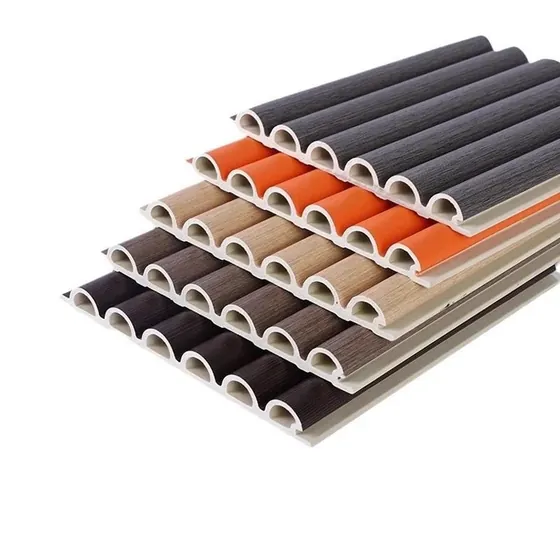
WPC Wall Panel Interior WW-IN16015
WW-IN16015 interior WPC wall panel, 160mm wide, 2900mm long, 10mm 15mm and 23mm thicknesses with a smooth wood veneer finish for homes offices and hotels.
See the specification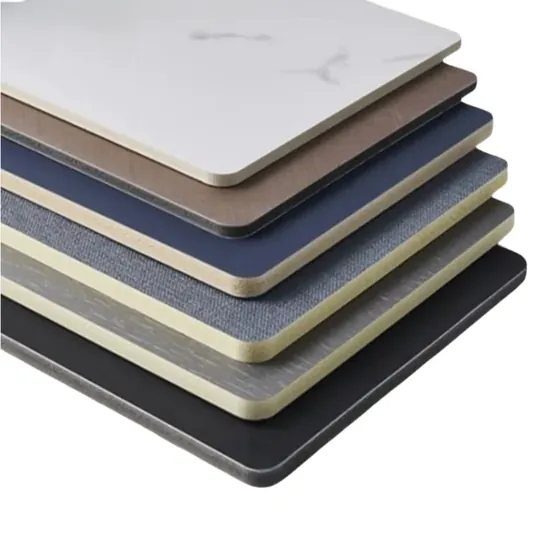
Bamboo Charcoal Wall Panel
Formaldehyde-free bamboo charcoal wall panels in 5mm and 8mm, 1220x1440mm. Bamboo powder wood fibre and recyclable PVC, waterproof and mildew proof interior panels.
See the specification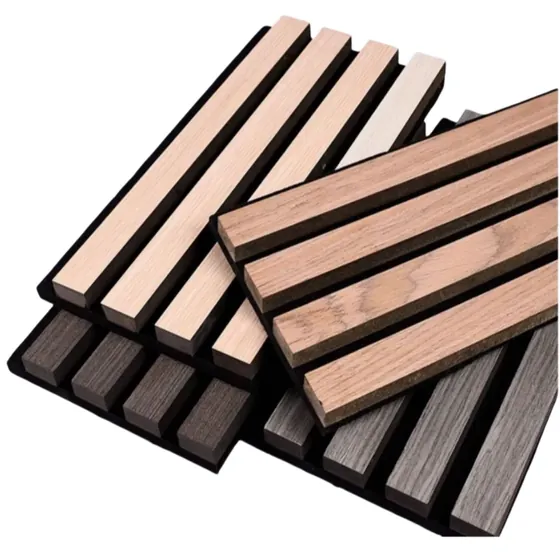
Wood Slat Acoustic Panels
Wood slat acoustic panels in 400x21mm and 600x21mm at 2.4m, engineered veneer and MDF slats over recycled plastic felt. Reduce echo in offices restaurants and studios.
See the specification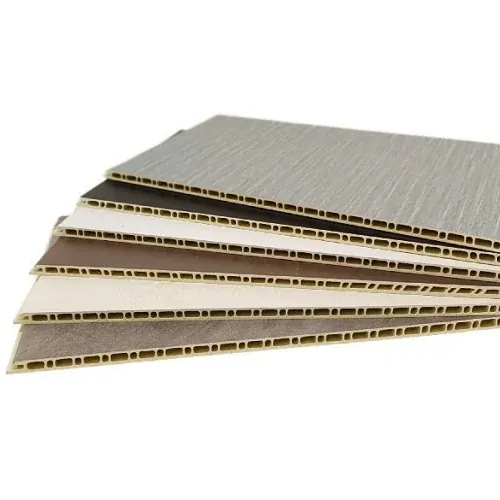
PVC Wall Panel
PVC wall panel in wood plastic or stone plastic composite, customized colour and size, fireproof waterproof scratch resistant with over 15 years service life.
See the specificationProduct Families Covered
Questions About This Guide
Can I use one panel type through a whole building?
Does a thicker panel absorb more sound?
Which panel is cheapest per square metre?
Can panels be cut to my ceiling height?
Put This Into Practice
Send the room, the area and the finish you are working to and a recommendation with the matching published specification comes back.