
Sealed Cartridge Bearings and Why Pawl Count Matters
Two bearings, four bearings, six pawls. What those numbers on a hub or headset specification are actually telling you.
Bearing counts appear on every hub and headset specification and almost nobody explains them. They are not marketing numbers - each one corresponds to a decision about where load is carried and how often the part needs servicing.
Cartridge against loose ball
A loose ball bearing runs steel balls directly against races cut into the part. It works, it is cheap, and it needs stripping and regreasing regularly because the races are open to water. A sealed cartridge bearing is a self-contained unit with its own races and seals that presses into the part. When it wears, you press it out and fit a new one instead of replacing the whole component.
Why our headsets specify two
Both the external VH-01 headset and the semi-internal headset run two sealed cartridge bearings, one at the top of the head tube and one at the bottom. That is the minimum for a headset and also the correct number: the steering load is carried at two points and adding more would do nothing.
Why our hubs specify two and four
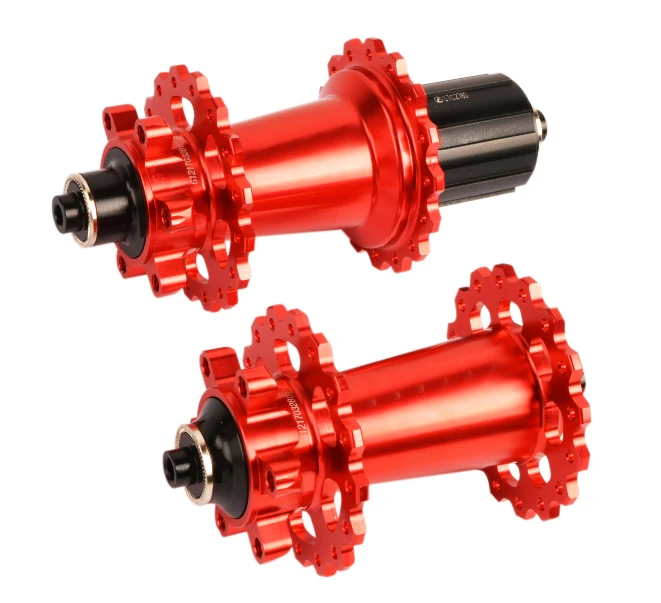
The mountain bike hub set runs two sealed bearings in the front hub and four in the rear. The front hub only has to support the wheel. The rear hub has to support the wheel and carry the drive load through the freehub body, which is a separate rotating assembly with its own bearings. Four is not generosity, it is what a driven hub needs.
Pawls and engagement
Our hubs specify six pawls. A pawl is the spring-loaded tooth that catches the ratchet ring when you pedal. With three pawls there are fewer catch points per rotation, so there is more dead movement before the drive engages. Riders feel this most on a technical climb, where you need the pedal stroke to count the moment you push. Six pawls halves that gap.
Freehub noise is a side effect
The clicking of a freewheeling hub is the pawls dragging over the ratchet. More pawls means a busier sound. Some riders like it and some do not, but it is not an indicator of quality in either direction.
Servicing
Sealed cartridges eventually fail, usually by feeling gritty when you spin them by hand with the wheel out. Replace rather than regrease: the seals are not designed to be opened repeatedly. Pawl springs are a separate service item and are the part that usually fails first on a rear hub.
The Parts This Article Refers To
MTB Hub Set AL7075 and AL6061-T6 with 6 Pawls
Six pawls and sealed bearings in a 149 and 266 gram pair
View specification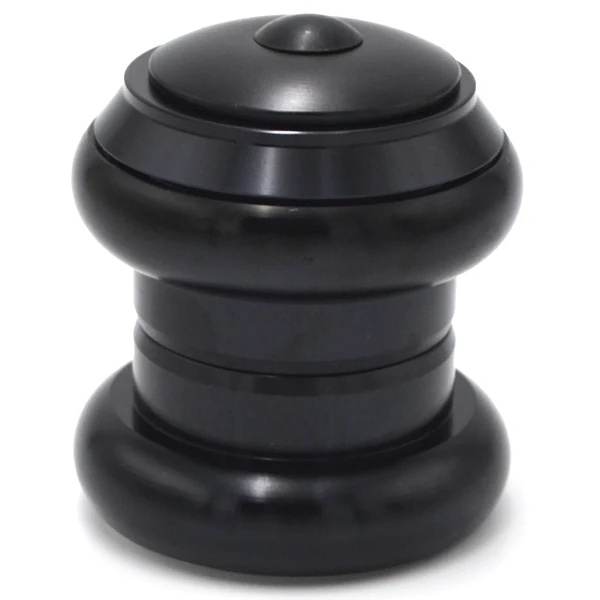
Threadless External Headsets VH-01
110 gram external cup headset on two sealed cartridge bearings
View specification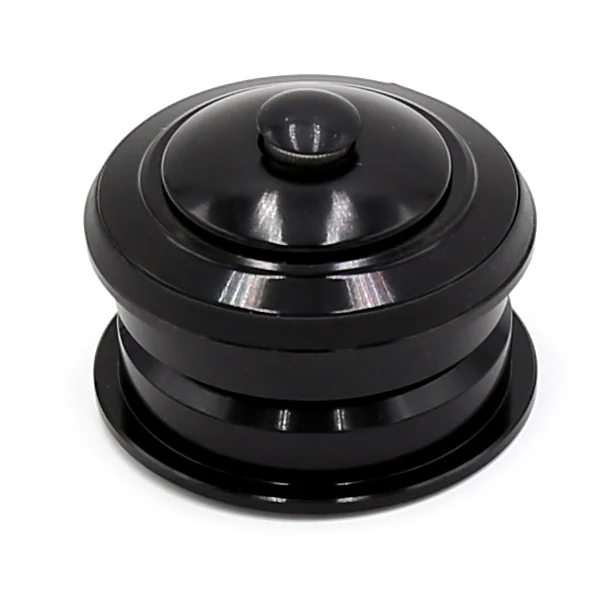
Semi-Internal Headsets 6061AL-T6
9.5 mm stack height for frames machined to take the cup inside
View specificationQuestions on This Topic
How do I know when a cartridge bearing is worn?
Are more pawls always better?
Can I regrease a sealed bearing?
Other Guides
AL6061-T6 or AL7075 Which Alloy Belongs in Which Bike Part
Two aluminium alloys cover almost the whole machined bicycle component market. Here is why a star nut is...
Read the guideWhy a Sewn Bike Bag Is Not Waterproof and a Welded One Is
Every stitch in a seam is a hole. High frequency welding removes them. Here is how to tell the two...
Read the guideChoosing a Bike Headset External or Semi-Internal
The frame decides, not the rider. A 33 mm stack against a 9.5 mm stack, and what happens if you specify the...
Read the guideApply This to Your Own Specification
Send the drawing or the sample and we will tell you which of these choices actually applies to your part.