
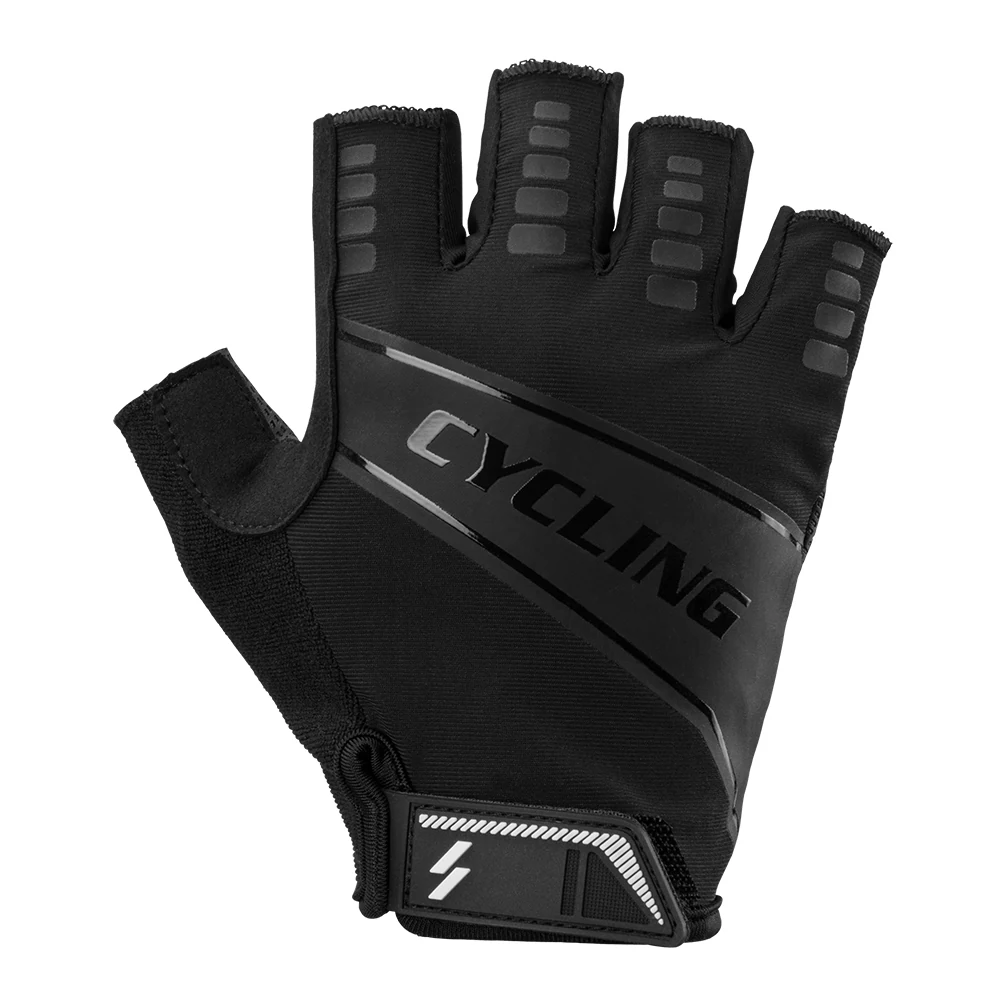
Reading a Cycling Glove Specification Panel by Panel
SBR, lycra, purlicue, CBL-1. What the terms on a glove specification actually describe, and which ones change how the glove feels.
Most glove listings say breathable and padded. A real glove specification lists a different material for the back of the hand, the palm, the purlicue, the wrist binding and the padding, because those five areas do completely different jobs.
The purlicue is the part you have never heard of
Purlicue is the web of skin between thumb and index finger. On a bike it takes constant pressure and rotation, and it is where gloves wear through first. Our gloves specify it separately: True Ultra CBL-1 on the full finger glove and the 43 gram half finger glove, True Super on the lighter models. If a specification does not mention the purlicue at all, nobody thought about it.
SBR is what is under the palm
SBR is styrene-butadiene rubber, a closed-cell padding. Closed-cell matters because it does not soak up sweat and go soggy. Our half finger gloves carry SBR padding, and the 43 gram model specifies 3 mm of it, which is the thickest in the range. If your hands go numb on long rides, that 3 mm figure is the number to look for.
Three-dimensional palm rest against flat padding
Two of our half finger gloves specify a three-dimensional non-slip palm rest rather than a flat pad. The difference is that the padding is shaped to the palm, so it sits under the heel of the hand where the ulnar nerve runs, rather than lying flat and moving around. Numb hands are a nerve compression problem, not a cushioning problem, and placement matters more than thickness.
Back of the hand fabrics
This is where gloves differ most. The 40 gram plain weave glove uses a B054 single warp plain weave. The breathable model adds elastic microfibre and silicone-printed pull tabs. The 43 gram glove combines plain weave with fine towelling and a 30 gauge mesh, which gives airflow plus somewhere to wipe sweat. The full finger glove uses spandex check panels so the fabric stretches across the knuckles instead of bunching.
Pull tabs are not a detail
A sweat-soaked half finger glove is genuinely difficult to remove, and riders damage the seams pulling on the fingertips. Silicone printing on the pull tabs, as specified on the breathable model, is what makes the glove come off cleanly. It is a small thing that changes how long the glove lasts.
Conductive fingertips and washing
Our full finger glove specifies washable conductive microfibre on the thumb and index fingertips. The word washable is the important one: most touchscreen fingertips are a printed conductive coating that stops working after a few hot washes. Wash cool and air dry either way.
The Parts This Article Refers To
Cycling Half Finger Gloves with Leather Palm and Mesh Back
43 grams with a leather cloak palm and 3 mm SBR padding
View specification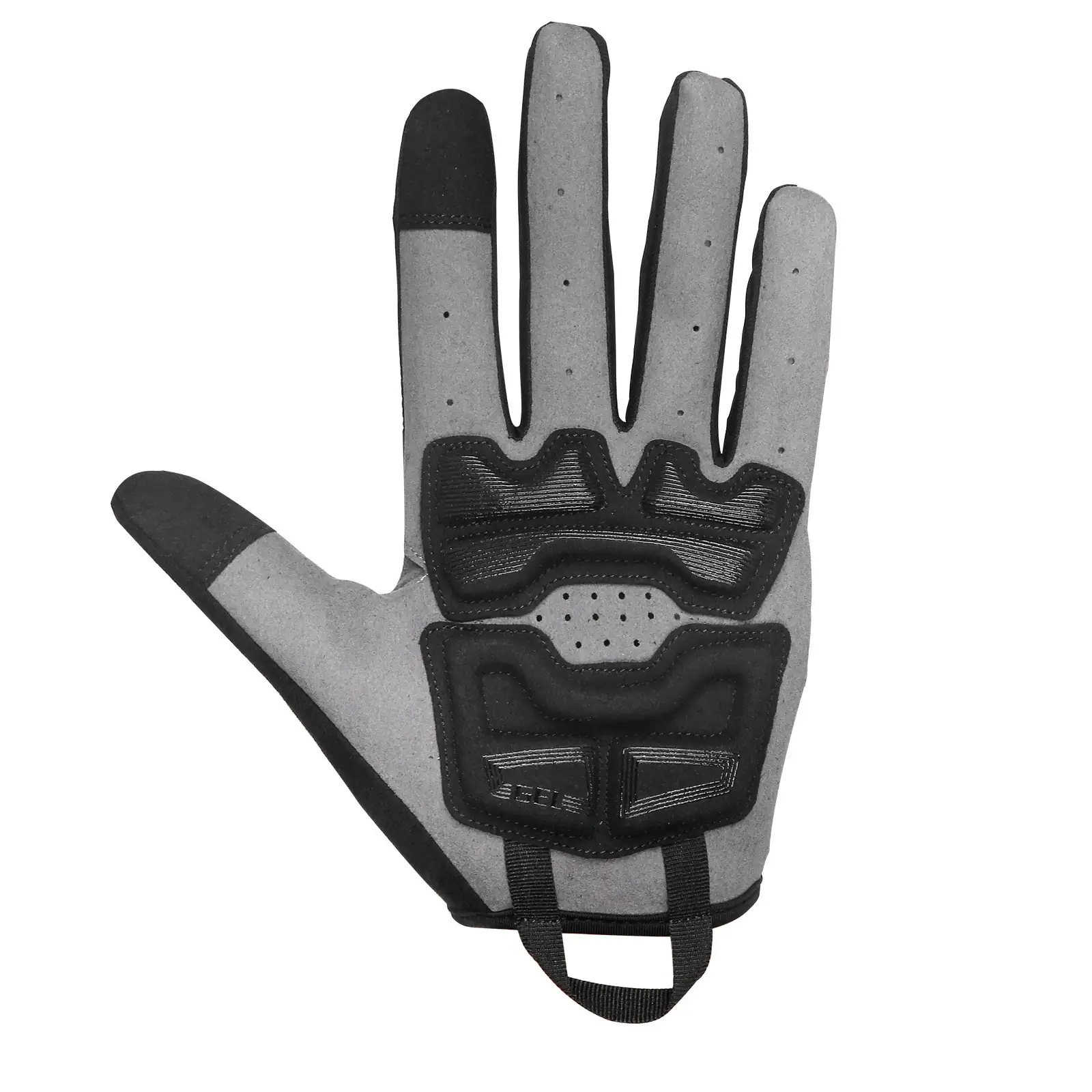
Cycling Full Finger Gloves with Conductive Fingertips
Touchscreen thumb and index finger on a washable conductive microfibre
View specification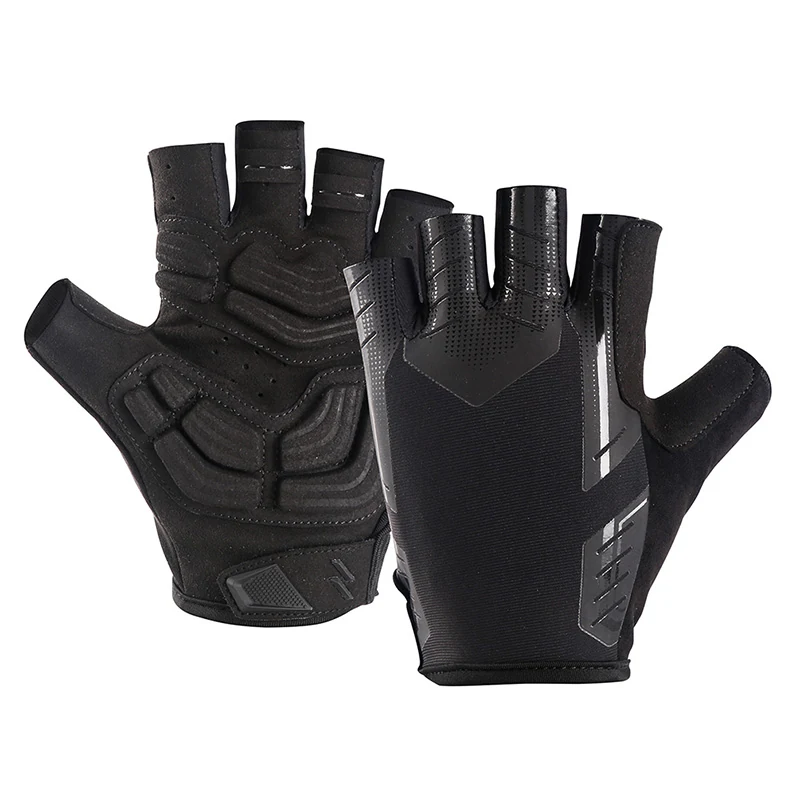
Breathable Non-Slip Half Finger Gloves 40 g
Breathable lycra back silicone pull tab and a three-dimensional palm rest
View specification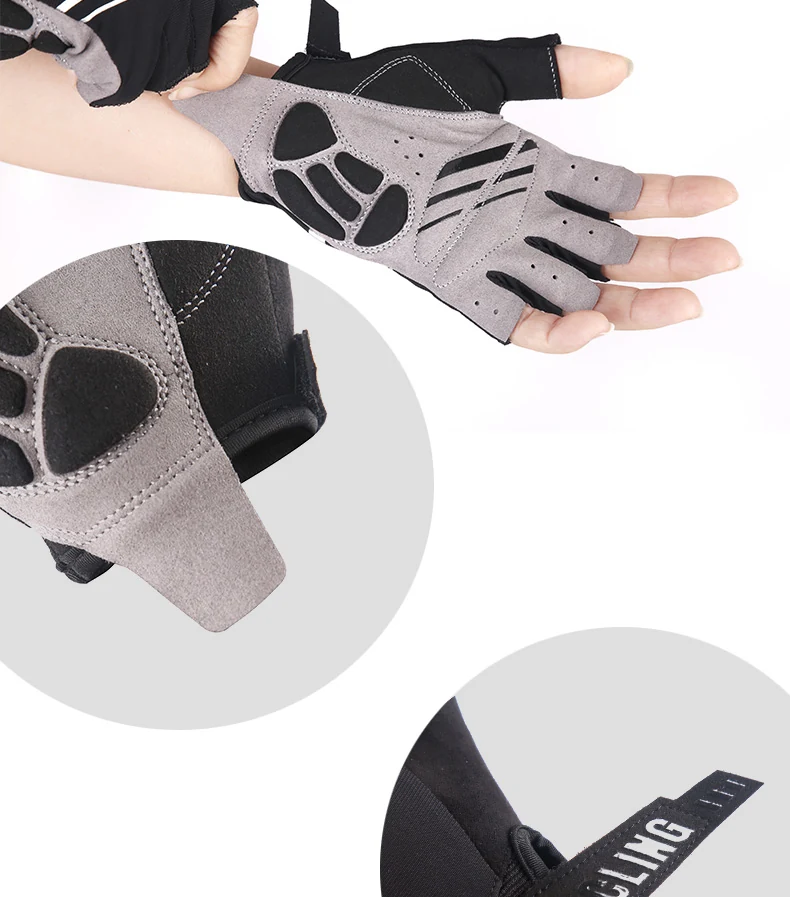
Sports Half Finger Gloves B054 Plain Weave
40 grams on a B054 plain weave back with a non-slip palm rest
View specificationQuestions on This Topic
What is SBR?
Which glove has the most padding?
Why do my hands go numb even with padded gloves?
Other Guides
AL6061-T6 or AL7075 Which Alloy Belongs in Which Bike Part
Two aluminium alloys cover almost the whole machined bicycle component market. Here is why a star nut is...
Read the guideWhy a Sewn Bike Bag Is Not Waterproof and a Welded One Is
Every stitch in a seam is a hole. High frequency welding removes them. Here is how to tell the two...
Read the guideChoosing a Bike Headset External or Semi-Internal
The frame decides, not the rider. A 33 mm stack against a 9.5 mm stack, and what happens if you specify the...
Read the guideApply This to Your Own Specification
Send the drawing or the sample and we will tell you which of these choices actually applies to your part.