
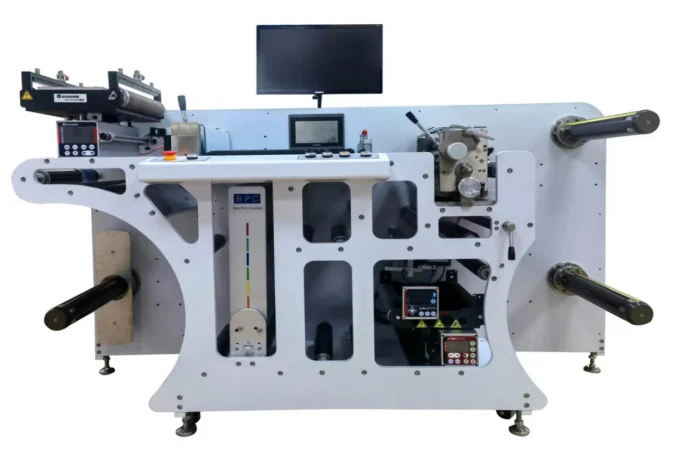
Inspection Machine with Slitting Function
Buyers of labels, flexible packaging and narrow web film struggle to balance inspection speed with defect detection accuracy. This inspection machine with slitting function handles paper up to 340mm wide, detects defects down to 1mm square, and slits at 160m/min.
- MOQ
- Usually 200 to 1000 pcs
- Customisation
- Logo, colour, packaging and labelling
- Payment
- 30% deposit, balance before shipment (T/T)
- Inspection
- Every order inspected before shipment
Product Overview
Buyers of labels, flexible packaging and narrow web film struggle to balance inspection speed with defect detection accuracy. This inspection machine with slitting function handles paper up to 340mm wide, detects defects down to 1mm square, and slits at 160m/min. It uses a Taiwan Skyeye V5.0 system with a DALSA 4K camera to identify paste words, missing print, color differences and barcode errors. For buyers, it addresses the bottleneck in converting lines where manual inspection is slow and misses defects, or automated inspection is too slow to keep up with the press.
Why Buyers Choose It
Key Benefits
- 120 m/min detection speed balances throughput and defect identification
- Detects defects as small as 1mm square, reducing false positives and missed errors
- Barcode detection handles 1D codes including EN8, EN13, EN39 and EN128
- Skyeye V5.0 software provides modules for defect, color difference and size detection
- Slitting section with six round knives allows for immediate roll finishing
- 27-inch display and 7-inch human-machine interface simplify operation and data review
Problems It Solves
- Manual inspection is slow, subjective and misses small defects
- Slow inspection speeds create a bottleneck in the converting process
- Inaccurate defect detection leads to customer complaints and waste
- Barcode errors result in supply chain disruptions and traceability issues
- Lack of data on defect types hinders process improvement efforts
- The need to unwind, inspect and re-slit material in separate steps
Where It Is Used
Who It Is For
- Procurement engineers at label converting companies
- Production managers in flexible packaging plants
- Quality control supervisors in narrow web film extrusion facilities
- Operations managers at printing houses with converting capabilities
- Engineering leads evaluating inline inspection systems
Application Scenarios
- Label converting plants needing to automate 100% inspection of printed labels
- Flexible packaging manufacturers inspecting film for print defects and barcode readability
- Narrow web film extruders checking for surface flaws and dimensional consistency
- Printing houses offering in-line inspection as part of a converting service
- Companies producing security labels requiring high-accuracy defect detection
Technical Detail
Specifications
| Maximum Paper Feed Size | 340mm |
|---|---|
| Maximum Detection Size | 320 x 320mm |
| Minimum Detection Size | 50 x 30mm |
| Maximum Unwinding Diameter | 700mm |
| Maximum Rewinding Diameter | 600mm |
| Machine Size (L x W x H) | 1900 x 1160 x 1680mm |
| Detection Speed | 120 m/min |
| Slitting Speed | 160 m/min |
| Barcode Detection Speed | 80 pcs/second |
| Color Difference Detection | △E > 3 |
| Software Version | V5.0 |
| MOQ | Varies by product, usually 200 to 1000 pcs, confirmed at quotation |
Values shown are the ones stated by the supplier. Anything not listed here is confirmed in writing when we quote.
Technical Features
- Maximum paper feed size of 340mm and detection size of 320 x 320mm
- Minimum detection size of 50 x 30mm to catch small imperfections
- Maximum unwinding diameter of 700mm and rewinding diameter of 600mm
- Detection speed of 120 m/min (dependent on label characteristics)
- Individual slitting speed of 160 m/min
- Defect detection for paste words, missing print, dirty points, and color variations
- Barcode detection for 1D codes with line distance ≥ 1.5mm
- Two-dimensional code detection for sizes > 10 x 10mm
Materials
- Steel frame providing structural rigidity
- ABS panels for operator interface and safety guarding
- High-precision encoders for accurate web tracking
- Round knives for clean and efficient slitting
- DALSA 4K wire scan camera for high-resolution image capture
Make It Yours
Customisation Options
- Slitting knife configuration adjusted to match label width and quantity
- User interface language changed to match the buyer’s location
- Keyboard and mouse included with the system
- Wireless WIFI connectivity included
How It Is Made
- Steel frame fabrication and assembly
- Panel mounting and wiring of electrical components
- Installation of the Skyeye V5.0 software and camera system
- Calibration of encoders, sensors and slitting knives
- Functional testing of detection speed, accuracy and slitting quality
- Final inspection and packaging for shipment
Quality And Use
Quality Control
- Product details confirmed before assembly begins
- Production process followed closely during fabrication and wiring
- Each order inspected before shipment to verify functionality
- Barcode detection tested with various code types and densities
Use Guide
- Ensure the machine is connected to a stable power supply
- Load the material onto the unwinding spindle, ensuring proper alignment
- Enter the label dimensions and defect parameters into the Skyeye software
- Start the inspection process and monitor the results on the 27-inch display
- Adjust the slitting knives to the desired width and quantity
- Regularly clean the camera lens and sensors to maintain optimal performance
How It Compares
| Compared with | Honest trade-off |
|---|---|
| Manual Inspection | Lower initial cost, but slower, subjective and prone to errors |
| Slower Automated Inspection | Higher throughput, but may miss small defects or struggle with complex patterns |
| Systems without Slitting | Requires a separate slitting operation, increasing handling and cycle time |
Questions About This Product
What is the minimum detectable defect size?
The machine detects defects down to 1mm square.
What barcode types does the system support?
It supports 1D codes including EN8, EN13, EN39 and EN128 with a line distance ≥ 1.5mm.
What software is included with the machine?
It includes Taiwan Skyeye V5.0 with modules for defect, color difference and size detection.
What is the maximum material width the machine can handle?
The maximum paper feed size is 340mm.
What is the detection speed?
The detection speed is 120 m/min, depending on label characteristics.
Can the system detect color differences?
Yes, the system can detect color differences with △E > 3.
What is the MOQ?
MOQ differs by product and usually falls between 200 and 1000 pcs. We confirm the exact figure with the factory when we quote.
Related Products
Before You Order
How MOQ Works When You Source From China
Why the minimum order quantity moves between 200 and 1000 pcs, what actually drives it, and how to bring it down without paying for it twice.
Logo Decoration Methods Compared
Silkscreen, offset, embroidery, laser, engraving, stamping press and heat transfer, and which substrate each one actually belongs on.
The Sample Process Explained
What a free sample covers, what it does not, and why the approved sample matters more than the specification email.
Quote this product
Tell us the quantity, the destination market and any customisation. We come back with a price and a sample plan.