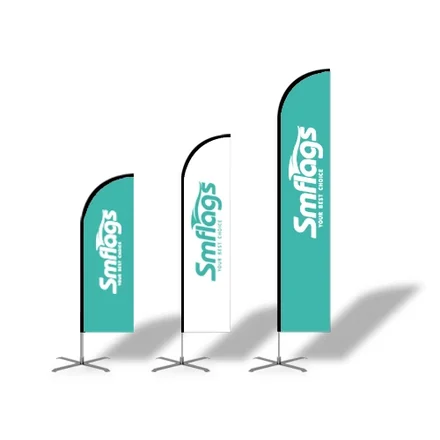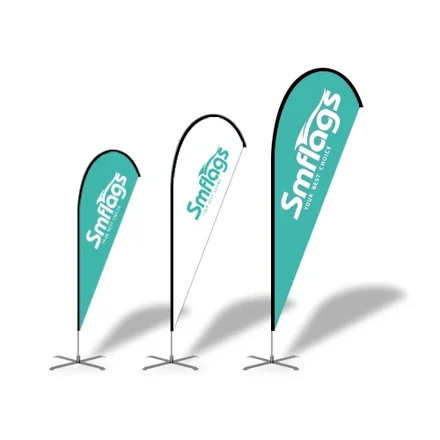
What the Two Terms Actually Mean
Single reverse means the design is printed once, on the front face of the fabric. The ink strikes through the weave, so the artwork is visible from the back as well, but reversed - text reads backwards. Double sided means two printed faces sewn either side of a block-out liner, so each side reads correctly. Everything else about the flag, the fabric, the sleeve, the pole and the base, is the same.
Why Single Reverse Is the Default
It is lighter and it is cheaper, which is why most feather and teardrop flags are ordered this way. A single layer flies more freely in light wind, and for a logo or a simple mark the reversed back face reads perfectly well from across a car park. If the budget has to stretch across twelve sites rather than one, single reverse is usually the right call.
When the Liner Earns Its Cost
Double sided is the answer when wording matters from both directions - a street frontage seen from two lanes of traffic, an exhibition aisle walked in both directions, a start gate people pass twice. The block-out liner stops the back print showing through the front, so neither face looks muddy. It costs more and it weighs more, so it needs a little more wind to fly.
How to Decide in One Question
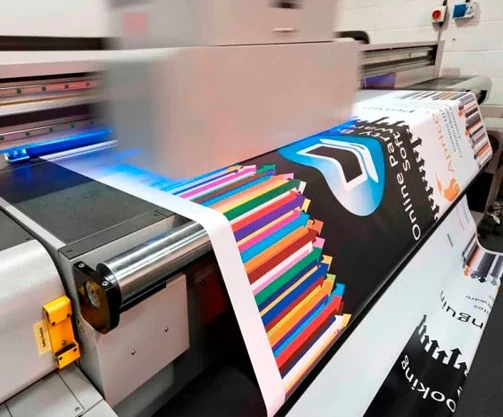
Ask where the viewer stands. One approach direction and a recognisable logo: single reverse. Two approach directions and text the reader has to actually parse: double sided. If you are unsure, order one of each as a sample - digital printing has no plate charge and no minimum quantity, so a pair costs very little to settle the argument.