
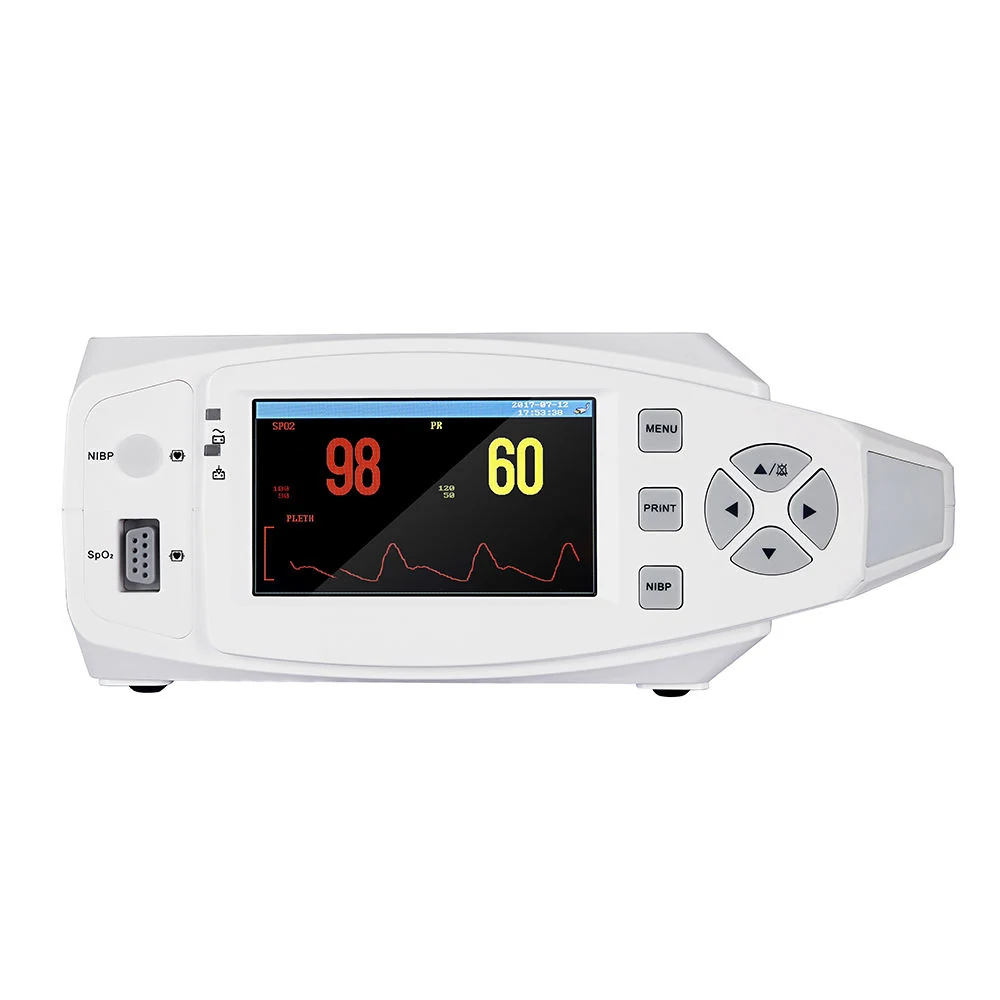
Vital Sign Monitor With Spot and Continuous Modes
A vital sign monitor operated from a 4 inch colour TFT touch screen, configurable across 3 or 5 lead ECG, NIBP, SpO2, temperature and CO2. SpO2 measurement stays accurate down to a 0.05 percent perfusion index and...
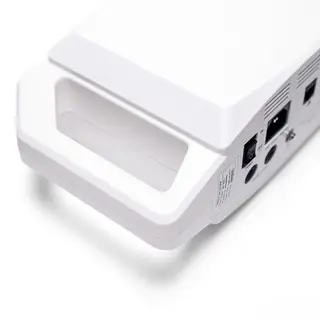
Product overview
What This Product Is And Who It Is For
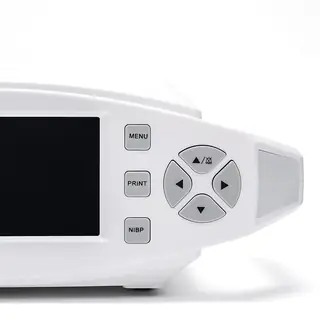
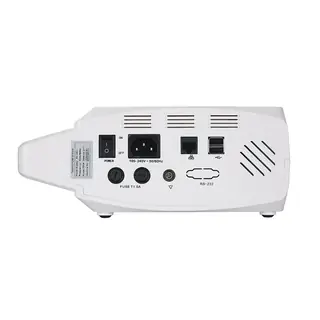
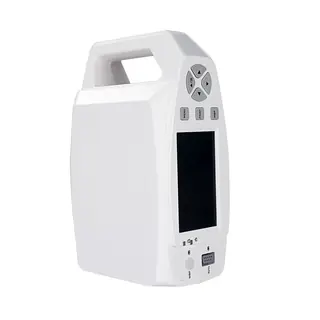
A vital sign monitor operated from a 4 inch colour TFT touch screen, configurable across 3 or 5 lead ECG, NIBP, SpO2, temperature and CO2. SpO2 measurement stays accurate down to a 0.05 percent perfusion index and performs in motion environments, with the perfusion index reported as a parameter from 0.05 to 20 percent. NIBP uses self-adaptive waveform amplitude adjustment and self-adaptive fast deflation algorithms. Two measurement modes are available: spot mode holding 100 user IDs with 200 episodes each, and monitoring mode recording continuously for 48 hours.
Problems It Solves
- Low perfusion and patient movement defeat ordinary SpO2 sensors, which the 0.05 percent low perfusion measurement addresses
- Spot checks written on paper get lost, so 100 user IDs store 200 episodes each
- Long cuff inflation times are uncomfortable on repeated measurement, which SAFD fast deflation shortens
- Trend deterioration is missed without continuous data, so monitoring mode records 48 hours
- Buying a full parameter set when only some are used wastes budget, so parameters are selectable
Who It Is For
- Hospital ward and emergency department buyers
- Recovery and observation unit managers
- Medical equipment distributors
- Veterinary hospitals and practices
- Private clinic and day surgery groups
Key benefits
Why Buyers Choose It
- SpO2 accuracy down to a 0.05 percent perfusion index reads patients that other monitors cannot, including poorly perfused and moving patients
- Perfusion index reported from 0.05 to 20 percent gives staff a signal quality measure rather than a bare saturation number
- Spot mode with 100 user IDs and 200 episodes each turns the monitor into a ward round device
- Monitoring mode records continuously for 48 hours for trend review
- SAWAA and SAFD NIBP algorithms shorten cuff time, which matters on repeated measurements
- Parameter sets can be selected so a department pays only for the parameters it uses
Application scenarios
Where It Is Used
Scenarios
- Ward round spot checks across a patient list
- Continuous monitoring in observation and recovery areas
- Emergency department triage and assessment
- Day surgery and procedural monitoring
- Veterinary use where extreme measurement conditions apply
- Distributor supply to hospitals and clinics
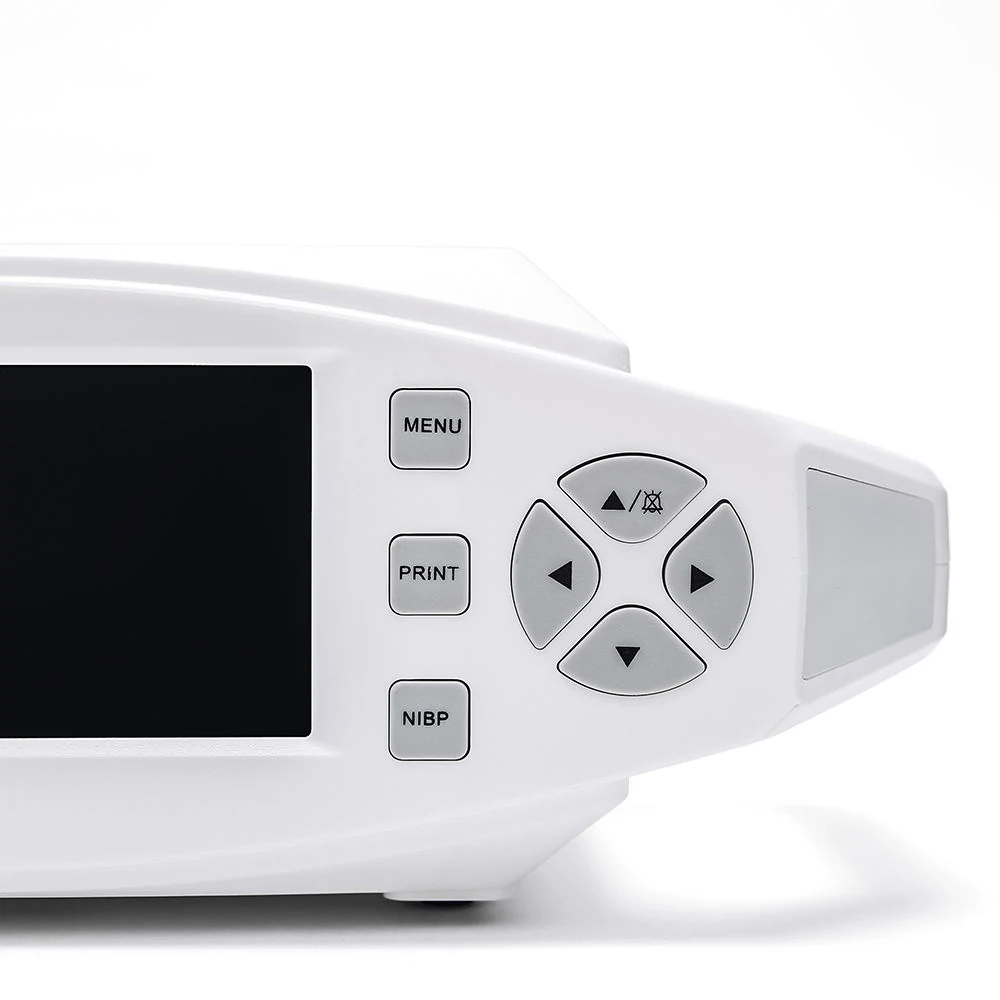
Technical features
How It Is Built
- 3 or 5 lead ECG with 3 waveform display
- SpO2 measurement accurate at a 0.05 percent perfusion index, with PI reported from 0.05 to 20 percent
- NIBP using SAWAA self-adaptive waveform amplitude adjustment and SAFD self-adaptive fast deflation
- 4 inch colour TFT touch screen
- Parameter options: 3/5-lead ECG, NIBP, SpO2 and temperature, or NIBP, SpO2, temperature and CO2
- Spot and monitoring measurement modes
- 100 user IDs storing 200 episodes each in spot mode
- 48 hour continuous recording in monitoring mode
- Visual and audible alarms with adjustable limits
- Historical data viewing and trend graph review
Specifications
Technical Data
| ECG | 3 or 5 lead, 3 waveform |
|---|---|
| SpO2 Low Perfusion Measurement | 0.05 percent |
| Perfusion Index Range | 0.05 percent to 20 percent |
| NIBP Algorithms | SAWAA and SAFD |
| Display | 4 inch colour TFT with touch |
| Parameter Sets | 3/5-lead ECG, NIBP, SpO2, Temp or NIBP, SpO2, Temperature, CO2 |
| Measurement Modes | Spot and monitoring |
| Spot Mode Storage | 100 user IDs, 200 episodes per user |
| Monitoring Mode Recording | 48 hours continuous |
| Alarms | Visual and audible with upper and lower limit setting |
Materials
- ABS housing
- Sensor and cuff accessories
Quality and compliance
Quality Control And Certification
Quality Control
- SpO2 performance is verified at low perfusion against the 0.05 percent specification
- NIBP behaviour is tested with the SAWAA and SAFD algorithms active
- Touch screen and interface functions are checked on each unit
- Data storage and trend review are function-tested
- Alarm limits and audible output are verified before packing
Customisation and comparison
Options And Alternatives
Customisation Options
- Parameter set selection for your department
- Sensor, cuff and accessory configuration
- Interface and manual language
- Mounting and trolley accessories
- Export carton quantity and marks
Compared With Other Options
- Basic spot check monitors
- A 0.05 percent low perfusion SpO2 measurement reads patients that basic sensors fail on
- Monitors without patient IDs
- 100 user IDs with 200 episodes each keep ward round readings attached to the right patient
- Full bedside monitors
- A 4 inch touch unit with selectable parameters costs less where only spot checks and short monitoring are needed
Use guide
How To Use It Correctly
Step
Select spot mode for ward rounds and monitoring mode for continuous observation
Step
Assign the correct user ID before taking a spot reading
Step
Check the perfusion index alongside the saturation value to judge signal quality
Step
Set alarm upper and lower limits appropriate to the patient
Step
Review stored data and trend graphs at the end of a monitoring period
Step
Clean sensors and cuffs between patients according to the facility protocol
Related products
Other Products In Medical Equipment
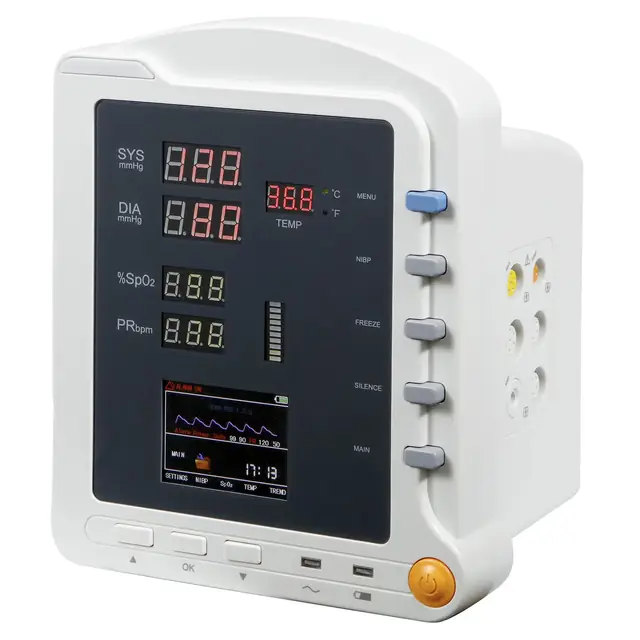
Multi Parameter Patient Monitor With 7 Inch Display
A compact multi-parameter patient monitor that integrates measurement modules, display and recorder into a single...
View product →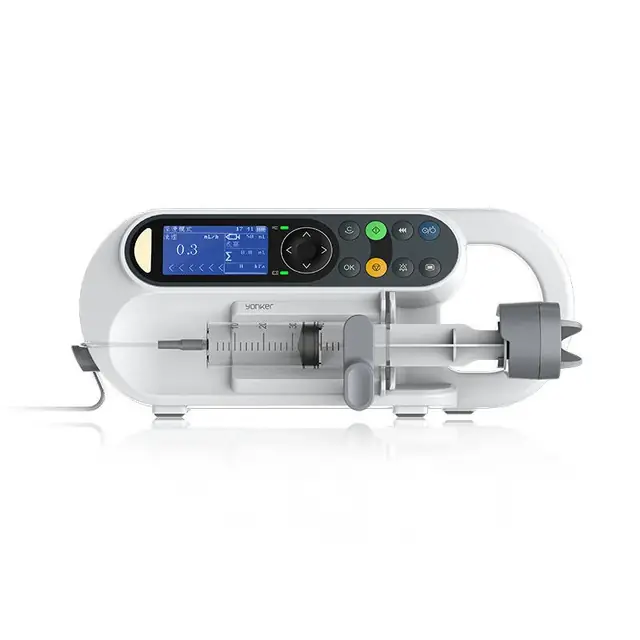
Veterinary Syringe Pump for 10ml 20ml and 50ml Syringes
A syringe pump built for veterinary use in pet hospitals, accepting 10ml, 20ml and 50ml syringes for controlled animal...
View product →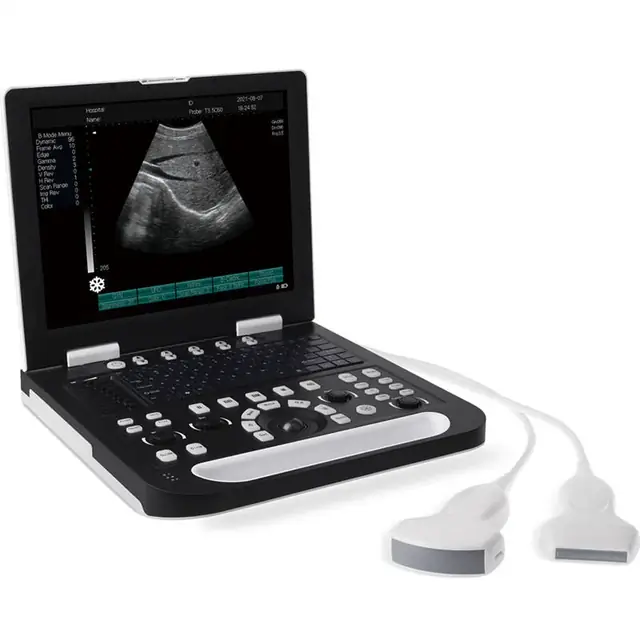
Laptop Colour Doppler Ultrasound System DUS50
A laptop-format colour Doppler ultrasound system, model DUS50, supplied for animal health diagnosis. The 15 inch LCD...
View product →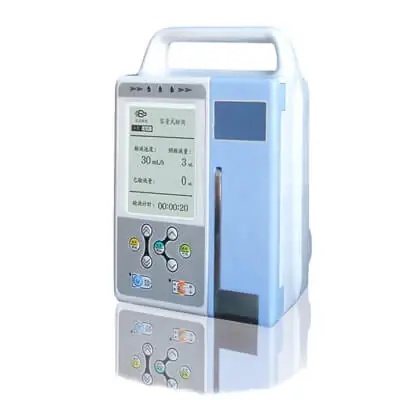
Volumetric Infusion Pump With Flow Drip and Time Modes
A volumetric infusion pump that delivers medication evenly across a set range, covering 0.1 ml/h to 1200 ml/h with a...
View product →Related reading
Industries Solutions And Guides
Hospitals and Clinics
Hospital and clinic buyers work against tender deadlines, infection control rules and a budget split across...
Diagnostic Imaging Centres
An imaging centre lives on throughput and on the patients it can actually scan. Systems that stall for tube...
Hospital Department Outfitting
Equipping a ward, a theatre or an outpatient department means buying furniture, equipment and consumables...
Export Logistics and After Sales
Qingdao sits next to the largest container port in North China, which is why import and export procedures and...
How Medical Ultrasound Equipment Works and How to Choose It
Ultrasound above 20,000 hertz is inaudible, highly directional and penetrates tissue. Diagnostic work uses 1...
Choosing a China Factory for Medical Products
Reputation, location, production capability and communication decide whether a factory suits your order. For...
FAQ
Vital Sign Monitor With Spot and Continuous Modes FAQ
How does the monitor perform on poorly perfused patients
SpO2 measurement is accurate at a perfusion index as low as 0.05 percent and performs in motion environments, with the PI value shown as a parameter from 0.05 to 20 percent.
How much data does it store
In spot mode, 100 user IDs with 200 episodes each. In monitoring mode, 48 hours of continuous recording with trend graph review.
Which parameter sets are available
3 or 5 lead ECG with NIBP, SpO2 and temperature, or NIBP, SpO2, temperature and CO2. Tell us your department requirement and we will quote that configuration.
What NIBP algorithms are used
SAWAA self-adaptive waveform amplitude adjustment and SAFD self-adaptive fast deflation, which shorten cuff time on repeated measurements.
Can it be used for animals
The SpO2 measurement is specified for accurate reading in extreme environments including large and small animals. Confirm your application and we will advise the sensor set.
What screen does it use
A 4 inch colour TFT with touch operation.
Request A Quote For This Product
Send your quantity, destination market and any labelling requirement. We confirm stock, lead time and the documentation that travels with the goods.