
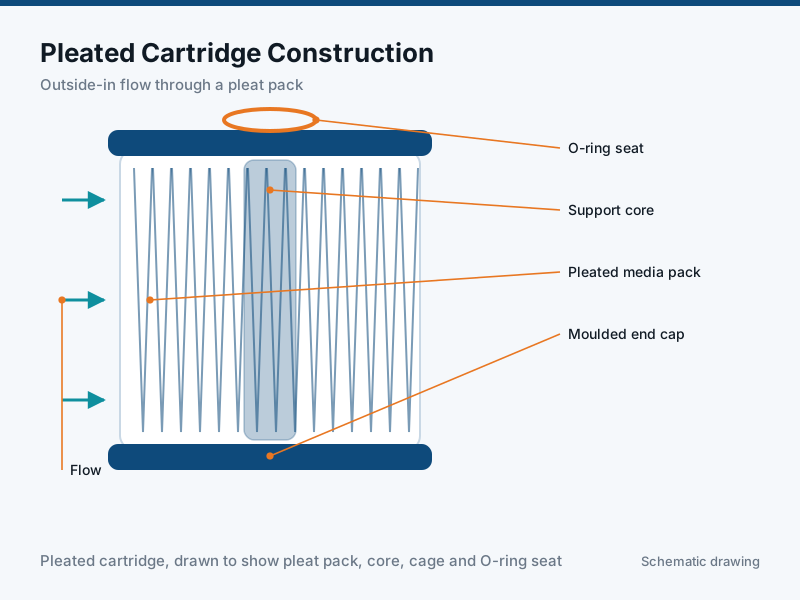
The Housing Is Fine It Is The Element That Costs You
Most plants that call us are not unhappy with their filter housings. They are unhappy with what the replacement elements cost and how long they take to arrive. Ripping out a working vessel to change supplier makes no sense, so the job is to match the element to the seat, the length and the flow direction already in service. That is a dimensional exercise, not a redesign.
How A Cross Reference Actually Runs
Send The Part Number
Problem: Catalogue codes are printed on the element and nowhere else, so nobody at the plant has them to hand.
Photograph the end cap and the label on the element you pull out at the next change-out and send the picture. That is usually enough for us to start.
Confirm The Envelope
Problem: Two cartridges with the same nominal length can still differ at the adapter and refuse to seal.
We check outer diameter, length, adapter or end cap style and flow direction against our series before quoting, and tell you if nothing matches.
Choose The Elastomer
Problem: A cartridge that fits perfectly still fails early if the O-ring compound is wrong for the fluid or the clean chemistry.
You tell us the fluid and the cleaning regime and we select from the compounds available in that series rather than defaulting to one.
Trial On A Real Run
Problem: A specification sheet does not tell you how an element behaves on your feed.
We quote a sample set in the exact configuration so you can log clean differential pressure and run length before switching.
Repeat Supply
Problem: The configuration gets lost between the person who trialled it and the person who reorders.
The confirmed order code stays on the account and on the carton, so a reorder is one message rather than a fresh specification exercise.
What Changes On The Line
- The installed housings stay where they are and no piping is touched
- The order code is written down once and reused on every reorder
- Change-out behaviour is proven on your feed before you commit volume
- Elastomer choice is made against your fluid rather than left at a default
Cartridges And Housings In This Solution
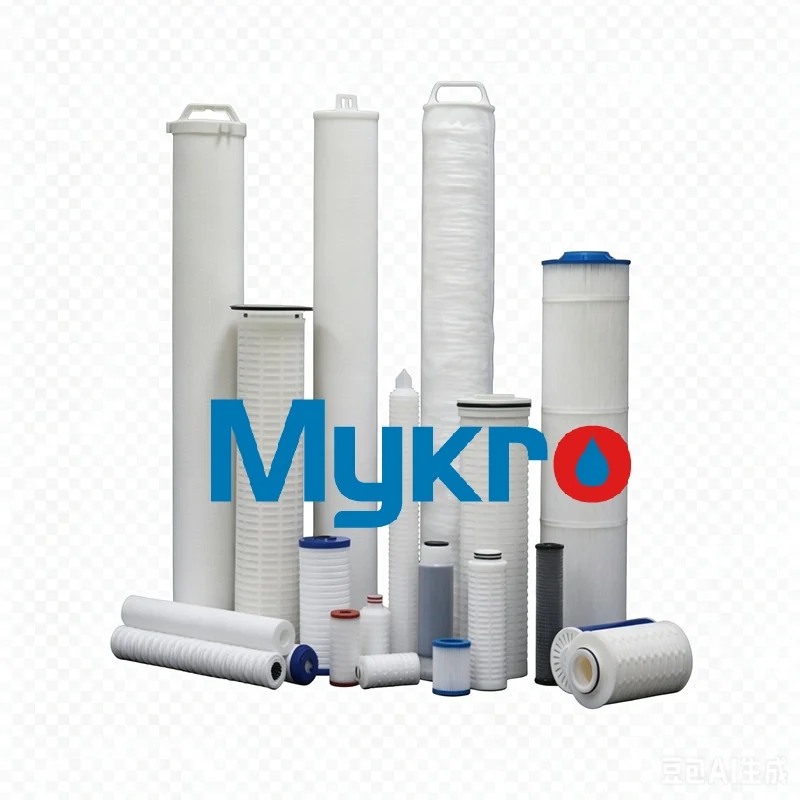
HFMV Series High Flow Filter Cartridges
HFMV is a 6.5 inch large diameter high flow cartridge with a vertically pleated polypropylene pack, an inner core and an injection moulded outer cage.
View Specifications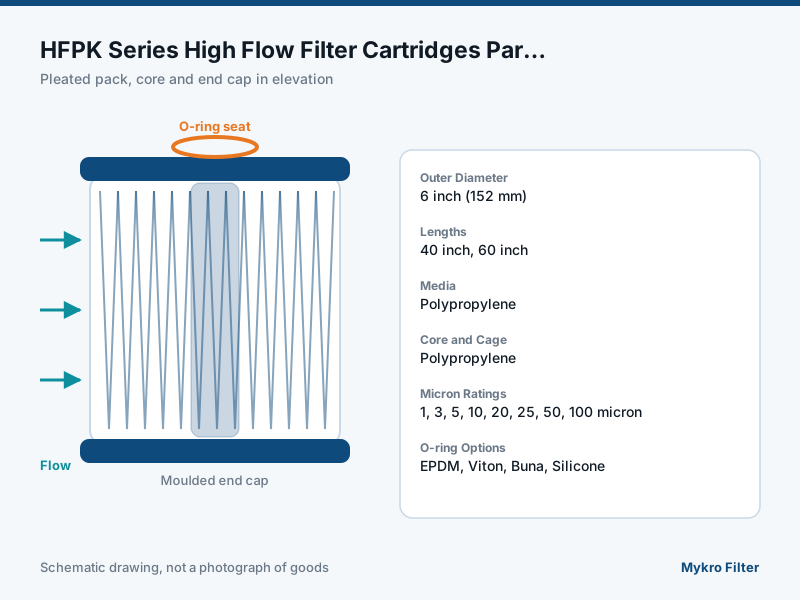
HFPK Series High Flow Filter Cartridges Parker Equivalent
HFPK is a 6 inch large diameter high flow cartridge with a pleated polypropylene media pack, an inner core and an injection moulded outer cage.
View Specifications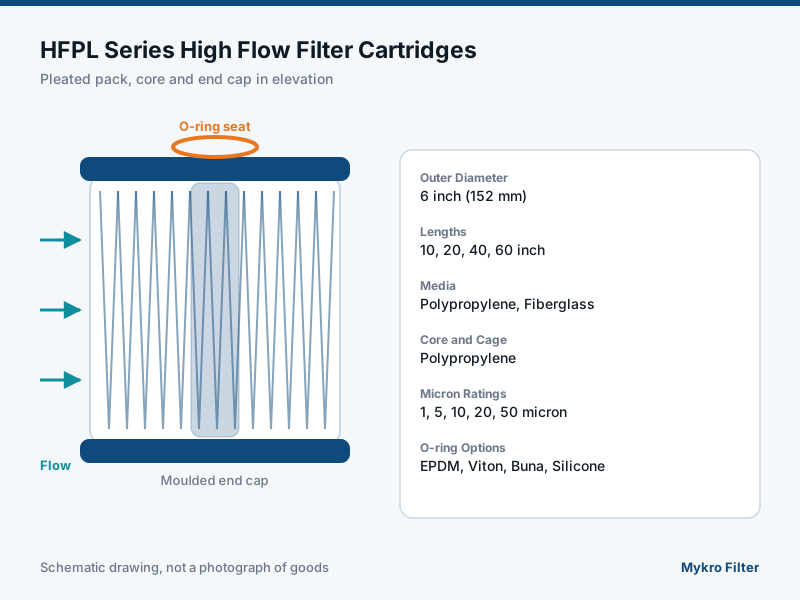
HFPL Series High Flow Filter Cartridges
HFPL is a 6 inch large diameter high flow cartridge with a vertically pleated polypropylene and fiberglass media pack, an inner core and an injection
View Specifications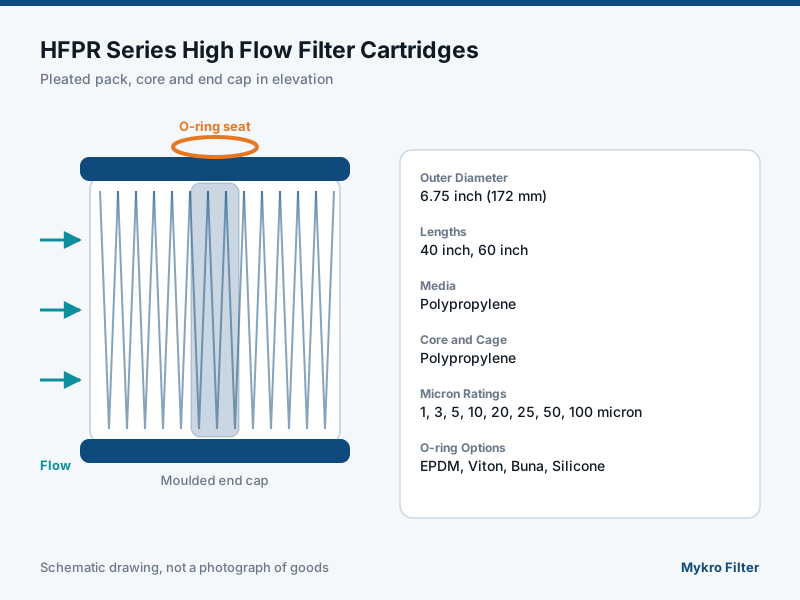
HFPR Series High Flow Filter Cartridges
HFPR is a 6.75 inch large diameter high flow cartridge with a multi-layer pleated polypropylene media pack, an inner core and an injection moulded out
View SpecificationsQuestions About This Solution
What do you need from me to start a cross reference?
What if nothing in your range matches?
Do you supply the OEM brands themselves?
Can you print our own part number on the carton?
How long does a sample take?
Send A Photo Of The Element You Pull Out Next
A picture of the end cap and label is usually enough for us to identify the series and quote an equivalent.