
process guide
How a Stainless Steel Sculpture Is Made
It Starts With the Site Not the Shape
The first step the workshop publishes is scheme design, and it is explicitly design for a customer's environment: the surroundings decide the content, the form and the colour before anything is drawn. That order matters. A shape chosen first and sited afterwards is how a square ends up with a piece that photographs well and means nothing when you stand next to it.
The Model Comes Before the Steel
Complex or large work is modelled small first, then scaled up from that small draft. This is also where the main support is designed, because the sculptor has to understand the load the piece will carry, its dimensions and its shape before any structure is committed. On a tall or cantilevered form, the skeleton is the real engineering and the visible surface is cladding.
How a Stainless Steel Sculpture Is Made
Turning the Model Into a Mould
The clay draft is then turned into a hard mould, normally plaster. This is the point at which an artwork becomes a manufacturing job: from here on the shape is fixed and repeatable, which is what makes a second casting or a matched pair possible.
Forging the Plate Over the Mould
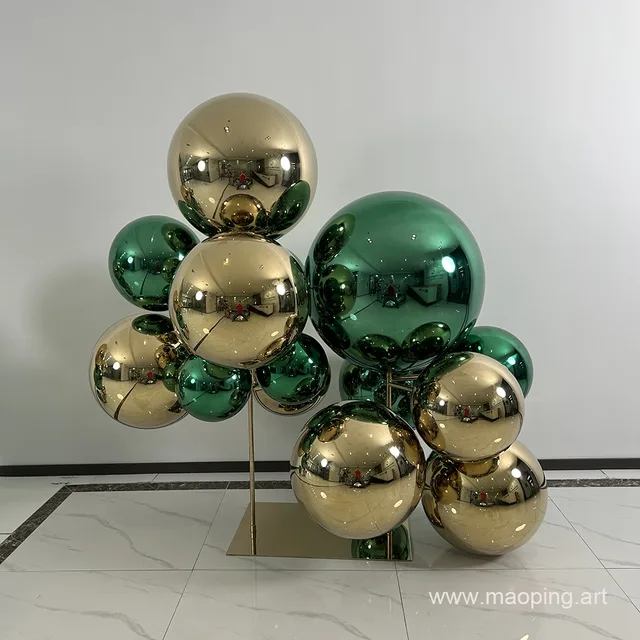
Steel plate is forged to the die to build the complete form, and the piece is ground repeatedly as it goes. For a sphere the sequence is easier to picture: plate is deformed over a mould into two hemispheres, the hemispheres are welded together, and the weld is polished until it disappears. That polished-out weld is the difference between a sphere and two half shells stuck together.
The Surface Is a Separate Decision
Stainless steel is silver white and glossy in itself, but the workshop also sprays it to whatever colour the scheme needs. Mirror polish throws the surroundings back at the viewer, brushed finishing calms the reflection and hides handling marks, and paint removes reflection altogether in favour of colour. The same shell can take any of the three, so the finish is chosen for the light on the site.
Assembly Is Welded Not Bolted
The final step is installation, and it is generally welded because a welded joint is more solid, with the sculpture's own skeleton carrying it once it stands. For anything shipped in sections, where the seams fall is a design decision made early: a seam that lands on a highlight will be visible forever, one that follows an edge will not.
What This Means for Your Timeline
Every one of those steps is real time in a workshop, which is why the listings state a production time of 35 to 45 days depending on the piece. Sea freight sits on top of that, and the foundation has to be ready before the piece lands. Work backwards from the date it has to be standing, not forwards from the date you place the order.
Products in This Guide
Parts Referred To Above
Outdoor square apartment art deco stainless steel sphere sculpture
View specification
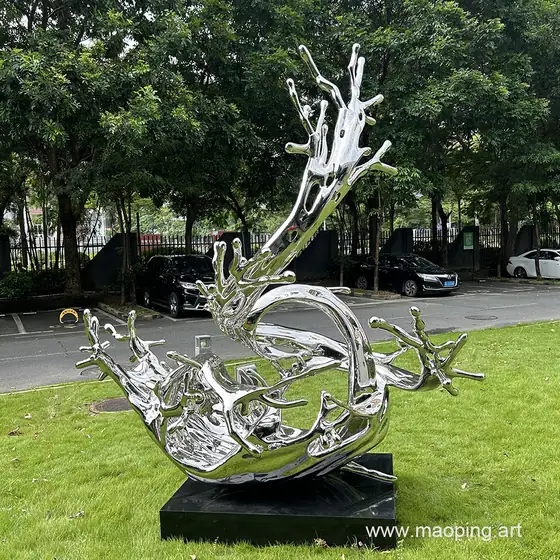
Outdoor square apartment art deco stainless steel spray sculpture
View specification
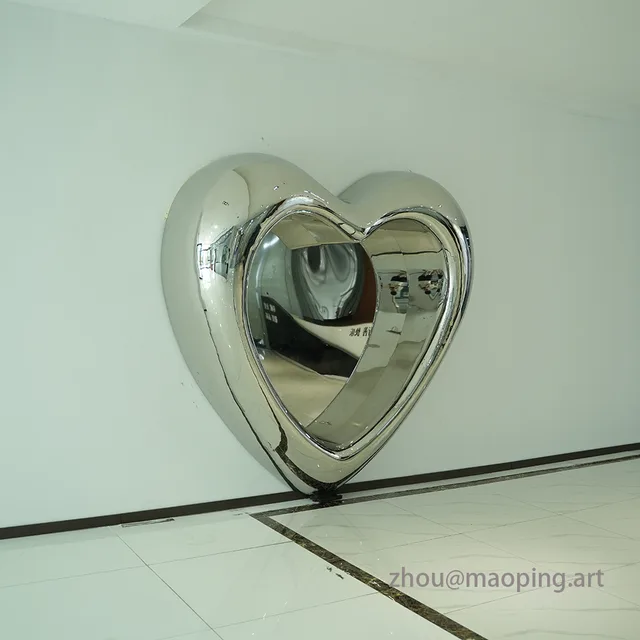
Interior home decoration art stainless steel wall sculpture
View specification
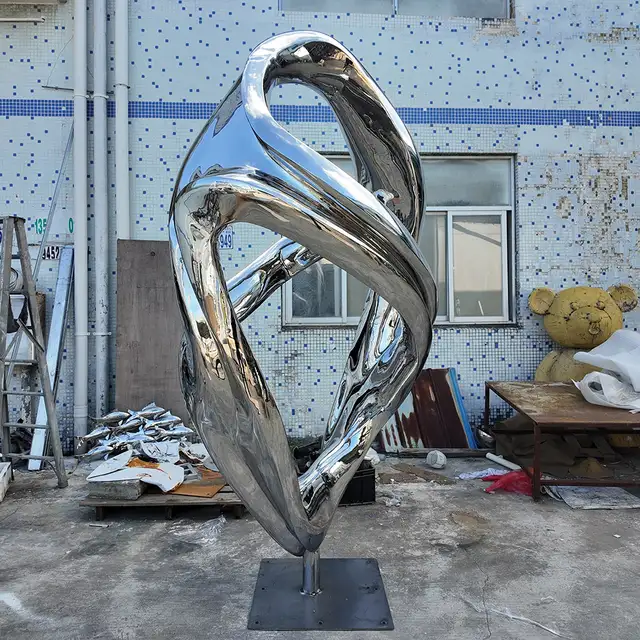
240cm Outdoor square decorative art stainless steel abstract spiral sculpture
View specification
Keep Reading
Ranges Industries and Other Guides
Questions Buyers Ask
Questions on This Topic
Do I need a drawing to start?
No. The workshop states that it takes orders according to a photo or a drawing from the customer. A reference image, a height and a description of the site are enough to begin the scheme design.
Why is the weld polished rather than left visible?
On a mirror finish a proud weld catches light differently from the surrounding surface and breaks the form. Grinding the weld back and polishing it out is what makes two hemispheres read as one sphere.
Can the same design be made in another material?
Usually yes. The workshop works in 304 and 316 stainless steel, corten steel, bronze and fiberglass, and the choice changes the fabrication route rather than the form.
How big can a piece be?
The company states stainless steel spheres from 25 mm to 10 m in diameter, and that it can produce metal balls of almost any size meeting a specification. Installed work recorded on this site runs up to 3750 mm.
What protects the finish in transit?
Packing is in a wooden case, on a Factory Direct and Door to Door Delivery basis. A polished surface cannot be touched up on site, so the crate is part of the product.
Apply This to Your Own Line
Send the duty, the pressure and a photograph of the existing head. We will confirm the pattern, the size and the material.