The centre bore is the hole in the middle of the wheel. What sits in that hole decides how the wheel is located on the vehicle.
The hub of a vehicle has a raised machined spigot in the middle of the stud circle. The centre bore of the wheel is the hole that sits over that spigot.
When the two match, the wheel is located by the spigot. The fasteners then only have to clamp the wheel against the hub face, not position it.
A hub centric fitment is one where the wheel bore matches the hub spigot. This is how a vehicle manufacturer designs the fitment, and it is why original wheels sit true with no effort.
Hub centric wheel spacers, such as Hub Centric Wheel Spacer B, carry the same idea through the spacer: the spacer bore fits the hub spigot, and the spacer's own machined lip locates the wheel.
A lug centric fitment is one where the wheel bore is larger than the hub spigot, so the wheel is positioned by the taper of the nuts or bolts as they are tightened.
This is common with aftermarket wheels, which are often made with a large bore so that one casting can be sold for many vehicles. It works, but it depends on the fasteners being drawn down evenly.
A hub centric ring, also called a spigot ring, is a sleeve that drops into an oversized wheel bore and reduces it to the hub spigot diameter. The wheel is then located by the hub again.
MAMA WHEEL publishes 162 O.D. / I.D. pairs, in aluminium alloy and in plastic. The outer diameter matches the wheel bore, the inner diameter matches the hub spigot.
Measure the wheel centre bore and the hub spigot diameter, then look for the pair that matches. A wheel bore of 73,1 mm on a hub spigot of 57,1 mm needs a 73,1 / 57,1 ring, and that pair is on the published chart.
If either figure falls outside the published range of 57,1 mm to 76,1 mm outer and 54,1 mm to 74,1 mm inner, send both measurements with your enquiry so availability can be checked.
FAQ
It is how vehicle manufacturers design the fitment, and it removes the need for the fasteners to position the wheel. That is why hub centric spacers and spigot rings exist.
It is a lug centric fitment at that point. A spigot ring restores hub location, which is why the rings are listed in 162 sizes.
Aluminium alloy and plastic. Both cover the same published size chart.
Measure the diameter of the machined hole in the middle of the wheel, and the diameter of the raised spigot on the hub. The first is the ring O.D. and the second is the ring I.D.
Related Products
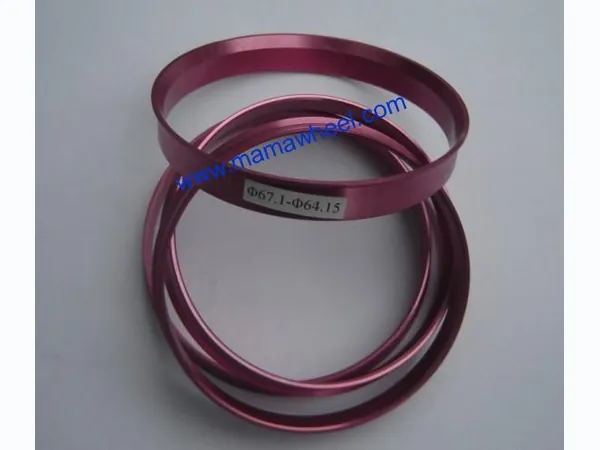 Hub Centric Rings
Aluminium alloy hub centric rings, also called spigot rings, in 162 published O.D./I.D. pairs.
View details →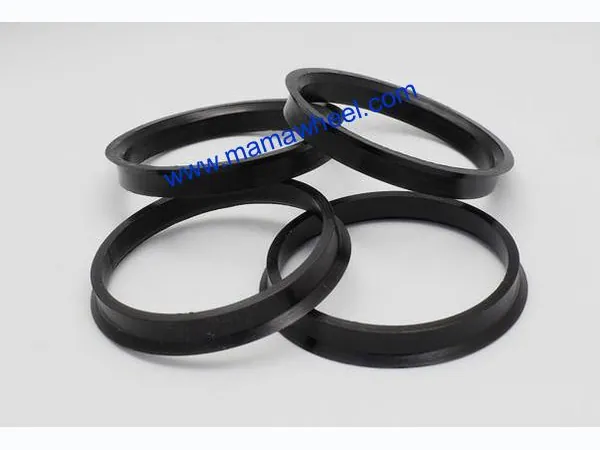 Hub Centric Rings
Plastic hub centric rings, also called spigot rings, in the same 162 published O.D./I.D. pairs.
View details →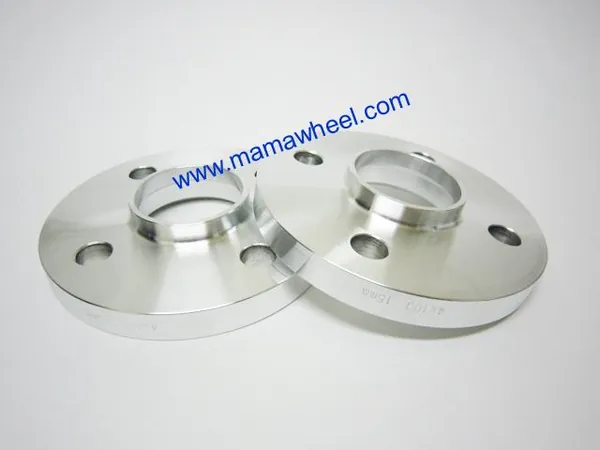 Wheel Spacers
Hub centric 6061-T6 aluminium spacer in 10 mm, 12 mm, 15 mm and 20 mm, in 4 and 5 lug patterns.
View details →Once you have the bolt pattern, the centre bore and the thread size, email them across and we will confirm the part.