
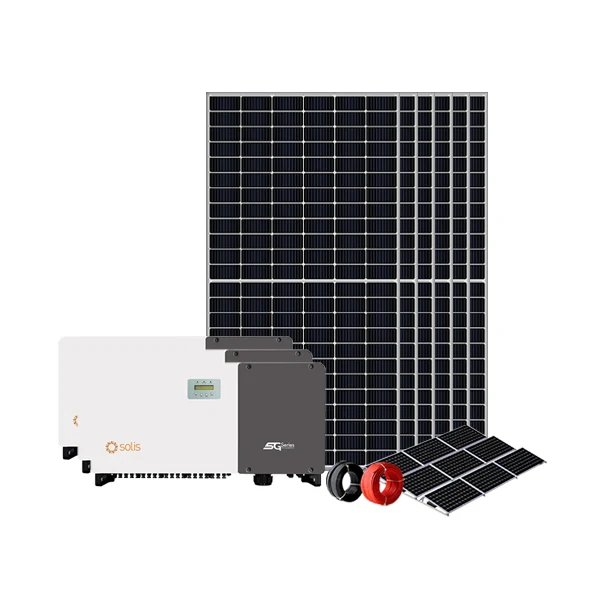
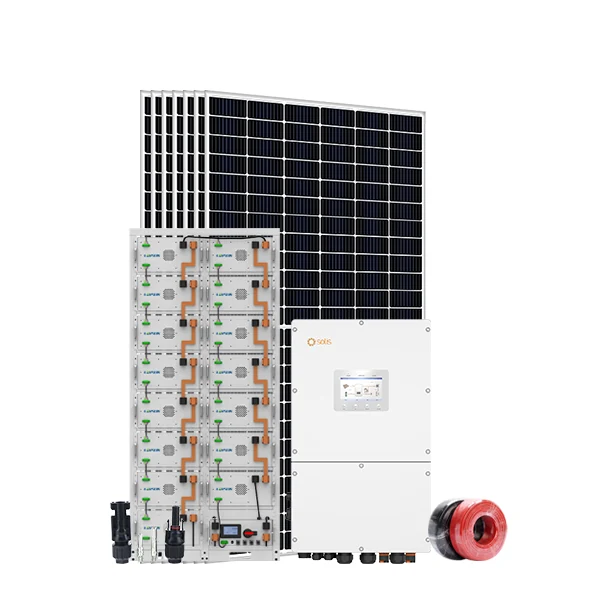
Commercial On Grid Solar System 1MW
1 MW
Commercial On Grid Solar System 1MW packages cells, racks, BMS, thermal management and fire protection into a single shipping-container footprint rated at 1 MW, so the site work reduces to foundation, cabling and commissioning.
What This Product Changes On Your Project
- Modular capacity - additional units run in parallel as the site load or tariff exposure grows
- Sized for peak shaving and demand-charge reduction, where the payback is a billing line item rather than a generation estimate
- Remote monitoring over standard industrial protocols, so the system reports into an existing SCADA or EMS
- Outdoor-rated enclosure removes the cost of a dedicated, ventilated battery room
- Pre-integrated and factory-tested, so site work is foundation, cabling and commissioning rather than assembly
Application Scenarios
- Manufacturing plants shaving monthly demand peaks set by start-up loads
- Commercial campuses shifting PV output from midday into the evening tariff window
- Industrial sites bridging short utility interruptions without starting a generator
- Grid-side projects providing frequency and capacity support
- Sites whose grid connection cannot be upgraded, using storage instead of more feeder capacity
Who It Is For
- Distributors supplying C&I storage into their own installer network
- EPC contractors delivering commercial and industrial storage projects
- Industrial plant engineers managing demand charges and process continuity
- Independent power producers and grid-side project developers
Problems It Solves
- Multi-vendor integration risk when cells, PCS and controls come from three suppliers with three warranties
- Demand charges set by a handful of peak intervals each month rather than by total consumption
- Grid connection capacity that will not be upgraded in time for the site's growth plan
- Curtailment or export limits that waste PV output the site has already paid for
Technical Features
- Fire detection and suppression designed into the enclosure rather than added by the installer
- Parallel operation of multiple units under one energy management layer
- Industrial communication interfaces for SCADA, EMS and remote diagnostics
- Cells, racks, BMS, thermal management and fire suppression integrated and tested before shipment
- Multi-level BMS monitoring cell voltage, current and temperature and reporting to the site controller
Published Specification Data
These figures come from the manufacturer datasheet for this model. Where a value you need is not listed, ask for the full datasheet rather than assuming a typical figure.
| Rated power | 1 MW |
|---|
Quality Control
- Packing inspection and photo record before container loading
- Incoming inspection of cells, power electronics and structural parts before assembly
- Capacity and internal-resistance grading so cells within a pack are matched
- Full-function test on every finished unit, not a sample from the batch
- Insulation and dielectric withstand testing on completed assemblies
Customization Options
- Grid code and AC voltage set for the destination market
- Enclosure colour and customer branding
- Communication protocol mapped to the site's existing EMS or SCADA
- Cooling and ingress rating selected for the site climate
How It Compares With The Alternatives
| A site-built battery room | The enclosure, thermal system and fire protection ship as one tested assembly, so the site does not have to build, ventilate and certify a room for them. |
|---|---|
| A diesel generator | Storage responds in milliseconds and has no fuel logistics, but it holds a finite energy budget - most industrial sites end up running both, with storage taking the peaks. |
| Grid connection upgrade | A capacity upgrade is a utility timeline the site does not control. Storage is a capital item the site can schedule itself. |
Getting This Product Right On Site
- 1
Send twelve months of interval meter data so the system is sized against the real demand curve, not the connected load
- 2
Confirm grid code, AC voltage and any export limitation required by the utility before production
- 3
Prepare a level foundation, cable routes and a clear service envelope around the enclosure
- 4
Commission with the supplier's sequence and record the baseline before the first billing cycle
- 5
Review the demand-charge line on the first two bills against the model and retune the dispatch schedule
Commercial On Grid Solar System 1MW - Buyer Questions
How is the system shipped and what does the site need to prepare
Can several units run in parallel
Do you support commissioning and after-sales on site
What is the minimum order quantity
What is the lead time on this system
Can the system be sized for our specific load profile
Other Commercial Solar System Models
Background For This Specification Decision
Why demand charges make a clearer business case than generation savings, and what data you need to model it honestly.
Read the guide →ChecklistCommissioning Checklist For Commercial Solar and StorageThe checks that separate a system that works on the day from one that is still being argued about three months later.
Read the guide →Factories, warehouses, cold stores and commercial campuses where the electricity bill is driven as much by demand charges as by consumption.
See the application →Utility Scale and Grid Side ProjectsGrid-connected storage and generation projects where the equipment is assessed on certification, dispatch behaviour and long-term degradation.
See the application →Agriculture and Rural ElectrificationFarms, irrigation schemes, processing sheds and rural communities where the grid is weak, distant or absent.
See the application →Request A Quote For Commercial On Grid Solar System 1MW
Tell us the quantity, the destination market and the application. We reply within 12 hours with lead time, certification and pricing.