
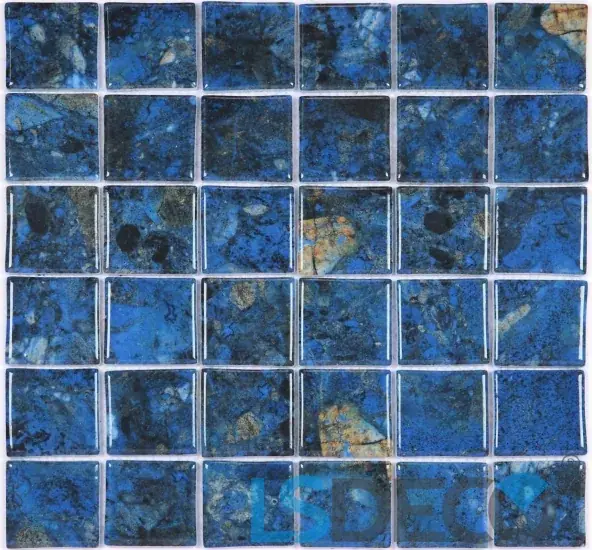
Glass or Porcelain for a Swimming Pool
Both materials appear on almost every pool we supply, usually on the same project. The question is not which is better but which belongs where.
How the two materials behave under water
Crystal glass mosaic is coloured through the body and refracts light, so a blend keeps its depth once it is submerged. That is why waterline bands and full-immersion feature walls are almost always glass in this catalogue — series such as Waterside, Semporna, Plam and Penny Round are published specifically as pool glass tile.
Glazed porcelain reads as a flatter, more uniform colour under water. That flatness is an advantage on a large deck, where a busy glass blend would be exhausting, and a disadvantage on a waterline, where depth is exactly what you want.
Slip resistance and where people walk
Steps, surrounds and beach entries carry wet foot traffic, and that is porcelain territory. Several porcelain items in this catalogue are published with a non-slip surface, and the 20 mm outdoor pavers are specified for heavy-traffic external areas.
Glass mosaic on a walking surface is a specification decision that needs the finish checked first. If a designer wants glass underfoot, ask for the surface description on that specific series before writing it into a schedule.
Format and how much cutting the installer faces
Glass mosaic is supplied on sheets — 1" x 1", 1" x 2", 2" x 2", 2" x 3" and larger formats all appear in the catalogue — so a curved waterline is handled by cutting mesh between chips rather than cutting tile.
Porcelain pool tile in a 6" x 6" format on a 12" x 12" sheet covers ground faster on straight runs but needs real cuts at a radius. Freeform pools generally favour smaller glass formats at the waterline for this reason alone.
A normal split on one project
Waterline and any submerged feature in glass mosaic; steps, benches and the surround in non-slip porcelain; plant room and back-of-house in ceramic. All three lines come from this catalogue, which is the point of consolidating them on one shipment.
Everything in this guide reflects what LSDECO publishes for the series concerned. Where a figure is not published — a slip rating, a thickness, a test report — we say so and ask the factory rather than estimating it.
Collections This Guide Applies To
Other Guides
- Chip Size Sheet Size and Why Orders Come Up Short
- Choosing a Waterline Tile You Will Still Like in Five Years
- Where 20 mm Porcelain Pavers Earn Their Cost
- Kit Kat Tile Is a Format Not a Trend
- What To Check Before Your First Order From Foshan
- Mounting Types and What They Mean on Site
- Keeping a Tiled Pool and Bathroom Looking New
Items Referenced in This Guide
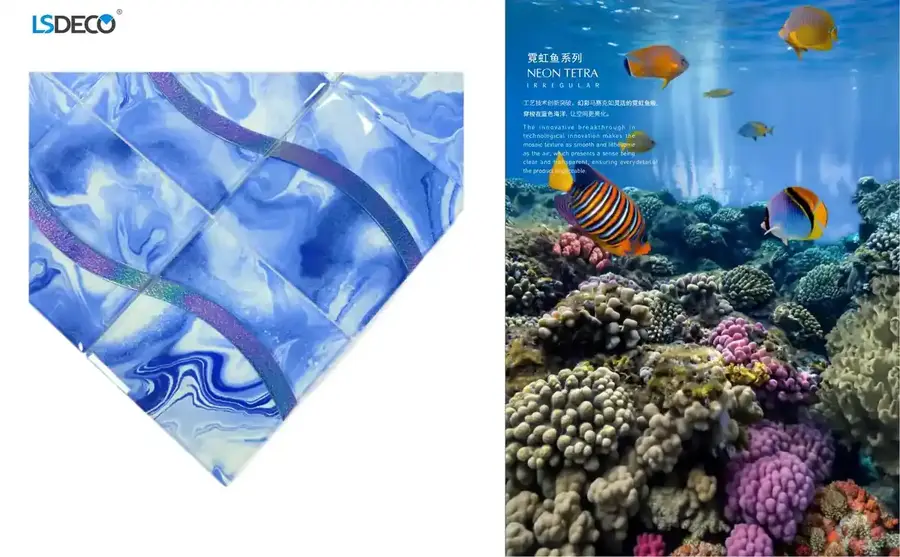
Neon Tetra Series Glass Pool Mosaic Tile
A smooth, clear glass mosaic with a light, transparent quality across the blend, developed f…
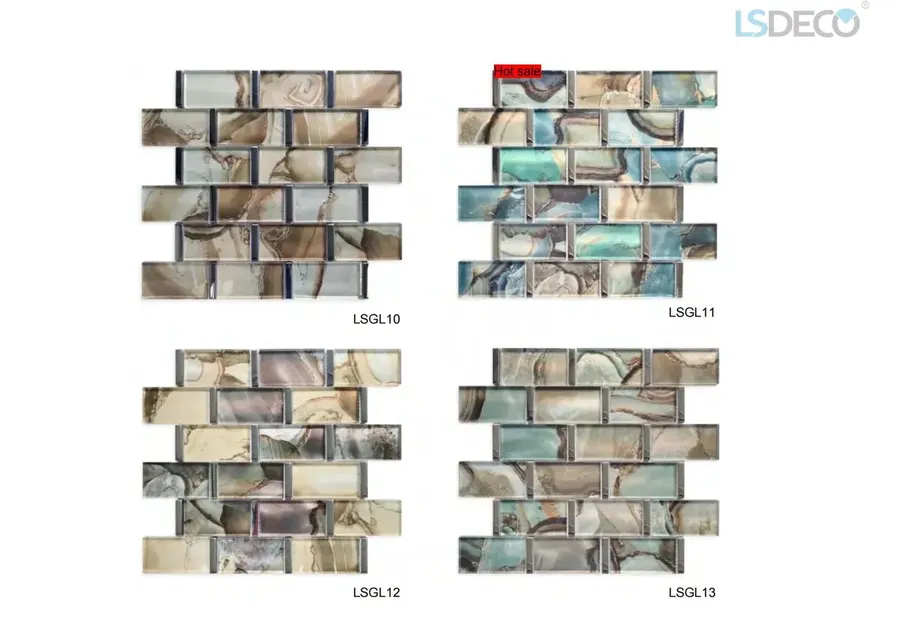
Goelia Glass Mosaic Tile
This elegant surface glass tile brings subtle textures and impressive classicism. Goelia is …
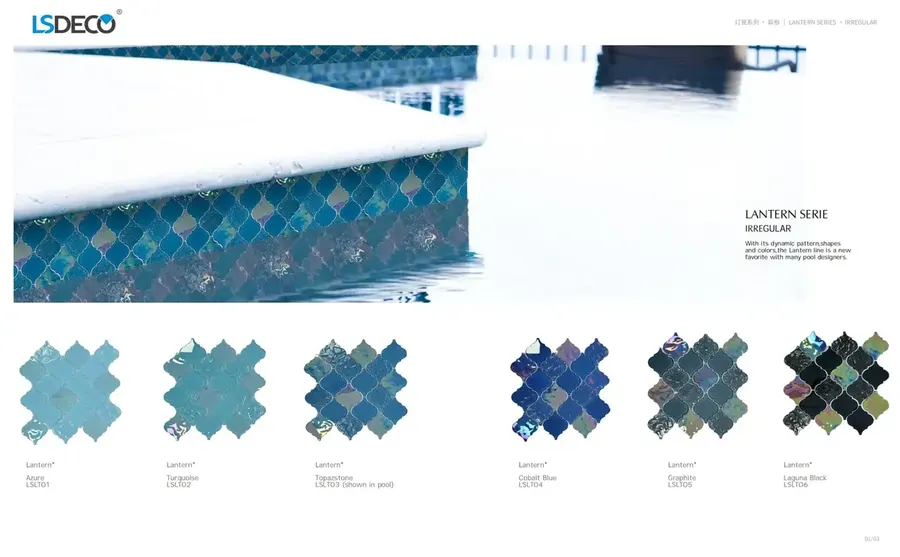
Lantern Irregular Pool Glass Mosaic Tile
This lantern irregular with its dynamic pattern, shapes and colors, the Lantern line is a ne…
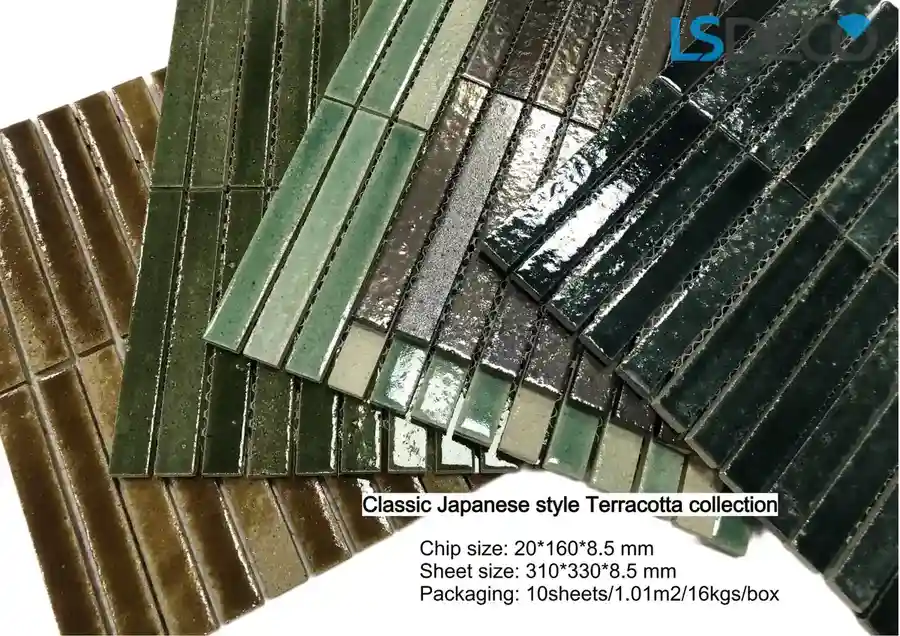
20×160mm Classic Japanese style Terracotta collection
Classic Japanese style Terracotta collection.
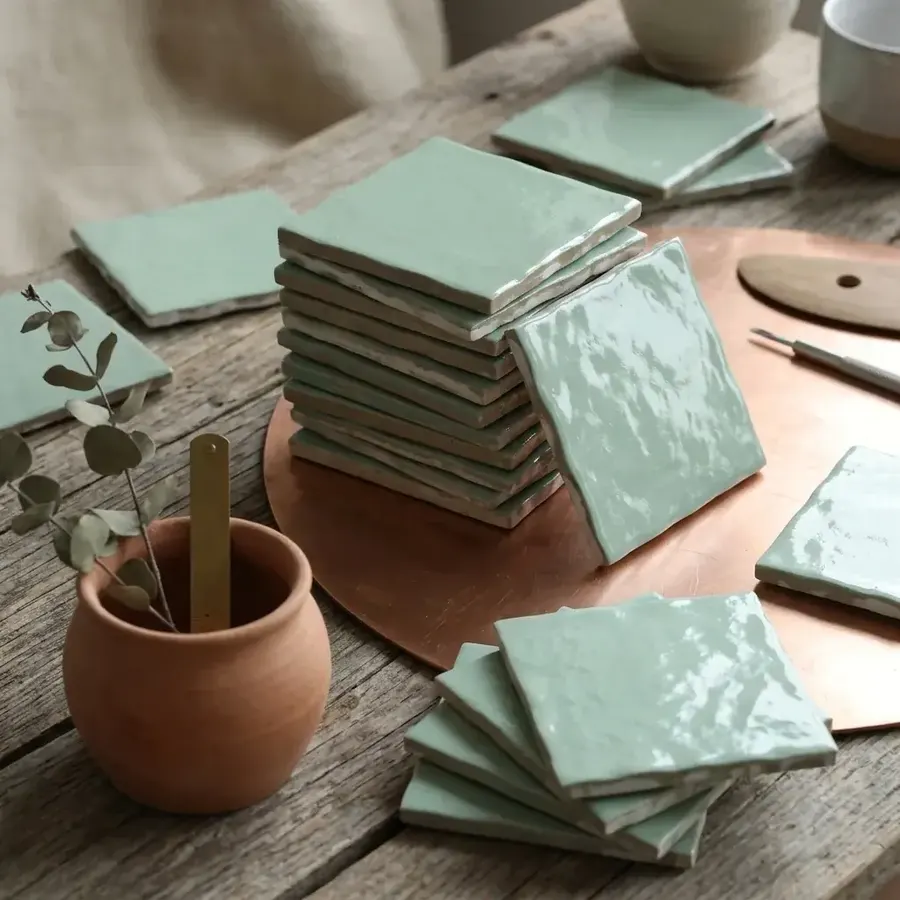
100×100mm Brisbane Porcelain Series
Brisbane Series now available for sampling.
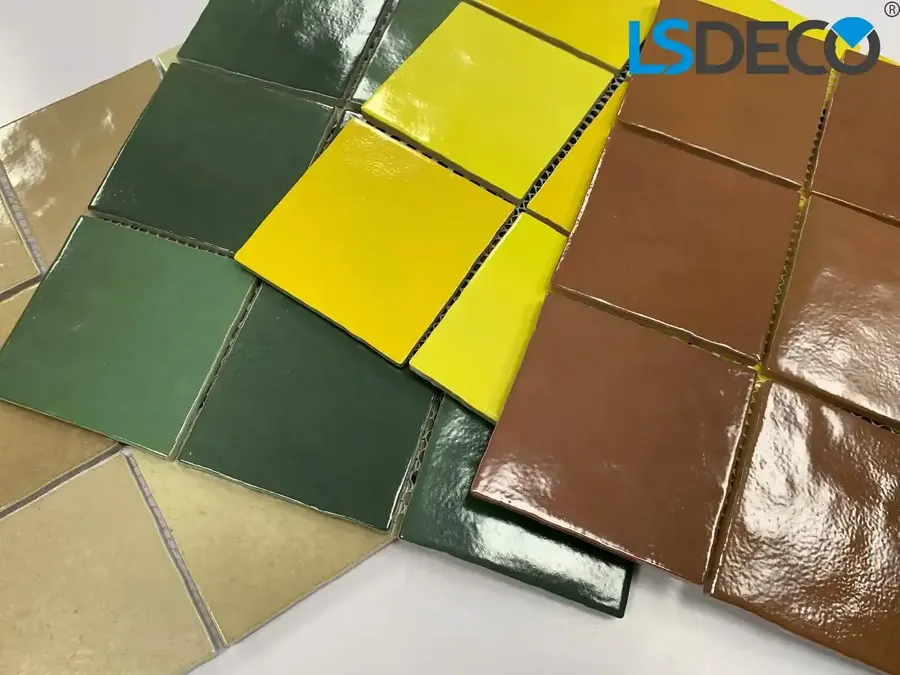
95×95mm Mesh Mounting Newcastle Porcelain Series
The gradient glaze gives a rich.
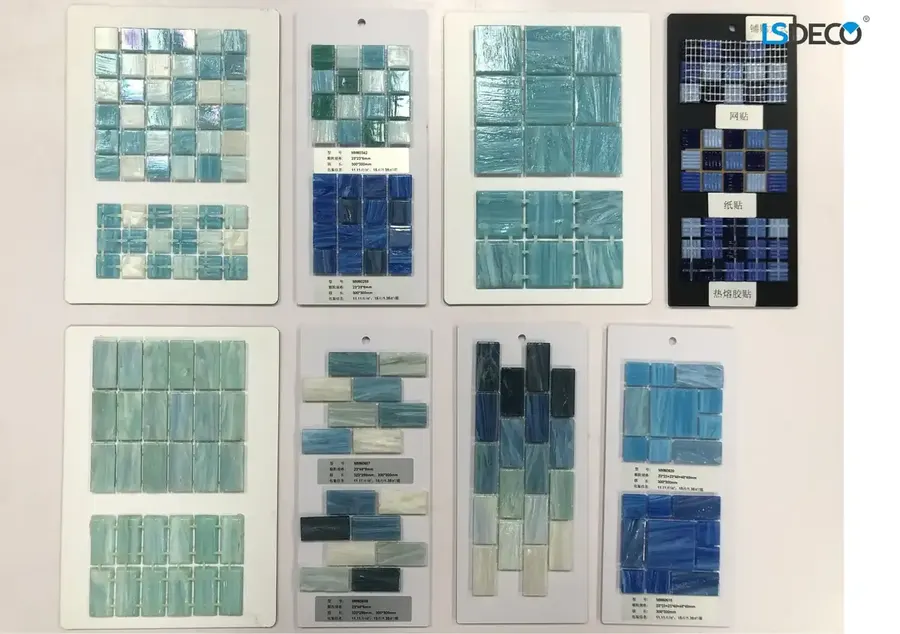
Hot Melting Glass Dot-Mounting Series
The Hot Melting Glass Dot-Mounting Mosaic Series featuring rich colors and textured finishes…
Neon Tetra Series Glass Pool Mosaic Tile
A smooth, clear glass mosaic with a light, transparent quality across the blend, developed f…
Questions on This Topic
Can glass mosaic be used on a pool floor?
It is done, but the surface finish of the specific series decides whether it is sensible. Ask us for the published surface description of that series before specifying it underfoot.
Does glass mosaic fade in strong sun?
Colour in crystal glass mosaic is in the body of the chip rather than printed on it, which is why it is used for waterlines. For a specific series, ask us what the manufacturer states before you commit a large exposed area.
Which is easier to repair after damage?
Mosaic on sheets is easier to patch locally because you can lift and replace a few chips. Keep a spare sheet or two from the original order — matching a blend years later is the hard part.
Still Deciding Ask Us Directly
Send the drawing, the area or the series you are weighing up. We would rather answer a question before the order than solve a problem after it.