
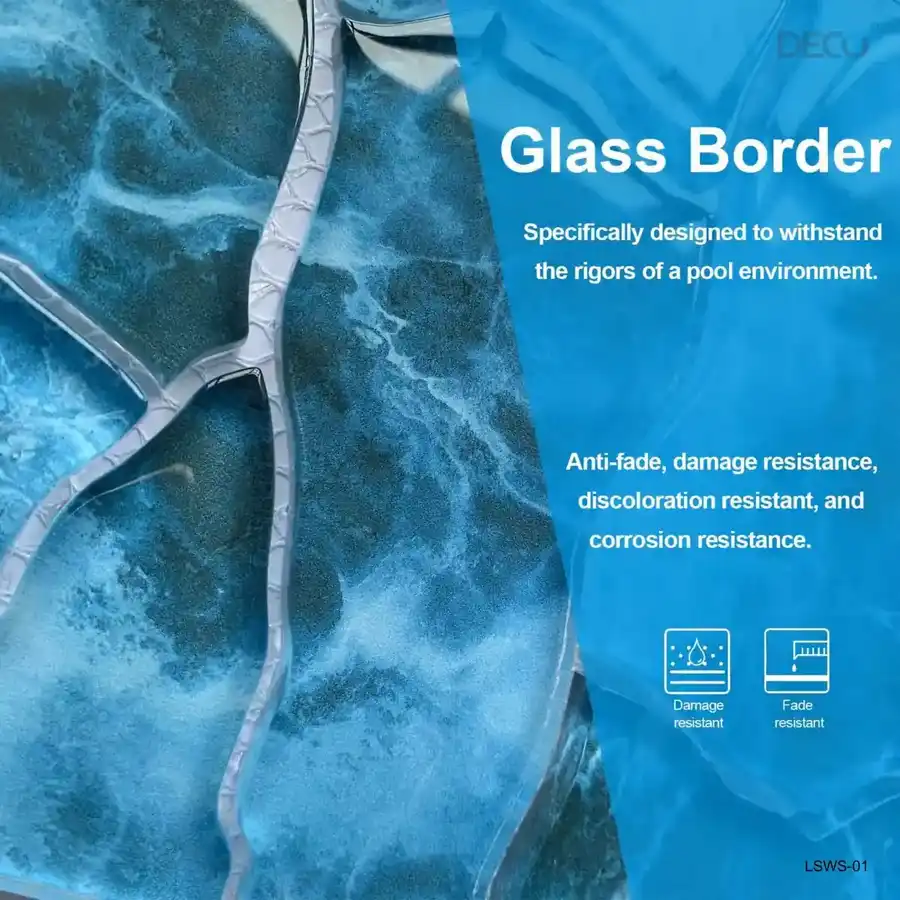
Mounting Types and What They Mean on Site
How a mosaic is held together before it is fixed decides how it is handled on site — and it is the part of the specification buyers most often skip.
The common mounting methods
Mesh-mounted sheets are backed with a fabric grid and are the general-purpose option: the installer beds the sheet directly, cuts the mesh at corners and adjusts chip by chip if needed.
Dot-mounted sheets, which LSDECO publishes as its own range, join chips with small adhesive points instead of a full backing. Less material sits between the tile and the adhesive bed, which matters in wet and submerged work.
Face-mounted (paper-faced) sheets are fixed face-down and the paper is washed off after the adhesive sets, leaving the back fully in contact with the bed.
What to confirm before the first sheet goes up
Confirm the mounting type for the specific item, because it changes the adhesive and the sequence. Check whether the mounting is visible through translucent glass chips — with clear glass, a heavy backing can read through.
Set out from a full sheet at the most visible corner and take the cuts to the least visible one.
Grout and the details that show
Grout colour changes a blend more than most people expect: a dark grout turns a pale glass blend into a graphic grid, a matched grout lets the colour float. Test on a spare sheet before grouting the pool.
Movement joints, the skimmer surround and the step nosing are where mosaic installations fail. They are detailing problems, not tile problems, and they are worth drawing before the pallet arrives.
Everything in this guide reflects what LSDECO publishes for the series concerned. Where a figure is not published — a slip rating, a thickness, a test report — we say so and ask the factory rather than estimating it.
Collections This Guide Applies To
Other Guides
- Glass or Porcelain for a Swimming Pool
- Chip Size Sheet Size and Why Orders Come Up Short
- Choosing a Waterline Tile You Will Still Like in Five Years
- Where 20 mm Porcelain Pavers Earn Their Cost
- Kit Kat Tile Is a Format Not a Trend
- What To Check Before Your First Order From Foshan
- Keeping a Tiled Pool and Bathroom Looking New
Items Referenced in This Guide
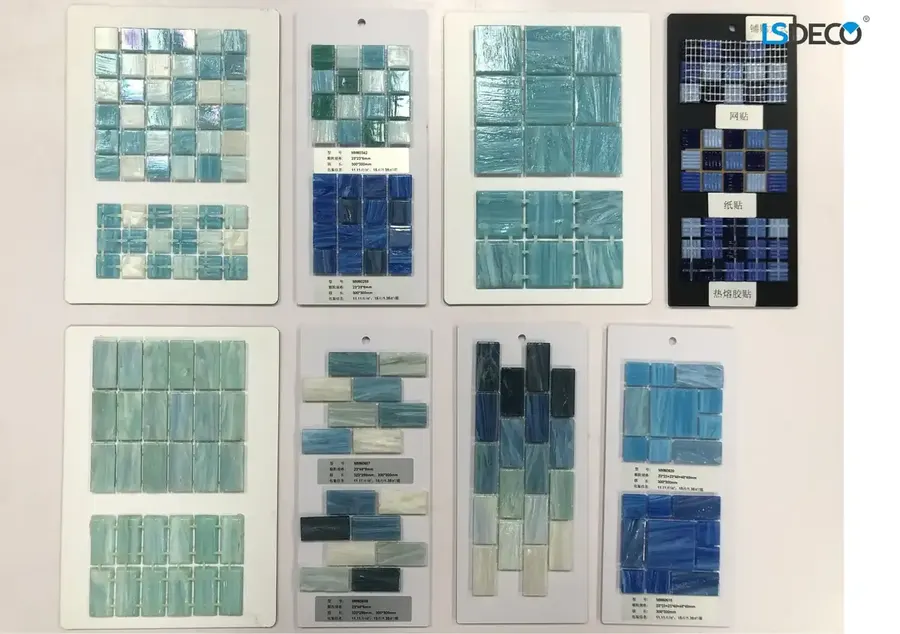
Hot Melting Glass Dot-Mounting Series
The Hot Melting Glass Dot-Mounting Mosaic Series featuring rich colors and textured finishes…
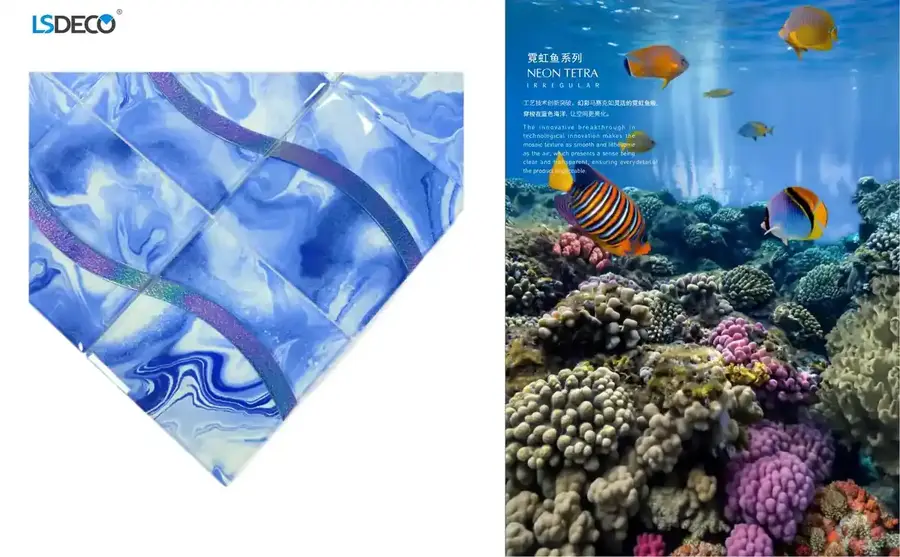
Neon Tetra Series Glass Pool Mosaic Tile
A smooth, clear glass mosaic with a light, transparent quality across the blend, developed f…
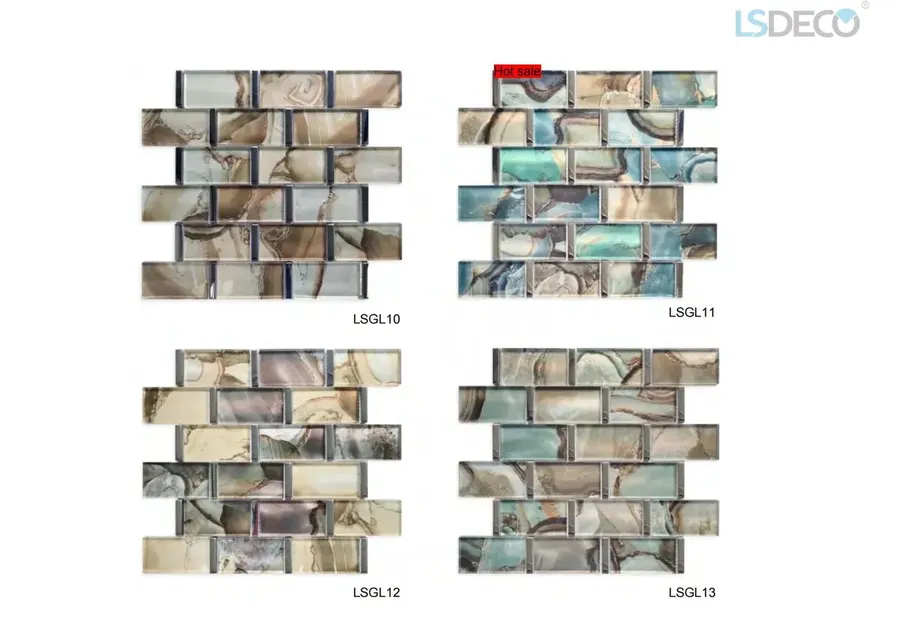
Goelia Glass Mosaic Tile
This elegant surface glass tile brings subtle textures and impressive classicism. Goelia is …
Neon Tetra Series Glass Pool Mosaic Tile
A smooth, clear glass mosaic with a light, transparent quality across the blend, developed f…
Goelia Glass Mosaic Tile
This elegant surface glass tile brings subtle textures and impressive classicism. Goelia is …
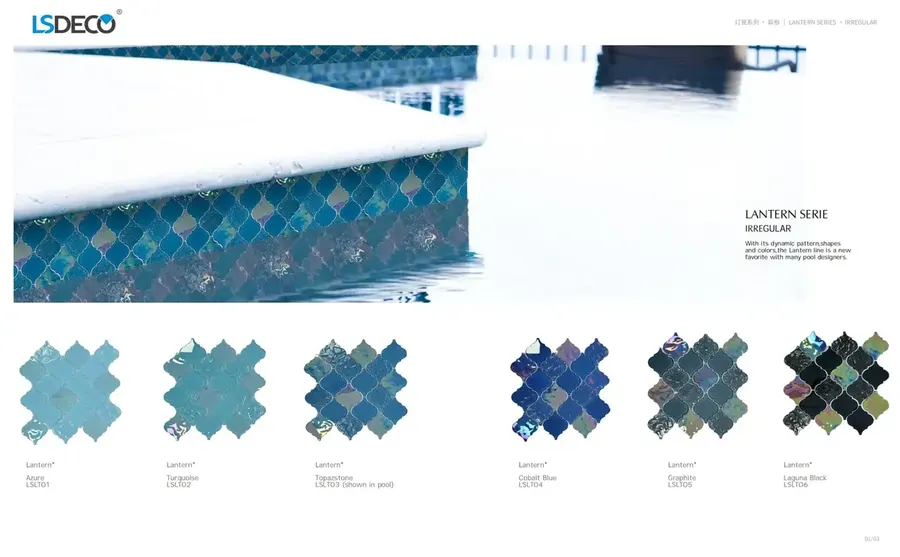
Lantern Irregular Pool Glass Mosaic Tile
This lantern irregular with its dynamic pattern, shapes and colors, the Lantern line is a ne…
Questions on This Topic
Which mounting does LSDECO supply as standard?
It depends on the series. We publish a dedicated dot-mounting range, and other series are supplied mesh-mounted. Ask for the mounting type of the specific item before you brief the installer.
Does the mounting affect underwater use?
It affects adhesive contact, which matters in submerged work. Dot mounting exists largely for that reason.
Can mosaic sheets be cut on site?
Mesh-mounted sheets can be cut between chips with a blade, and individual chips cut with a wet saw. Plan the setting-out so the cuts land where nobody looks.
Still Deciding Ask Us Directly
Send the drawing, the area or the series you are weighing up. We would rather answer a question before the order than solve a problem after it.