
Understanding OTR Tyre Service Codes E L and G
What E-3, L-3, E-4 and G-2 actually specify, and why fitting the wrong code costs more than the tyre.
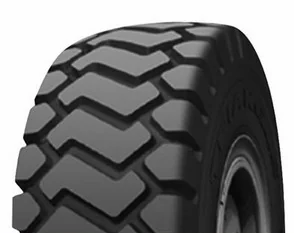
The code has two parts
An OTR designation such as E-3 or L-4 has a letter and a number. The letter is the service category — which kind of machine and duty the tyre is built for. The number is the tread depth class, where a higher number means a deeper tread. Both halves matter, and buyers routinely match one and ignore the other.
E is for earthmover service
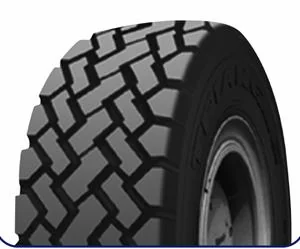
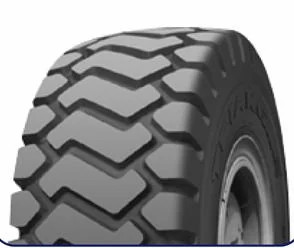
E designates haulage equipment — rigid dump trucks, articulated haulers, scrapers — machines that travel distance with a load. Our KG536 covers 14.00R24 and 14.00R25 in E-2, and KG516 covers 17.5R25 through 26.5R25 in E-3. KG558S is E-4, a deeper tread for continuous duty.
L is for loader and dozer service
L designates machines that work in one place with high torque and frequent direction changes — wheel loaders, dozers, container handlers. KG516 carries both E-3 and L-3 designations across its size range, because the same casing suits both duties at that depth class.
G is for grader service
G designates motor graders, where steering accuracy under continuous side load is the governing requirement rather than traction or depth. KG536 is available in G-2 for exactly this. Substituting an earthmover tyre on a grader compromises blade accuracy.
The depth number is an economic decision
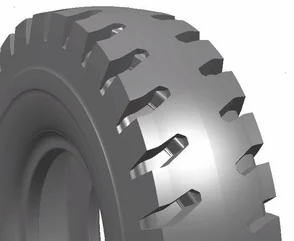
A deeper tread costs more and lasts longer in abrasive conditions, but on clean ground the extra depth generates heat and never wears down. KG516S is the deepened version of the 25 inch pattern for severe ground; on ordinary construction ground KG516 gives a lower cost per hour.
Container handling is its own case
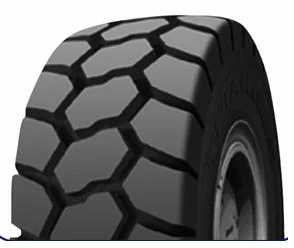
Port and terminal work is neither earthmoving nor conventional loading. The damage comes from container corners and yard debris rather than from the ground. KG558S in 16.00R25 E-4 is specified for container handler applications, with resistance to puncture and sidewall damage.
Matching code to machine
Start from the machine manufacturer's recommendation, then check the actual duty. A loader working rock all day needs more depth than the same model moving sand. A dump truck on a well-maintained haul road needs less than one on a poorly graded surface. Haul road condition affects tyre life more than any other single variable.
Products Covered in This Guide
More Guides
How to Cut Oak Plywood Without Chipping
Why thin face veneers tear at the cut, and the blade, feed and support choices that stop it happening.
Read the guide →Buying GuideReading a Truck Tyre Size and Load Index Table
What each column of a TBR specification table means, and how to check a tyre against your axle load before you order.
Read the guide →Material GuideChoosing Film Faced Plywood for Concrete Formwork
Face, glue, grade and core are four separate decisions. Each one moves the cost per pour, and they are often all left to the supplier.
Read the guide →Questions About This Topic
What is the largest OTR size you carry?
24.00R35, in the KG526S pattern, alongside 18.00R33.
Which tyre suits a container handler?
KG558S, 16.00R25 in E-4, which is specified for container handler applications.
Can I fit an E code tyre to a loader?
The codes describe intended service. KG516 carries both E-3 and L-3 designations, so it covers both duties. A tyre designated E only should be checked against the machine's requirement first.
Still Not Sure Which Specification You Need
Send the application, the machine or the part number and a recommendation comes back in writing before any order is placed.