
Reading a Truck Tyre Size and Load Index Table
What each column of a TBR specification table means, and how to check a tyre against your axle load before you order.
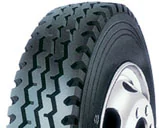
The size itself
In 1100R20, the 1100 is the nominal section width in millimetres of the older designation, the R means radial construction, and the 20 is the rim diameter in inches. A size written 295/80R22.5 uses the metric convention instead: 295 mm section width, an aspect ratio of 80 per cent, radial, on a 22.5 inch rim. A 22 inch and a 22.5 inch rim are not interchangeable.
Ply rating and TT or TL
Ply rating — 16 or 18 on the sizes in the KG901 table — is a load capability designation inherited from bias construction. TT means tube type and requires a tube and flap. TL means tubeless and requires a rim designed for it. Fitting a tubeless tyre to a tube-type rim does not work.
Load index, single and dual
Load index is usually published as a pair, such as 152/149. The first figure is the load capacity in single fitment, the second in dual fitment. The dual figure is always lower because twin tyres do not share load perfectly. For 1200R20 the index is 154/151, corresponding to 3750 kg single and 3450 kg dual.
Standard rim width
The table gives a standard rim — 7.00 for 900R20, 8.50 for 1200R20. Fitting a tyre to a rim outside its approved width range distorts the casing profile and produces uneven shoulder wear that is often mistaken for an alignment fault.
Relative pressure
The pressure column is the inflation pressure at which the rated load applies. It is not a recommendation for every load. 900R20 in the KG901 table carries its rated load at 900 kPa, while 1200R20 does so at 830 kPa. Running at rated pressure with a light load wears the centre of the tread.
Inflated dimensions
Section width and overall diameter matter for clearance and for matching across an axle. For 1100R20 the figures are 293 mm section width and 1085 mm overall diameter. Mismatched diameters on a twin fitment force one tyre to carry more than its share.
Working through an example
Suppose an axle is rated at 7000 kg and runs twin fitment, so each tyre must carry 1750 kg. Every size in the KG901 table exceeds that comfortably in dual fitment. The constraint is more likely to be the steer axle in single fitment, where 900R20 at 2800 kg per tyre gives 5600 kg across the axle.
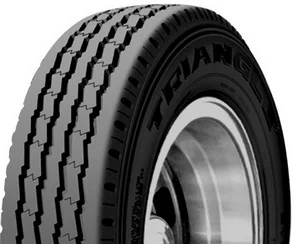
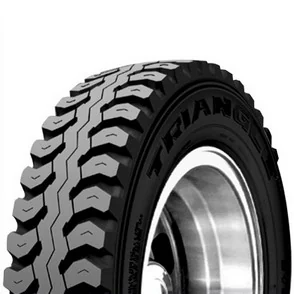
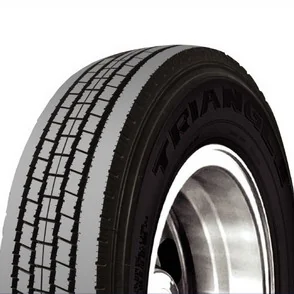
Products Covered in This Guide
More Guides
How to Cut Oak Plywood Without Chipping
Why thin face veneers tear at the cut, and the blade, feed and support choices that stop it happening.
Read the guide →Material GuideChoosing Film Faced Plywood for Concrete Formwork
Face, glue, grade and core are four separate decisions. Each one moves the cost per pour, and they are often all left to the supplier.
Read the guide →Comparison ArticleMDF Particle Board and Plywood Compared
Three panel families, three different structures, and the practical consequences for machining, fixing and finishing.
Read the guide →Questions About This Topic
Is 11R22.5 the same as 11.00R22?
No. They are different rim diameters and are not interchangeable. 11.00R22 is available as pattern KG679.
Can I fit a higher load index than I need?
Yes, a higher index is not a problem in itself. It usually means a stiffer casing, which may ride more harshly when the vehicle runs empty.
What happens if I inflate below the table pressure?
The tyre cannot carry its rated load. The casing flexes more, runs hotter and wears at the shoulders. Under-inflation is the most common cause of premature truck tyre failure.
Still Not Sure Which Specification You Need
Send the application, the machine or the part number and a recommendation comes back in writing before any order is placed.