
MDF Particle Board and Plywood Compared
Three panel families, three different structures, and the practical consequences for machining, fixing and finishing.
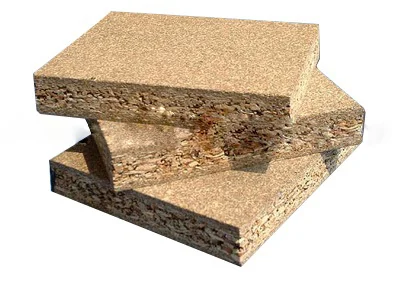
Three different structures
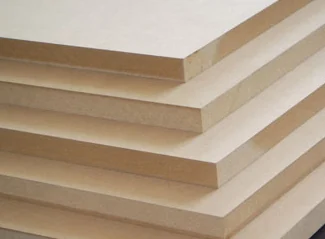
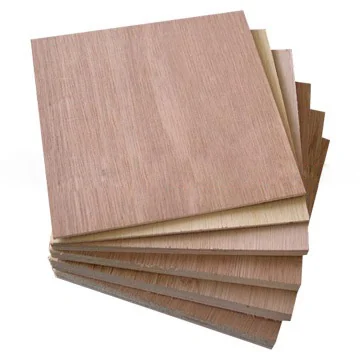
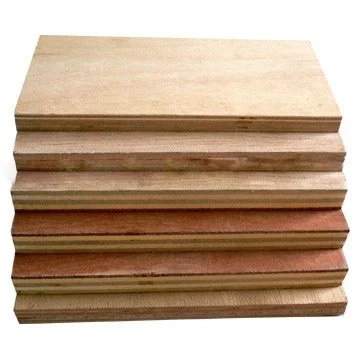
MDF is wood broken down to fibre and pressed with resin into a homogeneous board. Particle board is wood chips bonded with resin, so the structure is coarse and visible at the edge. Plywood is thin layers of wood glued in alternating grain directions, so it keeps the strength of timber in both directions. Almost every practical difference follows from these three structures.
Machining and edge quality
MDF has no grain and no chip, so it routs and profiles cleanly and takes a moulded edge. Particle board breaks out along the chip line and needs a facing or banding on any visible edge. Plywood cuts cleanly along the face grain but can tear at the veneer on the exit side.
Fixing and screw holding
Plywood holds a screw best, particularly in the edge, because there is continuous timber to grip. MDF holds a screw in the face reasonably and in the edge poorly, and splits if not pre-drilled. Particle board is weakest of the three and crushes under a fixing that is over-tightened.
Weight and density
Our MDF is specified at 750-850 kg/m3, which is dense — an 18 mm sheet is heavy to handle. Particle board is lighter for the same thickness. Plywood weight varies with core species: a poplar core panel is considerably lighter than a hardwood core one of the same size.
Finishing
MDF takes paint directly on the face, which is why it dominates painted furniture and joinery, though cut edges absorb heavily and need sealing. Particle board needs a face — melamine or wood paper — which our catalogue supplies pre-applied. Plywood can be finished clear where the face veneer justifies it, which is where okoume is normally specified.
Moisture
None of the three is waterproof, but they differ in how they fail. Particle board swells fastest and does not recover. MDF swells at the edges and stays swollen. Plywood with WBP glue tolerates repeated wetting best, which is why it is the only one of the three used for formwork.
Choosing between them
Painted furniture and profiled edges: MDF. Faced carcass and shelving in volume at the lowest cost: particle board. Load-bearing components, fixings in the edge, moisture exposure or a clear finish: plywood.
More Guides
How to Cut Oak Plywood Without Chipping
Why thin face veneers tear at the cut, and the blade, feed and support choices that stop it happening.
Read the guide →Buying GuideReading a Truck Tyre Size and Load Index Table
What each column of a TBR specification table means, and how to check a tyre against your axle load before you order.
Read the guide →Material GuideChoosing Film Faced Plywood for Concrete Formwork
Face, glue, grade and core are four separate decisions. Each one moves the cost per pour, and they are often all left to the supplier.
Read the guide →Questions About This Topic
Which glue classes do you supply?
MDF in E0, E1, E2 and MR. Particle board in MR, E1 and E2. Commercial plywood in MR, WBP, E1 and E2.
What is the density of your MDF?
750-850 kg/m3.
Which panel is best for a kitchen carcass?
Melamine faced particle board is the volume standard because it arrives finished. Where the carcass carries significant load or may get wet, plywood is the safer choice.
Still Not Sure Which Specification You Need
Send the application, the machine or the part number and a recommendation comes back in writing before any order is placed.