
Scrunchie Fabric and Size Selection
Choose the right fabric and size for scrunchies. Learn how elasticity, weight, print, and hair type affect performance and shelf presence.
Fabric Types and Their Behaviour Against Hair
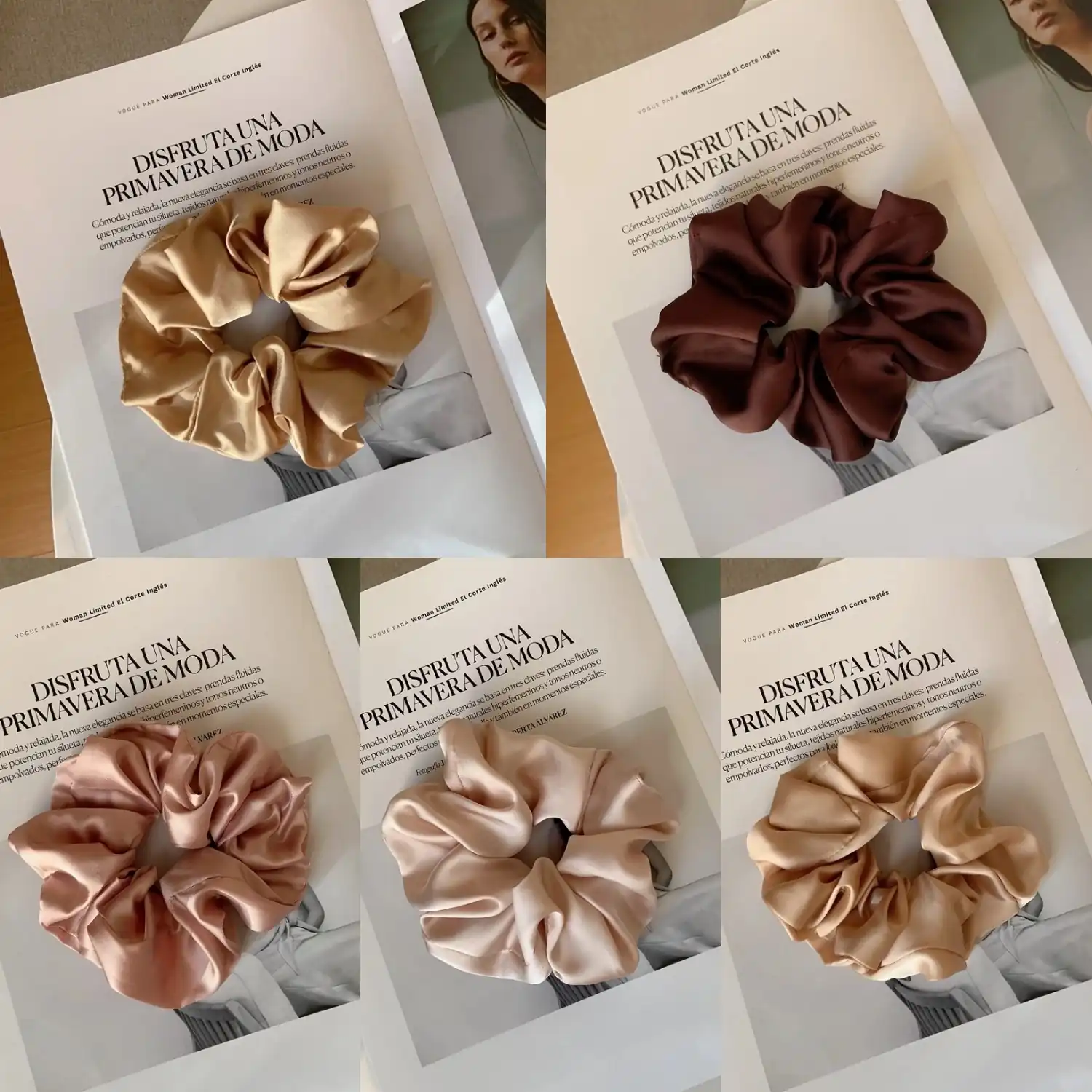
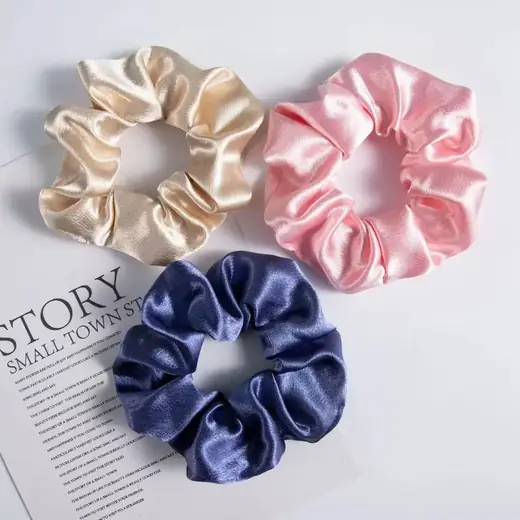
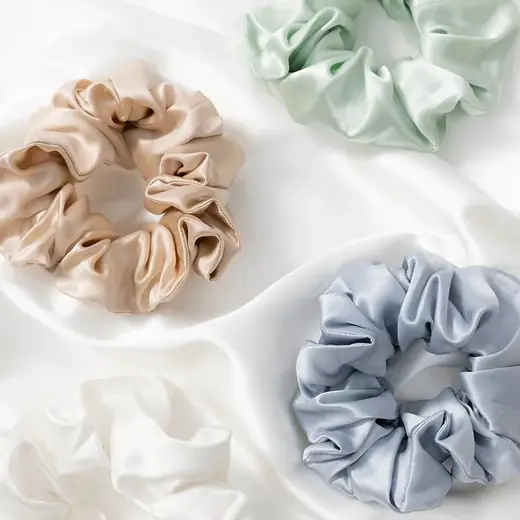
Each fabric affects grip, slip and hair marking differently. Mulberry silk is lightweight and smooth, reducing friction and minimising creasing on fine or curly hair. Polyester satin holds shape well and resists stretching, but can leave slight marks on delicate strands. Microfibre absorbs moisture and is ideal for post-workout or humid climates. Flannel and plush knitted offer softness and warmth, suitable for winter collections. Organza is crisp and structured, used for decorative or layered designs. Rabbit fur adds texture but requires careful handling to avoid shedding. Printed seasonal and scarf tie versions use stable fabrics that maintain pattern alignment during stretching.
How Elastic Choice Affects Fit and Longevity
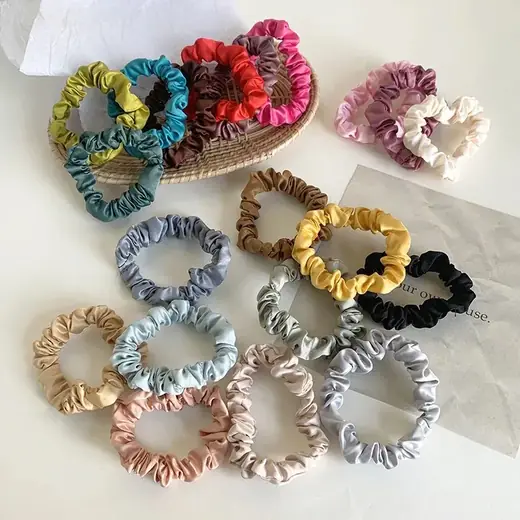
The elastic core determines how much tension the scrunchie holds over time. Thinner elastics (1mm) are used in 16mm skinny silk versions for minimal visibility and soft grip. Wider elastics (3mm) are standard in 4cm queen size scrunchies to maintain hold on thick or long hair. High-resilience elastics reduce stretching after repeated use. Always test the elastic with the fabric thickness—too tight a core can distort the fabric edge, too loose a core causes slippage. Confirm the elastic type in the sample before bulk production.
Size and Shelf Presence
16mm skinny silk scrunchies appear delicate on shelf and suit minimalist or travel-sized ranges. The 4cm queen size version reads as a full statement piece, ideal for premium or gift sets. Wider scrunchies are more visible in retail displays and carry a higher perceived value. Size affects packaging too—smaller versions allow more units per carton, larger ones require more space. Plan your assortment based on shelf space allocation and target price points.
Colour and Print Assortment Planning
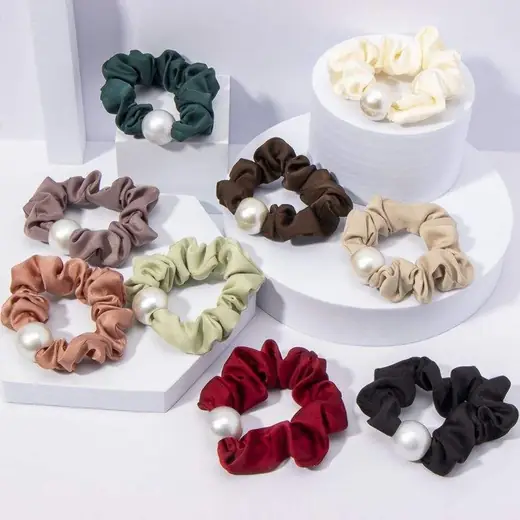
Solid colour satin and silk scrunchies are easy to stock and reorder. For seasonal ranges, printed versions require artwork approval and minimum print run checks. Seasonal prints work best on polyester satin due to its stable surface and bright colour retention. Scarf tie versions use fabric with directional patterns, so alignment must be confirmed in the sample. Use a mix of solid and printed styles to balance inventory risk and visual variety. Limit colour palettes to 4–6 per season to reduce complexity.
Hair Marking and Customer Feedback
Silk and satin scrunchies leave minimal marks on hair. Microfibre and plush knitted can leave slight impressions if worn tightly for long periods. Rabbit fur may shed or transfer fibres onto dark hair. Flannel can cause static in dry climates. Always test the finished scrunchie on a range of hair types before finalising the design. If your target market includes sensitive or fine hair, avoid fabrics with high surface friction or loose fibres.
What to Confirm Before Production
Request a physical swatch of the exact fabric, not a digital image. Confirm the elastic type and diameter in writing. Approve a fully sewn sample with the chosen fabric and elastic. Verify the print alignment and colour match against the swatch. Agree on inspection timing and method before production starts. Ensure the packaging design accounts for the size and shape of the finished scrunchie.
Questions About This Topic
What fabrics are available for scrunchies?
We offer 16mm skinny silk, 4cm queen size mulberry silk, polyester satin solid colour, microfibre absorbent, flannel, plush knitted, organza, rabbit fur, printed seasonal, and scarf tie versions.
How does fabric weight affect hold and hair marking?
Lighter fabrics like silk and satin offer less grip and minimal marking. Heavier fabrics like flannel and plush knitted can leave impressions if worn tightly. Microfibre absorbs moisture but may stretch over time.
Can I use my own print on the scrunchie fabric?
Yes. We accept custom prints on satin and scarf tie versions. Send your artwork for confirmation on feasibility and minimum run requirements before production.
Which elastic should I choose for different sizes?
Use 1mm elastic for 16mm skinny silk. Use 3mm elastic for 4cm queen size scrunchies. Confirm the elastic type with the fabric thickness to avoid distortion or slippage.
How do scrunchie sizes affect shelf visibility?
16mm versions appear subtle and delicate. 4cm versions are more prominent and carry higher perceived value. Larger sizes are more visible in retail displays and better for gift sets.
Can I mix fabrics in the same order?
Yes. We can produce multiple fabric types in the same order, such as silk and satin in different sizes or styles, as long as the construction and packaging are confirmed.
What is the best fabric for sensitive or fine hair?
Mulberry silk and polyester satin are the best choices. They are smooth, low-friction, and leave minimal marks on delicate strands.
Products This Guide Covers
Keep Reading
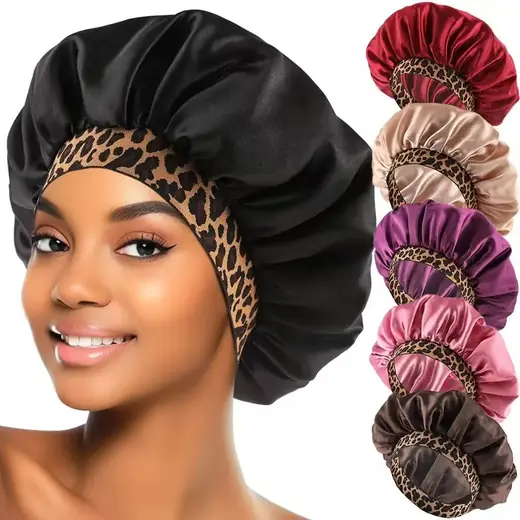
This is the single confusion that causes most sourcing mistakes. Silk is a natural fibre reeled from the cocoon of the silkworm, and mulberr
Read moreUses a single layer of fabric with a wide, soft elastic band stitched around the edge. The band stretches to fit most head sizes and holds t
Read more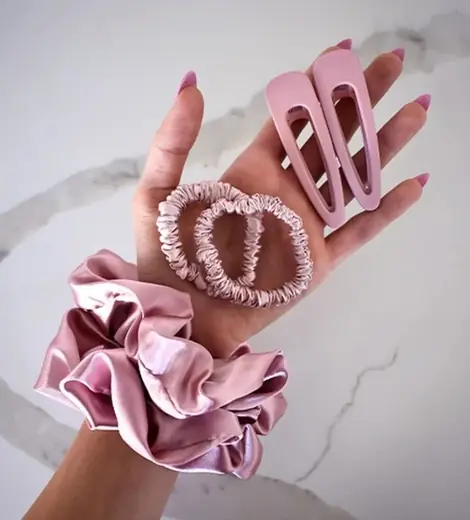
These rods use a flexible core, usually plastic or foam, wrapped in polyester satin. The satin face reduces friction, so hair slides instead
Read moreStill Not Sure Which Option Fits Your Range
Send us the price point you are aiming at and the customer you are selling to. We will tell you which fabric and construction to use and what a sample would involve.