
Cellulose Acetate Combs Explained
Cellulose acetate is a natural-derived plastic used in combs for its smooth finish, static resistance, and tortoise shell pattern depth. Learn how it differs from moulded plastic and what to check in a sample.
Cellulose Acetate Is a Natural Derived Plastic
Cellulose acetate is made from wood pulp and acetic acid, not petroleum. It is thermoplastic, meaning it can be heated and shaped into combs, then cooled to hold form. Unlike moulded plastic, it has a slightly softer feel and a more organic grain. It is used in combs because it resists cracking, holds detail well, and does not degrade under heat or UV exposure like some plastics.
Why It Is Used for Wide Tooth and Pick Combs
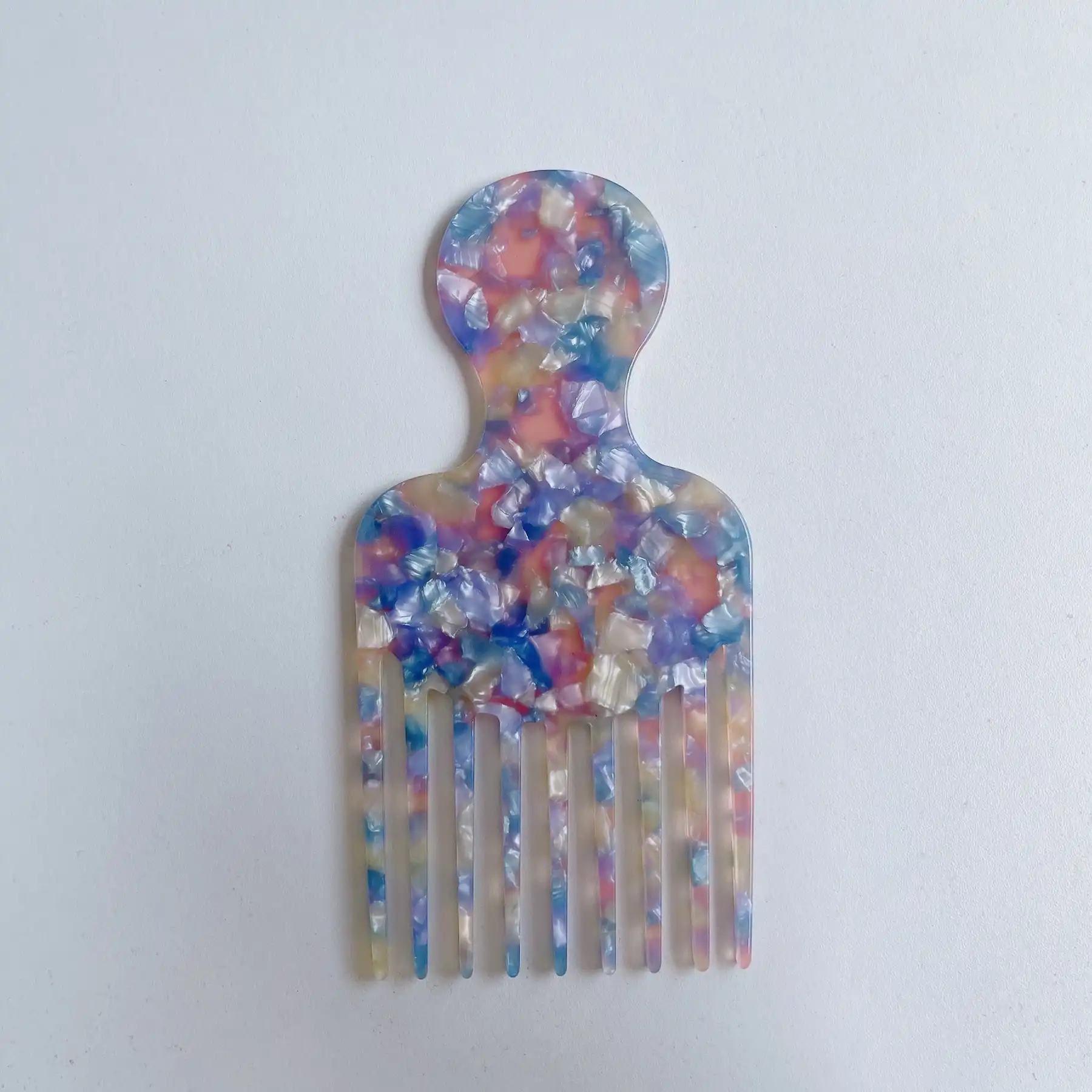
The material holds fine details in the tooth profile, so it can be shaped into wide teeth that are smooth and evenly spaced. This reduces snagging and hair breakage. It is also ideal for pick combs because the teeth can be tapered and polished to a sharp point without chipping. The natural resistance to static makes it suitable for anti-static round tooth combs.
Tortoise Shell Patterns and Visual Consistency
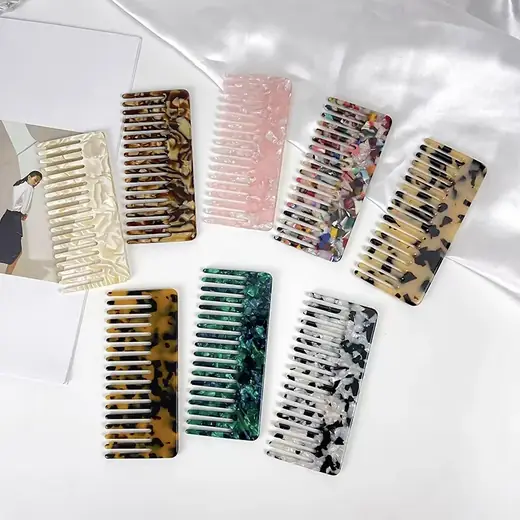
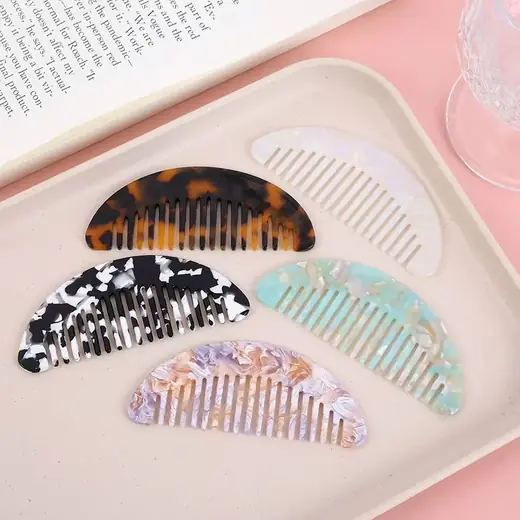
Cellulose acetate can be dyed in layered patterns that mimic tortoise shell. The pattern is not printed but embedded in the material during extrusion. This gives depth and variation that cannot be replicated with surface printing. Check the pattern consistency across the comb: it should flow naturally and not repeat in a rigid way.
Tooth Finish and Static Performance
Acetate teeth are naturally less prone to static than moulded plastic. The surface polish is smoother and does not build up charge when brushing dry hair. Moulded plastic teeth often have a rougher edge or visible flash from the mould, which can catch hair. Acetate teeth are polished to a uniform finish, which reduces friction and improves glide.
What to Check on a Physical Sample
Inspect the tooth polish for smoothness and evenness. Look for seam lines where the material was joined during moulding—these should be minimal and not visible on the face of the comb. Check edge smoothness: sharp edges or burrs indicate poor finishing. Confirm pattern consistency across the comb, especially in tortoise shell styles, to avoid mismatched or repeated sections.
Construction and Use Cases
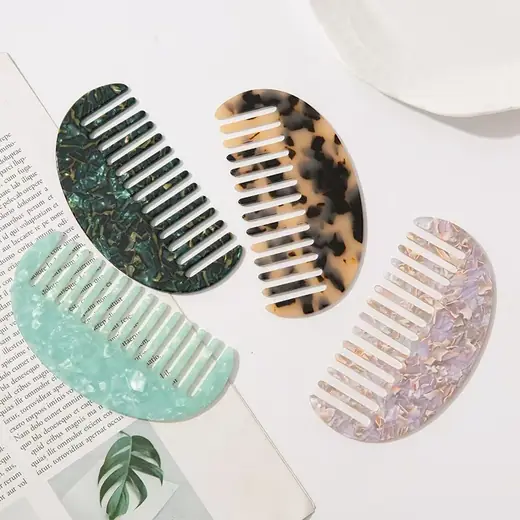
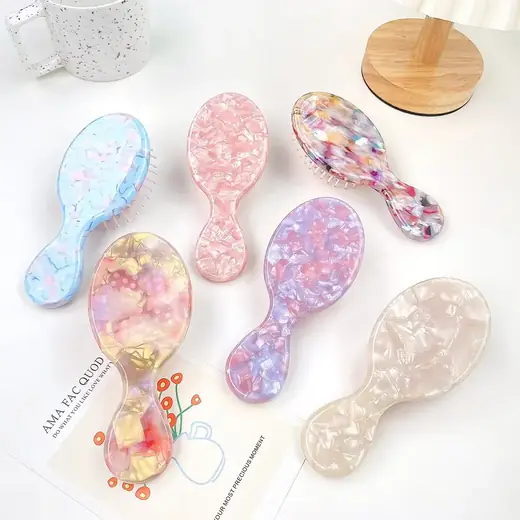
Joi supplies acetate wide tooth combs for detangling, arch combs for styling, pick combs for sectioning, and air cushion massage combs with rounded teeth for scalp stimulation. The material's durability and smooth finish make it suitable for daily use in salons and at home. It is not recommended for high-heat styling tools, as prolonged exposure may soften the surface.
How It Differs from Moulded Plastic Combs
Moulded plastic combs often have visible gate marks, rough tooth edges, and a higher tendency to generate static. Cellulose acetate combs have a more refined finish, better pattern depth, and lower static build-up. The material also feels warmer to the touch and has a slightly heavier weight, which some users prefer for perceived quality.
Questions About This Topic
What is cellulose acetate made from?
Cellulose acetate is made from wood pulp and acetic acid, not petroleum. It is a natural-derived thermoplastic used in combs for its durability and smooth finish.
Why is cellulose acetate better than moulded plastic for combs?
It has a smoother tooth finish, less static, better pattern depth in tortoise shell styles, and does not crack easily. Moulded plastic often has rough edges and visible mould lines.
Can the tortoise shell pattern be customised?
Yes. The pattern is embedded during extrusion, so variations in colour and flow can be adjusted. Send your design and we will confirm the feasibility before production.
How do I inspect a sample for quality?
Check tooth polish for smoothness, seam lines for visibility, edge smoothness for burrs, and pattern consistency across the comb. Avoid combs with visible mould marks or uneven colour.
Are acetate combs safe for daily use?
Yes. They are durable, static-resistant, and hold their shape under normal use. They are not recommended for use with high-heat styling tools.
Products This Guide Covers
Keep Reading
This is the single confusion that causes most sourcing mistakes. Silk is a natural fibre reeled from the cocoon of the silkworm, and mulberr
Read moreUses a single layer of fabric with a wide, soft elastic band stitched around the edge. The band stretches to fit most head sizes and holds t
Read more
These rods use a flexible core, usually plastic or foam, wrapped in polyester satin. The satin face reduces friction, so hair slides instead
Read moreStill Not Sure Which Option Fits Your Range
Send us the price point you are aiming at and the customer you are selling to. We will tell you which fabric and construction to use and what a sample would involve.