
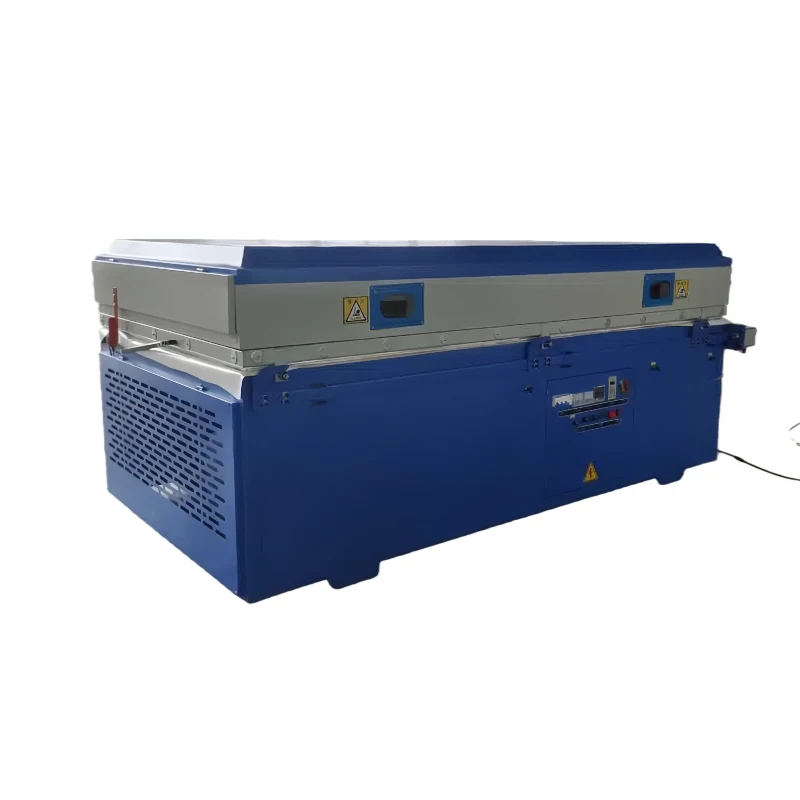
Vacuum Membrane Press for MDF Kitchen Cabinet Doors Save 60% of labor force
Presses PVC and PET film onto routed MDF door fronts in one heated vacuum cycle. Built to order.
View Machine Data →
Presses PVC and PET film onto routed MDF door fronts in one heated vacuum cycle. Set up for PVC film on cabinet door fronts, where the negative pressure cycle is what pulls the film into the routed groove.
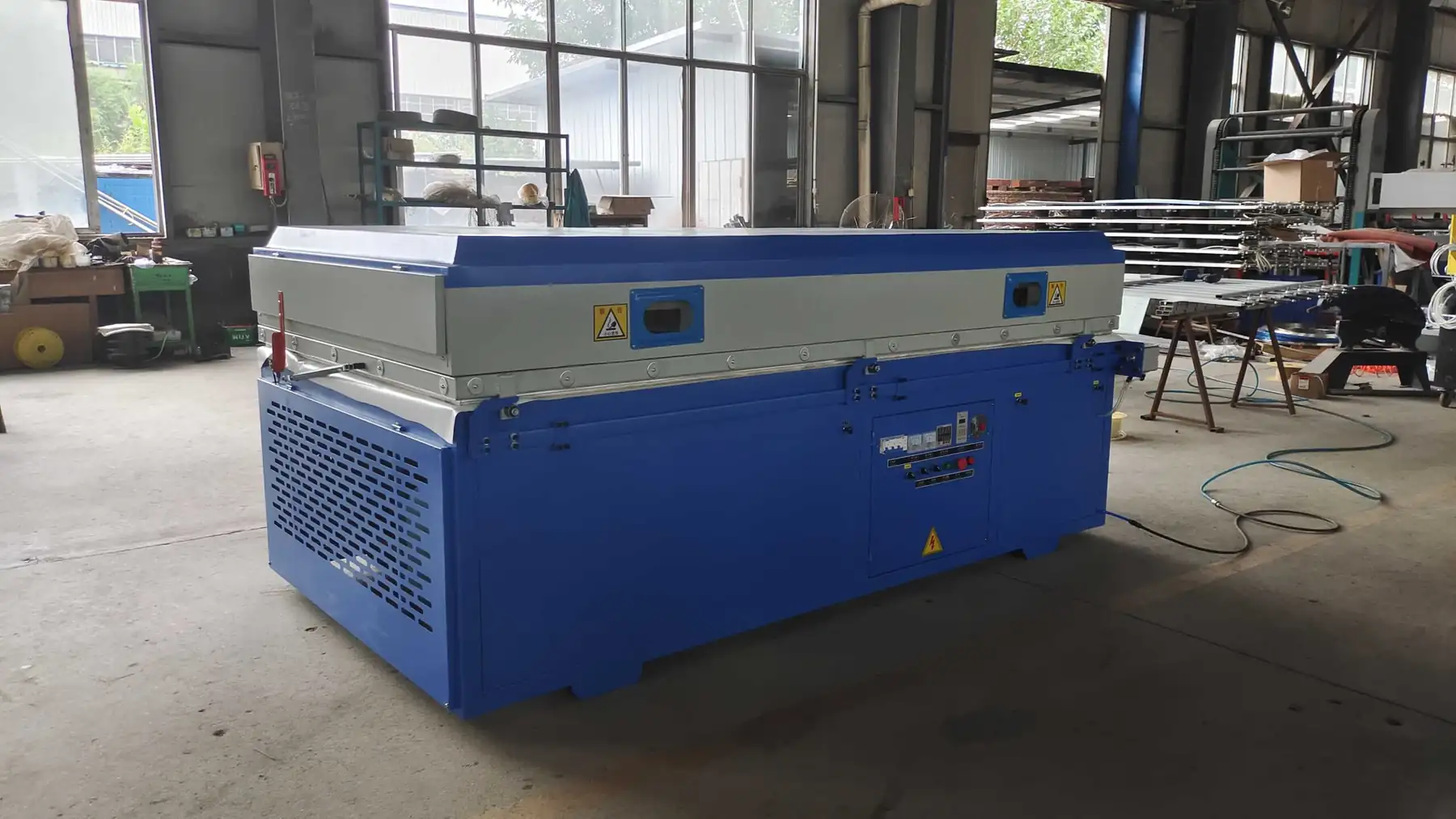
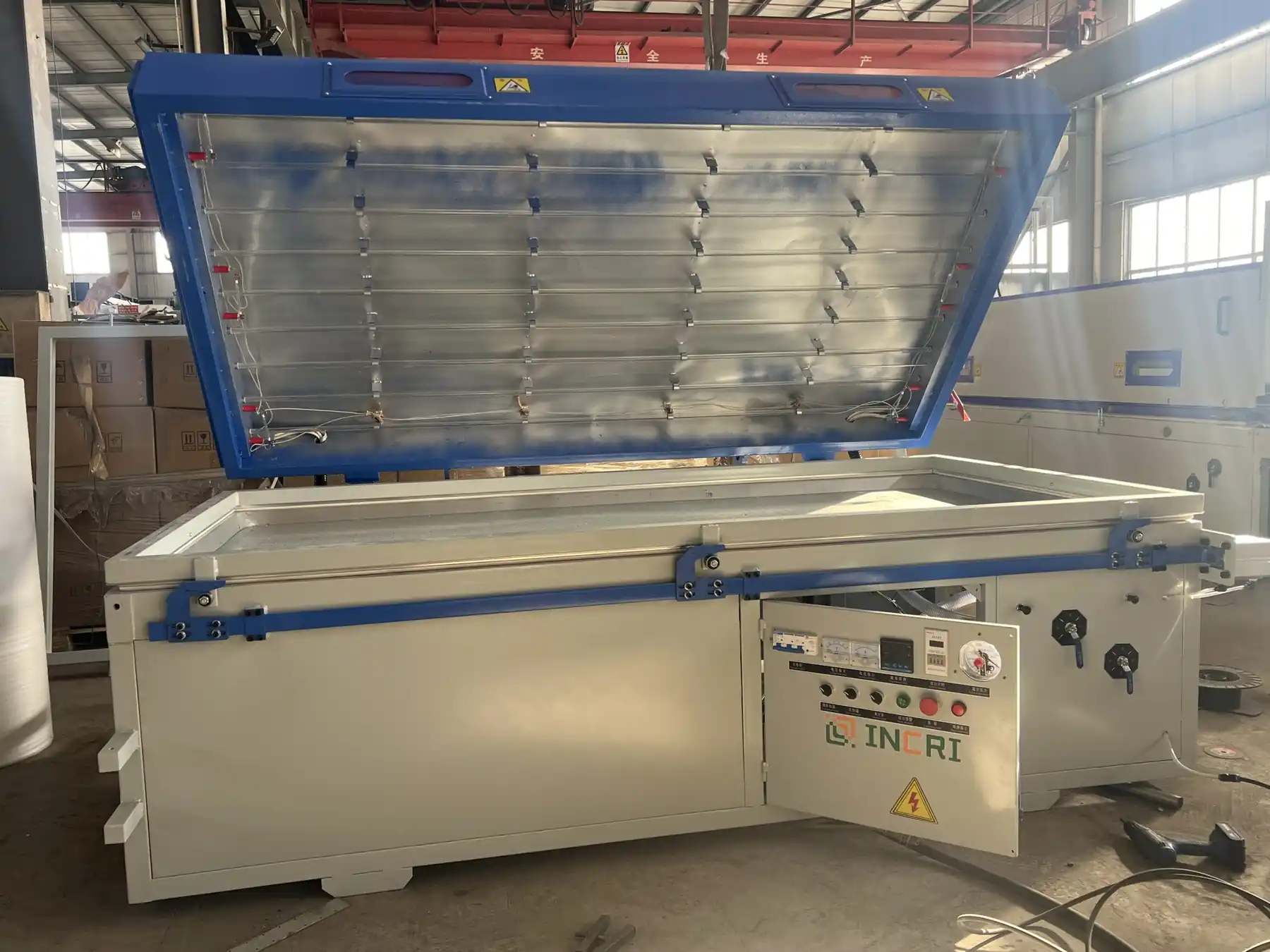
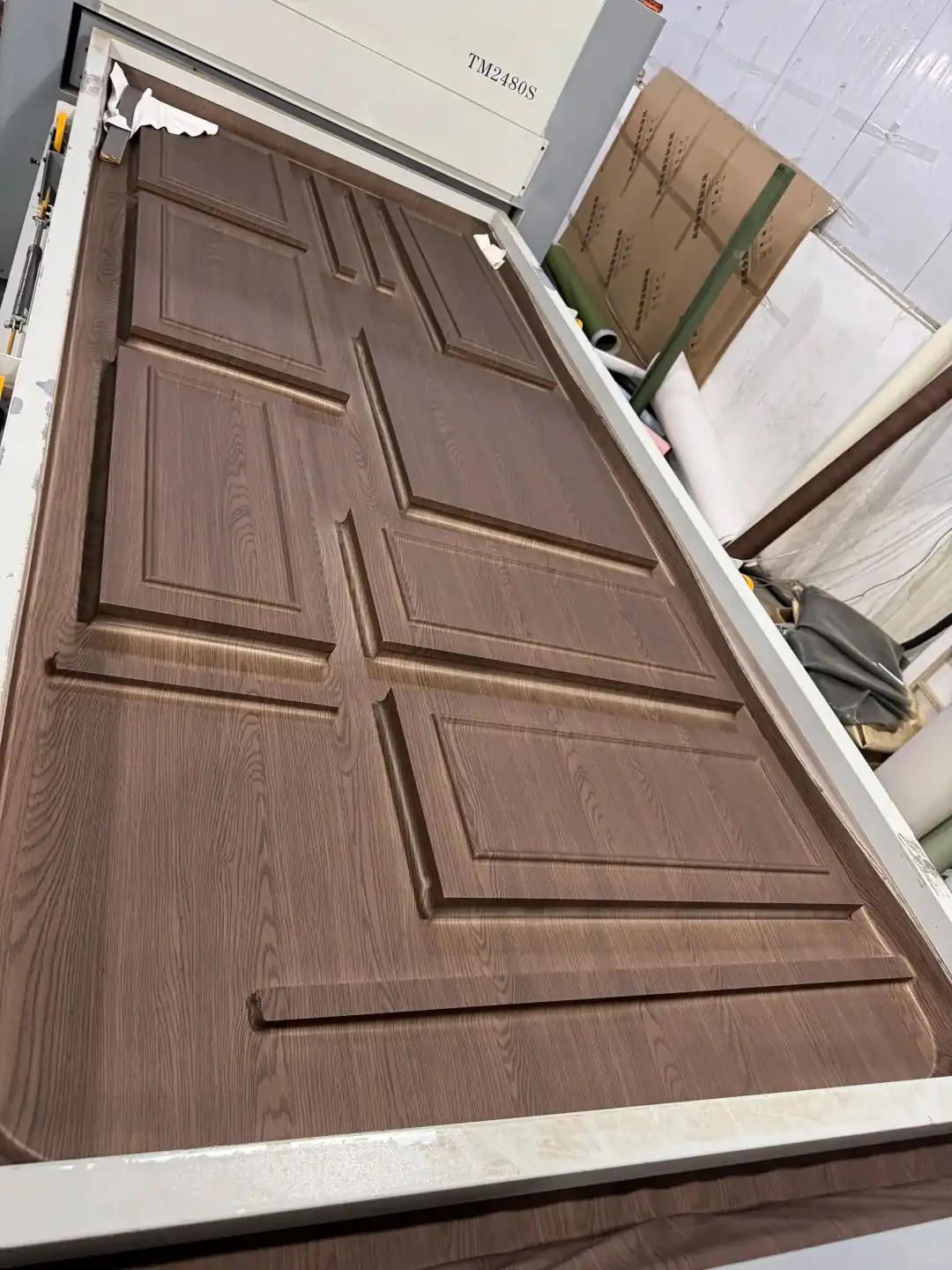
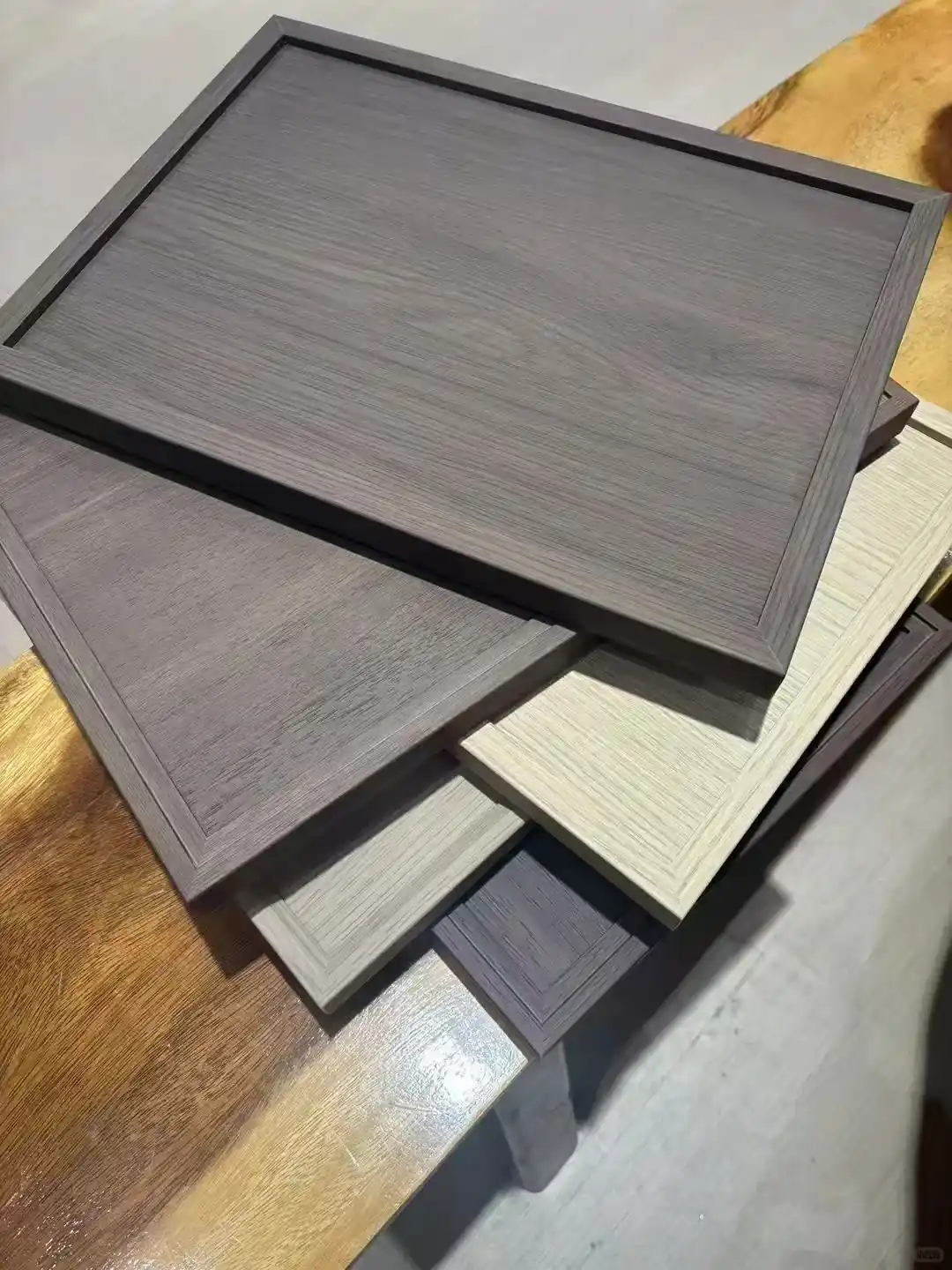
Set up for PVC film on cabinet door fronts, where the negative pressure cycle is what pulls the film into the routed groove.
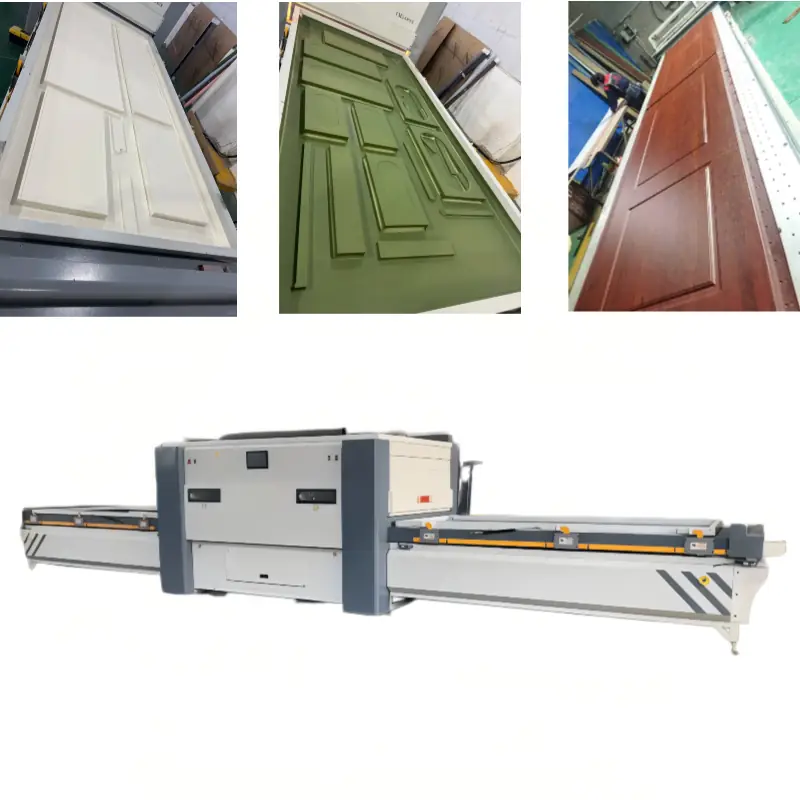
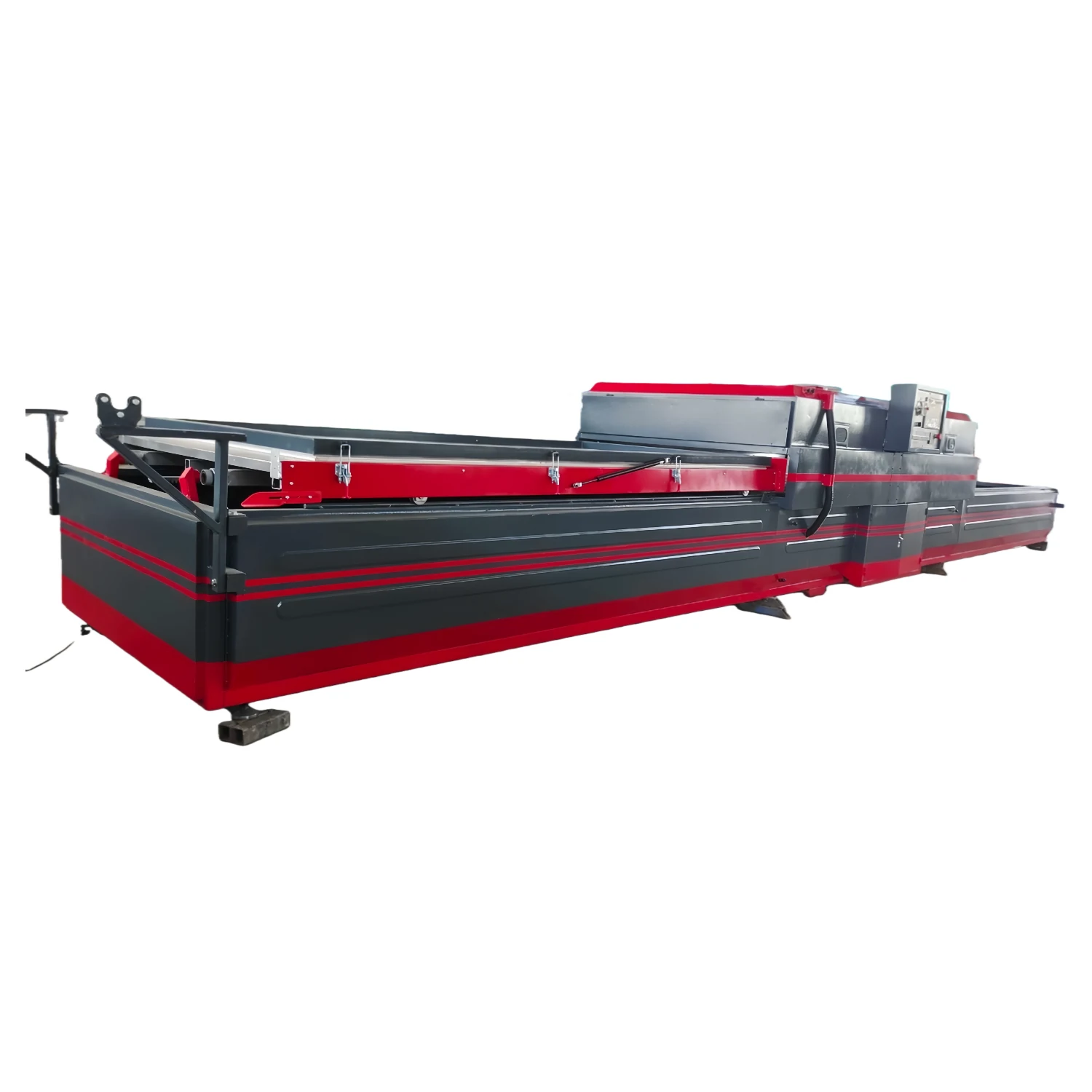
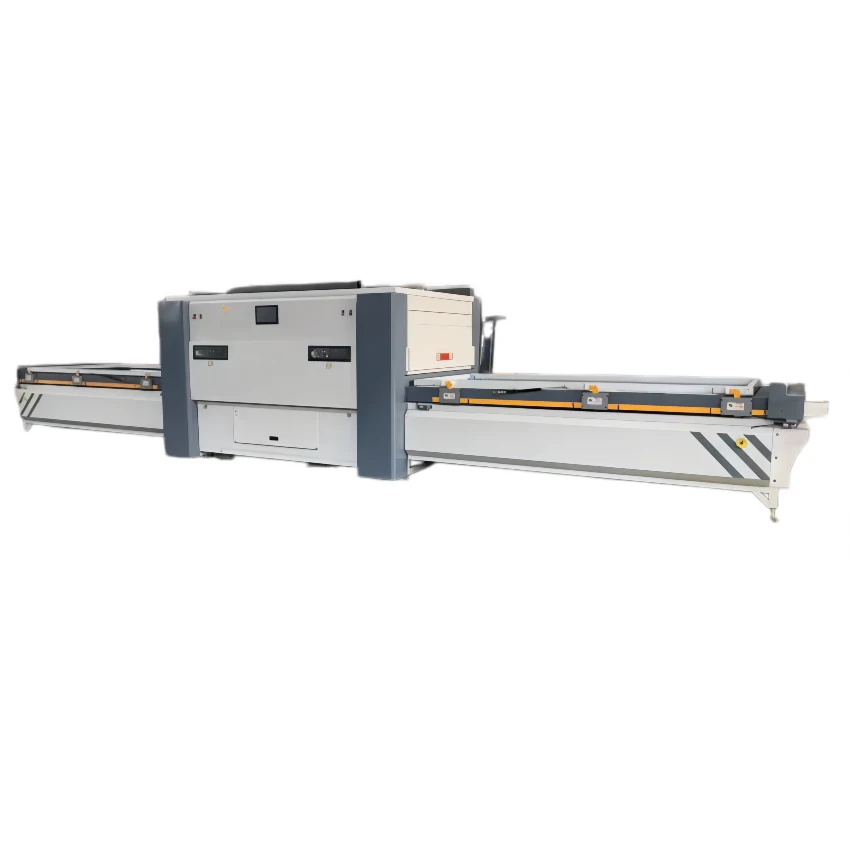
The vacuum membrane press covers PVC film onto the face of a routed panel: compound doors, cabinet fronts, furniture parts and speaker boxes. A heated membrane is pulled down over the panel under negative pressure, so the film follows deep grooves and 3D profiles instead of bridging over them. A full cycle runs 2-4 minutes per load, and the vacuum reaches -0.1 MPa with a plated working pressure of at least -0.095 MPa.
Negative pressure of -0.1 MPa pulls film into deep grooves without bridging or bubbles
Double upper and lower heating keeps the panel face at an even temperature across 2300 x 1100 mm
PLC with LED touch screen stores the cycle, so the second shift repeats the first shift's settings
Double gas path with an enlarged storage tank gives uniform suction and stops film tearing
Double layer thermal insulation and full sealing cut the energy used per press cycle
| Parameter | Value |
|---|---|
| Plated working pressure | Negative pressure >= -0.095 MPa |
| Max vacuum press | -0.1 MPa |
| Max processing height | 80 mm |
| PVC film thickness | 0.10-0.60 mm |
| Working speed | 2-4 min per piece |
| Machine weight | 1500 kg |
| Total power | 20 kW |
| Power consumption | 5 kW |
| Top temperature | 180 C |
| Voltage | 380 V 50 Hz 3 phase |
| Heating | Double upper and lower heating |
| Vacuum pump | Single vacuum pump |
| Control system | PLC with LED touch screen |
| Temperature control | Thermocouple |
| Packing size | 3500 x 2100 x 2400 mm |
All machines can be customised to the buyer's requirement. Figures are the published data for this model series.
The press applies even pressure over the whole face, so groove edges do not lift and one operator can run the cycle
A flat press cannot follow a routed profile. The membrane wraps the groove walls and edge profile in the same cycle
Bringing the press in house removes freight between shops and lets you finish a door order in the same week
Sand and dedust the routed panel so no chips sit under the film
Set the plate temperature for the film grade you run and let the table stabilise
Load panels with the spacing your film width allows and close the membrane frame
Run the vacuum cycle, typically 2-4 minutes per piece, and unload when pressure releases
Trim the overhang and check groove corners before the panels go to packing
Presses PVC and PET film onto routed MDF door fronts in one heated vacuum cycle. Built to order.
View Machine Data →
Presses PVC and PET film onto routed MDF door fronts in one heated vacuum cycle. Built to order.
View Machine Data →
Presses PVC and PET film onto routed MDF door fronts in one heated vacuum cycle. Built to order.
View Machine Data →
Presses PVC and PET film onto routed MDF door fronts in one heated vacuum cycle. Built to order.
View Machine Data →
Yes. Set up for PVC film on cabinet door fronts, where the negative pressure cycle is what pulls the film into the routed groove. Every machine is built to order, so the configuration is confirmed against your own panel size and coating system before production.
PVC film from 0.10 mm to 0.60 mm. The plated setting normally runs at 0.1-0.45 mm.
2 to 4 minutes per piece depending on film grade, panel thickness and plate temperature.
Max processing height is 80 mm.
Both. A double worktable lets one table load while the other presses. A clamshell version with one removable table is also available.
380 V, 50 Hz, three phase. Total power is 20 kW with around 5 kW consumed in normal running.
The machine is almost fully assembled before loading, and video guidance plus an English manual are free. An engineer can travel to your site if you cover travel, visa, insurance, hotel and USD 200 per day labour.
Send your panel size, coating system and line speed. You will get the model recommendation, full technical data and a price.