
Moisture Comes From Below
A finished floorboard has a sealed top face and, very often, a bare back. Moisture from the subfloor and from the air under the floor enters the unsealed side, the board takes up water unevenly through its thickness, and it cups. The complaint arrives months after shipment, usually from a humid market, and by then the boards are installed.
What A Back Coater Does
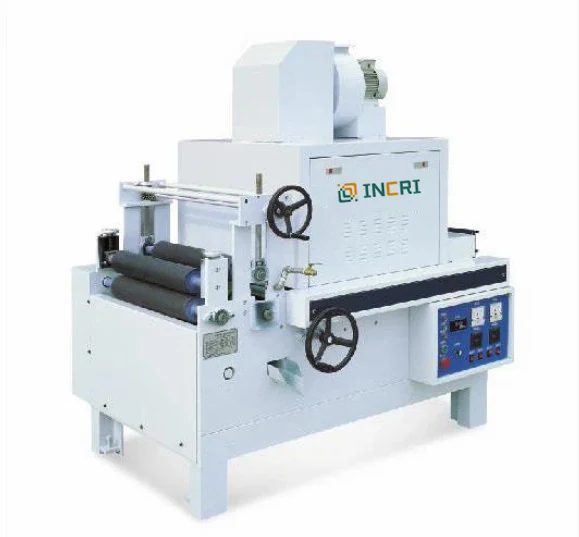
A back coating machine is designed for painting the back of solid wood flooring. Used correctly, the seal on the back prevents more than 80 percent of the water that would otherwise enter the floor from the back side, and the floor does not deform easily. The standard build pairs a single roller coater with a double lamp UV dryer, so the seal is applied and cured in one pass.
Four Side Coating
If your market is particularly humid, the moisture proof effect is better with four side painting rather than back only. The edges of a board are as open as the back, and a board that is sealed on six faces is a different product from one sealed on one.
Where It Sits In The Line
Back coating is a separate pass from the face finishing, and the machine is sized the same way: 600, 1000 or 1300 mm coating width, 2 to 90 mm processing thickness, 24.6 kW total power. On a flooring line it commonly runs between calibration and the face coating sequence, so the board is flat when it reaches the top coat stations.