
Start With Working Width Not Head Count
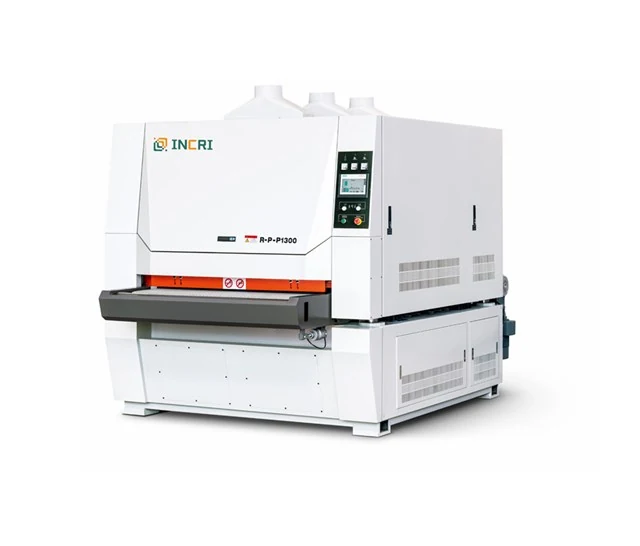
The first decision is whether you will ever rip a panel before sanding. If your product is full size sheet, a 1000 or 1300 mm machine is the only sensible answer, and the weight that comes with it is the point: the IBSG2313R-P-P is 6000 kg because a 1300 mm head needs that mass under it to stay steady. If your product is doors, stiles and narrow fronts, a 600 or 750 mm machine at 3000 to 3560 kg does the same job with less abrasive per panel and a smaller footprint.
Then Decide How Many Heads
Each head is one sanding stage in one pass. A two head machine at 14.02 kW calibrates and finishes. A three head machine at 21.07 to 24.26 kW adds an intermediate stage. The extra head costs connected load and machine length, and it pays back in handling: two passes saved per panel, every panel, every shift.
Calibrating Or Floating
A calibrating head cuts raw board to a set thickness. A floating head follows the panel surface, which is what you need on cured primer, because a rigid head will cut through the primer at the panel edge and show the substrate under the top coat. If your line is primer, sand, top coat, you need the upper floating primer sander, not a calibrating machine with a finer belt.
Check The Things People Forget
Working air pressure must be at least 0.6 MPa or the sanding units will not hold position. Abrasive belt speed is adjustable from 3 to 12 m per second and you will use the lower end on cured coating. Auto stop on belt break is standard across the range, and it is the feature that stops a whole batch of primed panels being scrapped by an unnoticed failure.