
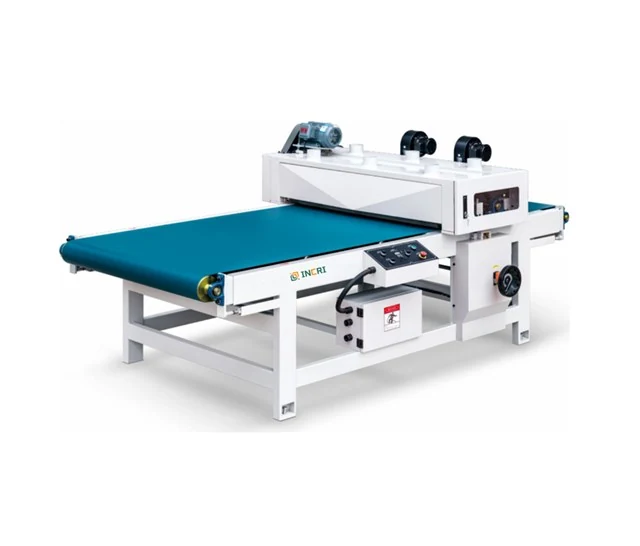
Nibs In The Cured Film
Almost always sanding dust that was still on the panel when it was coated. Compressed air blow off moves dust around rather than removing it. A dust clean machine with double brush rollers and a blower lifts dust out of the grain immediately before the coater, at 0-20 m per minute so it keeps pace with the line.
Orange Peel And Bubbles
The wet film did not have time or heat to flow level before it cured. An IR heating leveller heats the film within a short distance of the coater so it flows flat, with an axial flow fan making the tunnel temperature uniform. Going straight from coater to UV lamps cures the defects in.
Burn Through At The Panel Edge
A rigid sanding head cutting cured primer will reach the substrate at the edge, and the board shows under the top coat. The fix is an upper floating head that follows the panel surface, which is exactly what the primer sander is built for.
Pores That Sink After Coating
Open pores swallow primer and reappear as depressions. Flooding more primer into them does not work. A putty filling machine applies a formulated filler at 10 to 30 g per square metre under constant pressure, which closes the hole before the primer goes on.
Stain That Looks Washed Out
Colour sitting on the surface leaves the pore light and the grain reads flat. A brush roller stain machine works colour into the dented holes of the wood surface, which is what makes the grain read clearly.
Membrane Film Lifting At The Groove
Film that bridged the groove rather than following it, usually because vacuum or plate temperature was too low for the film grade. The press should be pulling to -0.1 MPa with double upper and lower heating, and the cycle should be stored in the PLC so it is not reset by feel each morning.