
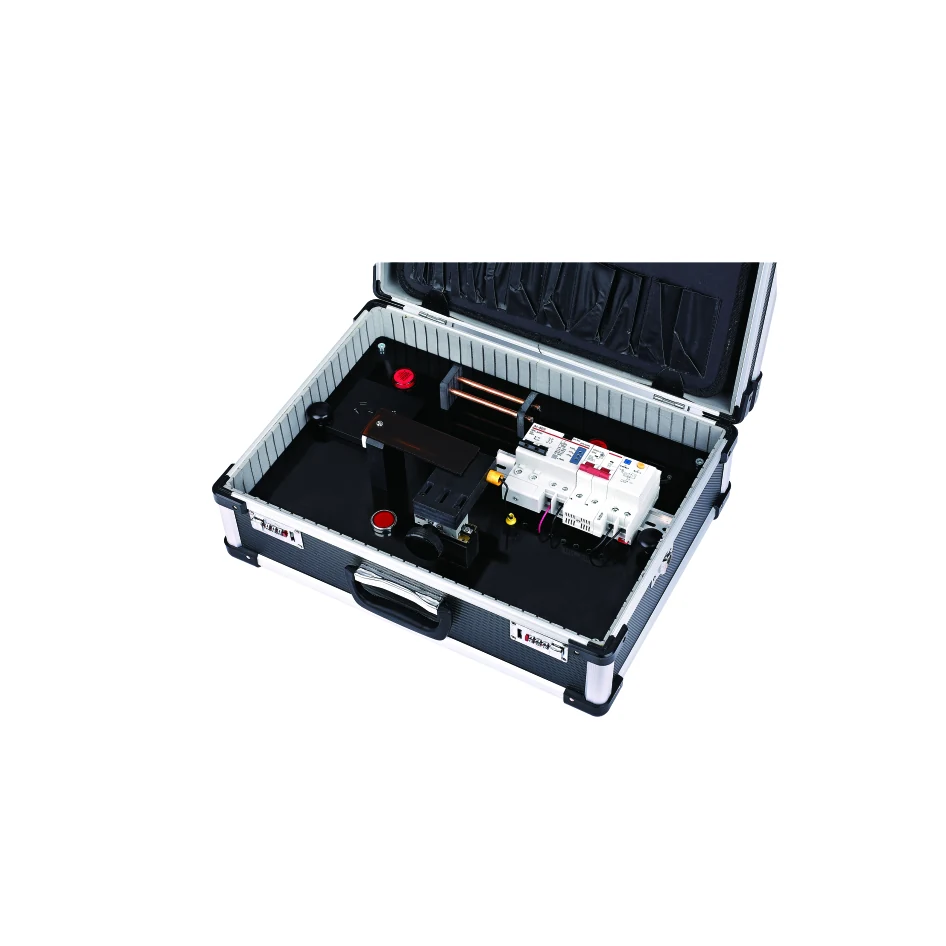
Arc-Fault Circuit-Interrupters(AFCI)
Arc Fault Electric Test Device
The Arc Fault Electric Test Device generates controlled series and parallel arc faults in circuits with loads from 1.3A...
View ProductThree DIN devices that look alike protect against three different faults. Getting the selection wrong leaves a real risk uncovered.
A miniature circuit breaker protects the cable against overload and short circuit. It reacts to current magnitude, thermally for a sustained overload and magnetically for a short circuit. Our AC range is built to GB10963.1 and IEC60898-1 with a Type C characteristic. What an MCB does not do is notice current leaking to earth, or an arc drawing normal current.
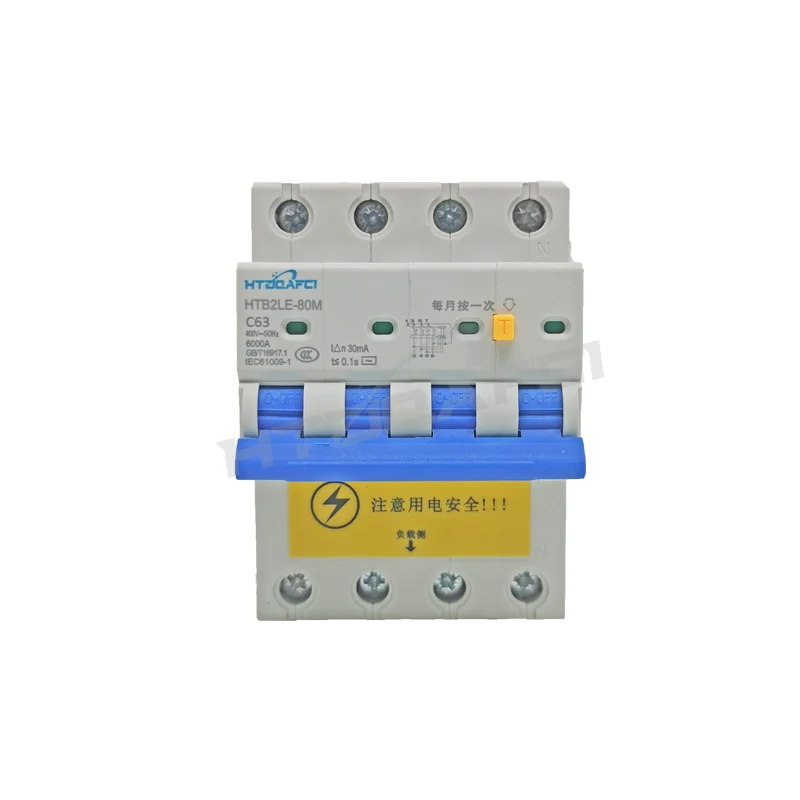
A residual current device compares the current flowing out with the current returning. A difference means current is leaking, usually through a person or through damaged insulation. An RCCB provides only that function, an RCBO combines it with overcurrent protection in one device. In this range that is the RCCB, RCBO and ELCB family, including the DZ47LE-63, HTB2L-80 and HTB2LE-40 models.
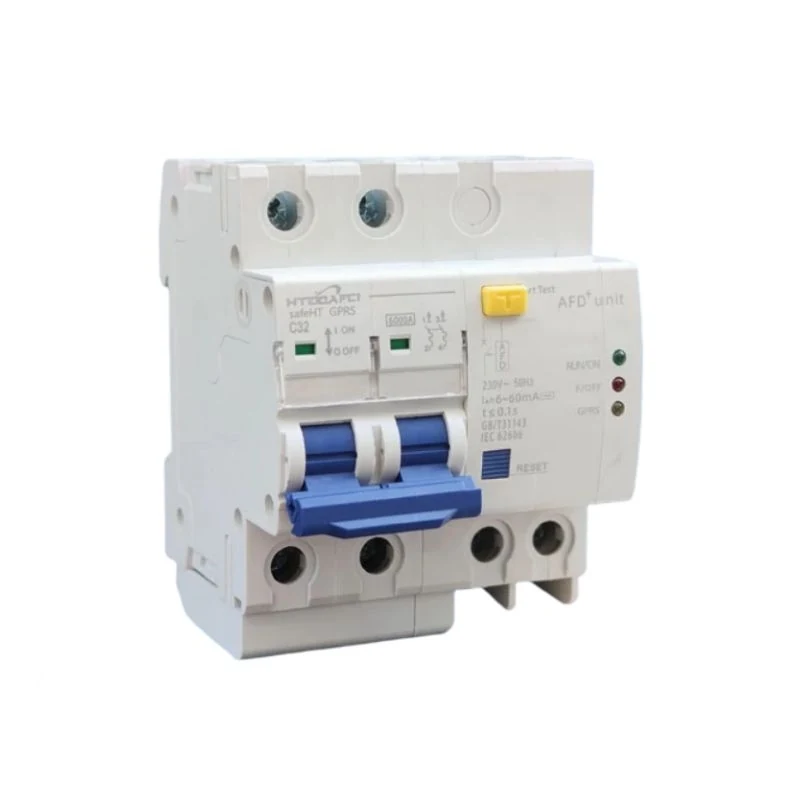
An arc fault draws current that can look entirely normal to both an MCB and an RCD. A loose terminal or a crushed flex produces an intermittent arc which generates heat at the fault point. An AFDD analyses the current signature and disconnects when it recognises an arc. Our AFDD models work at 230V 50Hz to IEC62606, including a 32A adjustable device.
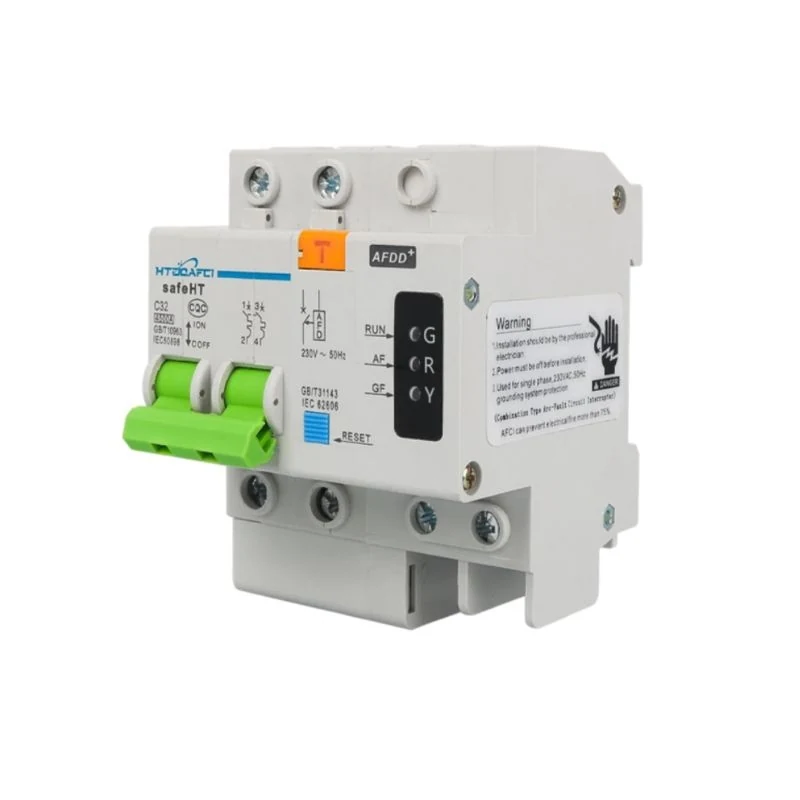
Cable protection is the MCB. Shock and earth leakage protection is the RCCB or RCBO. Fire risk from damaged wiring is the AFDD. On a circuit with old wiring feeding valuable contents all three functions are relevant, which is why AFDD and RCBO combination devices exist.
Residual current devices have a test button. Arc fault protection is harder to prove on site, which is why we supply an arc fault electric test device that generates a controlled arc so the AFDD can be demonstrated at commissioning.
The Arc Fault Electric Test Device generates controlled series and parallel arc faults in circuits with loads from 1.3A...
View ProductFor panel builders and installers, it replaces a conventional MCB or RCCB with a single device that adds reliable earth...
View ProductThe AFDD(AFCI)63A 4.5KA Arc Fault Circuit Breaker is a single-pole or double-pole device designed to detect and...
View ProductThe safeHT AFDD/AFCI is a smart arc fault detection device integrated with a miniature circuit breaker and residual...
View ProductThe protection is the same. The difference between the three smart ranges is how the device reaches the person who wants to switch it.
An AC breaker fitted to a solar string is one of the most common sourcing mistakes on the DC side and the reason the DZ47Z-63 series exists.
A Type C device is the default across most of this range. Knowing what the curve means stops nuisance tripping and undersized protection.
Metal or plastic, indoor or outdoor, surface or flush. The enclosure decision is usually made last and causes the most site problems.
What to ask a supplier before the first order, written from the questions we are actually asked.
Combination devices exist that pair arc fault detection with residual current and overcurrent protection in one DIN unit. Send the circuit detail and we will name the models.
That depends on your national wiring rules, which differ by market. The devices themselves are stated to IEC62606.
No. It detects earth leakage and overcurrent. A series arc can draw entirely normal current.
GB10963.1 and IEC60898-1 are stated for the AC miniature circuit breaker range.
With an arc fault electric test device that generates a controlled arc at commissioning.
Send it over and we will confirm which devices in this guide apply to your circuits.