Buying Guide
Choosing Furniture Casters For Office Chairs And Mobile Units
Wheel material, stem fitting and load - why the wrong caster marks a new floor, and how to check a replacement will actually fit.
The Wheel Is Chosen By The Floor
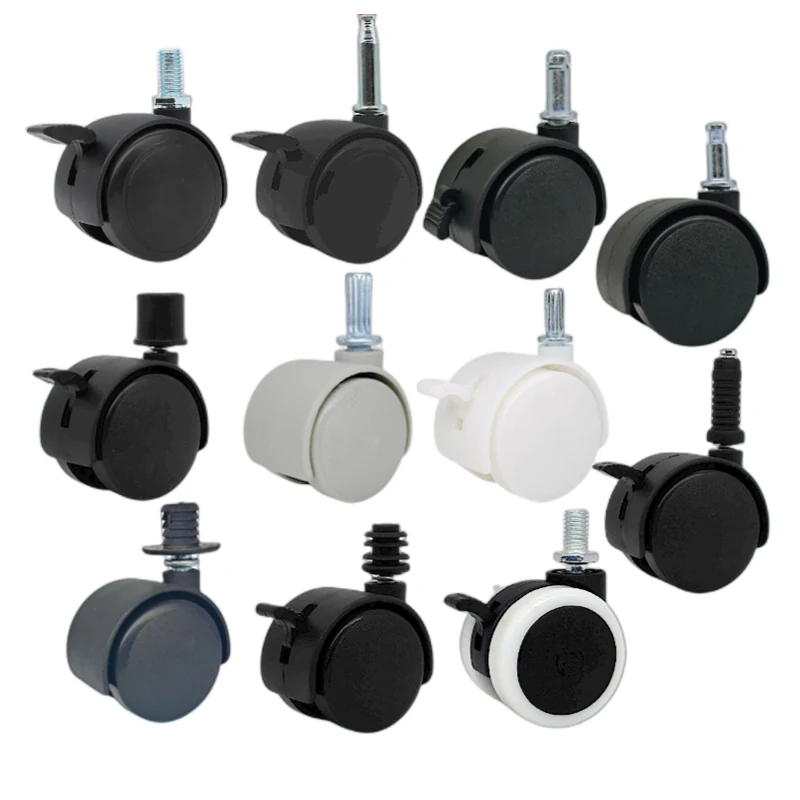
This is the whole decision in one sentence: soft wheels for hard floors, hard wheels for soft floors. A polyurethane tyre deforms slightly under load and spreads the contact patch, so it rolls over wood, laminate and tile without scoring them. A hard nylon wheel does the opposite, concentrating load into a narrow line - which is what you want on carpet, where it has to cut through the pile to roll at all, and what you absolutely do not want on a new hardwood floor.
Why Chairs Arrive With The Wrong Wheels
Office chairs ship with hard nylon casters as standard, because carpet was the default office floor for decades and nylon is cheaper. Floors changed and the default did not. The result is a familiar sequence: new hard flooring is laid, existing chairs are moved back in, and faint tracks appear along the main routes within a few months. Changing five wheels per chair is the cheapest intervention available at that point, and cheaper still before the floor goes down.
The Stem Decides Whether It Fits
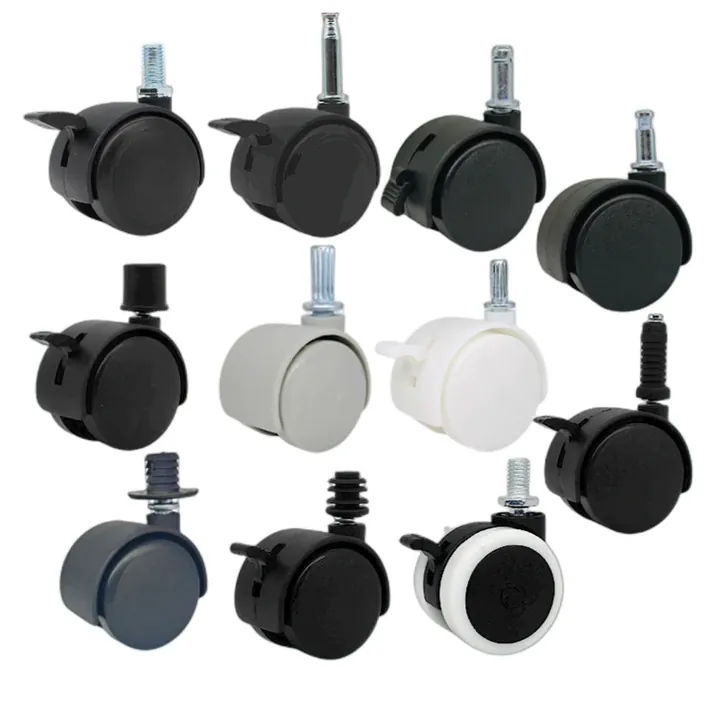
The wheel is the part people look at and the stem is the part that determines whether the caster is usable. This caster uses a metal split key ring stem - the grip-ring pattern that most office chair bases are drilled for, where a sprung ring on the stem holds it in the socket under friction. Grip-ring stems vary in diameter and length between chair makes, so before ordering a building-wide quantity, pull one caster out of an existing chair and check a sample against it.
Size And Clearance
This model is published at 2.625 in high, 0.5 in wide and 0.562 in long. Height matters more than it looks: replacing casters with a taller or shorter wheel changes the seat height of every chair in the building and can push a chair out of the range its gas lift was set up for. If you are matching existing seating, compare the overall height of the old caster, not just the wheel diameter.
Load And Duty
A five-star office chair base spreads the occupant's weight across five casters, so individual wheel loading is modest and failure normally comes from wear and debris rather than from overload. Mobile pedestals and trolleys are different - fewer wheels, heavier concentrated loads and often a rougher floor - so check the duty before assuming an office chair caster is the right part for a loaded trolley.
Buying Spares Sensibly
Casters are sold in fives for a standard chair base, and the sensible unit of purchase is chairs rather than wheels. Order against the number of chairs plus a working margin, keep the size and stem specification with the furniture records, and reorder against that specification rather than against a photograph. A caster that is a millimetre out on the stem is as useless as no caster at all.
A Short Checklist
Identify the floor first and let it choose the wheel material. Pull an existing caster and measure the stem diameter and length. Compare overall caster height, not wheel diameter, so seat heights do not change. Confirm the duty is seating rather than loaded trolley work. Then order per chair, with spares, and record the specification.
Have a specific case? Send the dimensions, the drawer schedule or the floor plan and you will get an answer about your project rather than the general rule.
Ask Our Export Team