

Ground Insulation and Frost Heave Prevention In Low Temperature Cold Storage
Engineering best practices for preventing frost heave and optimising thermal performance.
- Technical
- January 8, 2023
- 6 min read
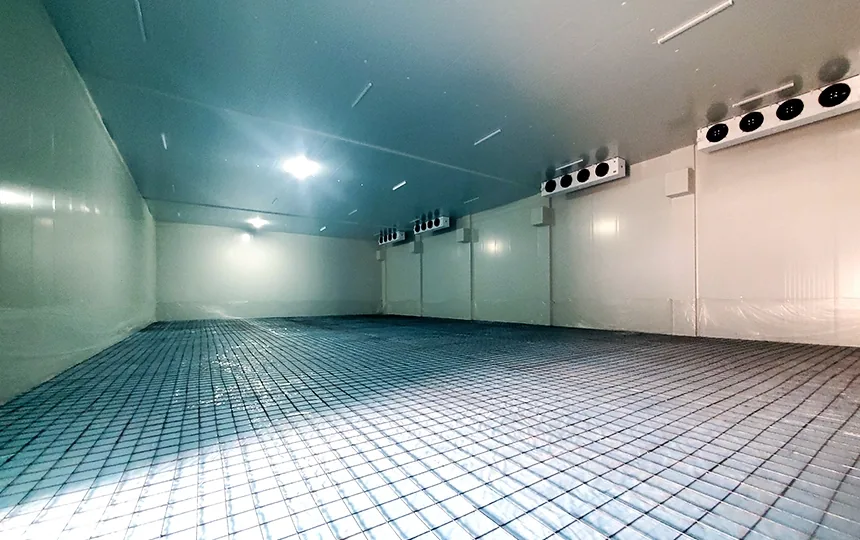
The floor is the part of a cold store that nobody inspects and nobody can repair cheaply. Get it wrong on a freezer and the slab lifts, the racking goes out of level and the only real fix is to take the room out of service and rebuild it.
Why frost heave happens
Below minus 18 degrees the cold penetrates the ground under the slab. Moisture in that ground freezes and expands, and the expansion pushes the floor upward. The process is slow, cumulative and essentially irreversible once it starts.
Three ways to prevent it
- Below-ground heating cables that hold the sub-base above freezing
- Ventilation gaps that let ambient air carry heat under the slab
- Raised floor structures that separate the cold slab from the ground entirely
Which one suits a site depends on ground conditions, water table, available floor-to-ceiling height and whether the building is new or existing. Heating cables are the most common choice in new industrial builds because they need no extra height and can be zoned and monitored.
Insulation practice follows the temperature
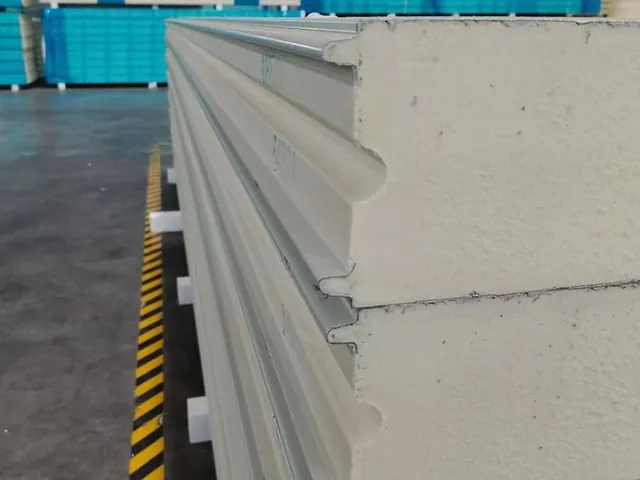
Ground insulation practice differs based on storage temperature. A plus 4 degree chiller has a very different floor build-up from a minus 25 degree freezer: thickness, moisture barrier and frost protection all scale with the temperature difference across the slab.
| Room duty | Floor insulation | Frost heave protection |
|---|---|---|
| Chiller, 0 to +5 degrees C | Moderate thickness | Usually not required |
| Freezer, -18 to -25 degrees C | Heavy thickness | Required |
| Blast freezer, below -30 degrees C | Heaviest thickness | Required, zoned and monitored |
Three things designed together
Load bearing, insulation thickness and moisture barriers must be designed comprehensively for each project rather than specified separately. Insulation that cannot carry forklift and racking loads will crush; a moisture barrier in the wrong plane will trap water inside the build-up, where it will freeze.
On Howcool export projects the insulated floor build-up with anti-frost-heave heating is part of the EPC scope, so the slab, the insulation and the heating are one design and one responsibility.
Quick Answers
At what temperature does frost heave become a risk?
Below minus 18 degrees Celsius, frost heave prevention becomes critical for the floor build-up.
What are the options for preventing frost heave?
Below-ground heating cables, ventilation gaps, or raised floor structures — chosen according to ground conditions and available height.
Can floor insulation be added to an existing freezer?
Only by taking the room out of service and rebuilding the floor, which is why the build-up should be designed correctly at the outset.
More Engineering Notes
Grape Cold Storage Operating Procedure Temperature Humidity and CA
A complete guide to grape cold storage — variety tolerance, optimal temperature ranges, humidity and CA best practices.
3500 Square Metre Low Temperature Cold Storage Delivered In 120 Days
Six-room -18~-25℃ storage for beef, lamb and seafood. 120-day total build.
20000 Ton Seafood Cold Storage Enters Final Commissioning
20,000-ton seafood refrigeration project enters final commissioning phase.
Belt And Road Customs Supervised Cold Storage First Phase Handed Over
First phase of 100,000-ton customs logistics port cold storage successfully handed over.
Apply This To Your Own Facility
Send the room dimensions, target temperature and product type and our engineers will return a heat load calculation and equipment selection.