
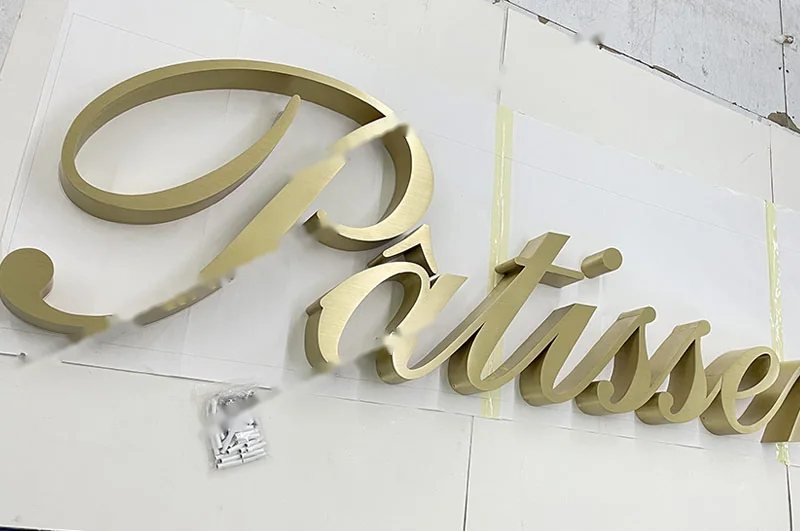
Two Numbers That Drive Everything Else
Our letters start at 6 mm thick and 40 mm high. Those two numbers set the cost, the fixing method, the lead time and — more than anything else — whether the sign reads from where people actually stand.
Get them settled before you ask for a price, because every other decision depends on them.
Start With Viewing Distance
- Letter height is a function of how far away the reader is, not of how much wall you have. A name that has to be read from across a car park needs a different height from the same name above a reception desk.
- Measure the real viewing position. On a high street the reader is usually on the opposite pavement, not directly underneath the fascia.
- Where a name has several lines at different sizes, fabricate the whole set as one job so stroke weights stay visually consistent between lines.
Then Choose Thickness
- 6 mm is the minimum we work in, and it is enough for most flat-cut letters at ordinary heights.
- Go thicker where the letter is large, where the edge is a visible part of the design, or where the sign is within reach of the public and will get knocked.
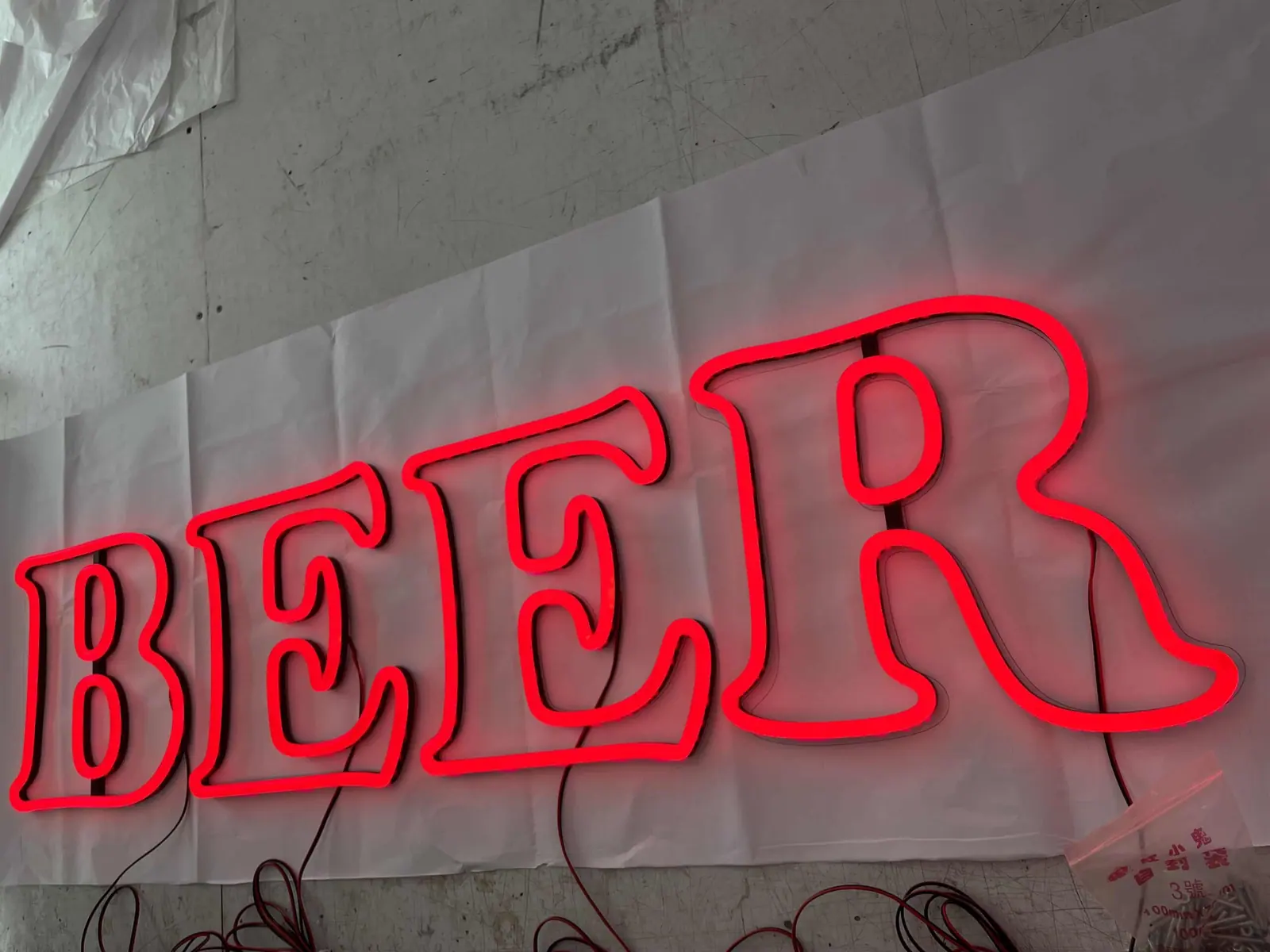
- For built-up and box letters, the number that matters alongside thickness is return depth — the distance the letter stands off the wall. That is what creates the shadow line, and if the letter is to be lit, it is what determines whether the face lights evenly.
Where Material Changes the Answer
- Stainless steel is heavy. Above a certain height the fixing — and the crew carrying it up the scaffold — becomes the limiting factor rather than the metal.
- Aluminium weighs far less at the same size, which is why very large facade letters are often specified in lacquered aluminium rather than steel.
- If the brand colour matters more than the metal finish, aluminium lacquered to a RAL or Pantone reference is usually the more honest answer than a painted steel letter.
Putting It on the Drawing
Send vector artwork with the cap height marked, the material and grade named, and the colour reference quoted. We return an approval drawing showing thickness, return depth, finish and the fixing detail.
Nothing is cut until that drawing is signed off. Fabrication then runs 5 to 7 days.
Related References
Products Covered by This Guide
 Ref 130
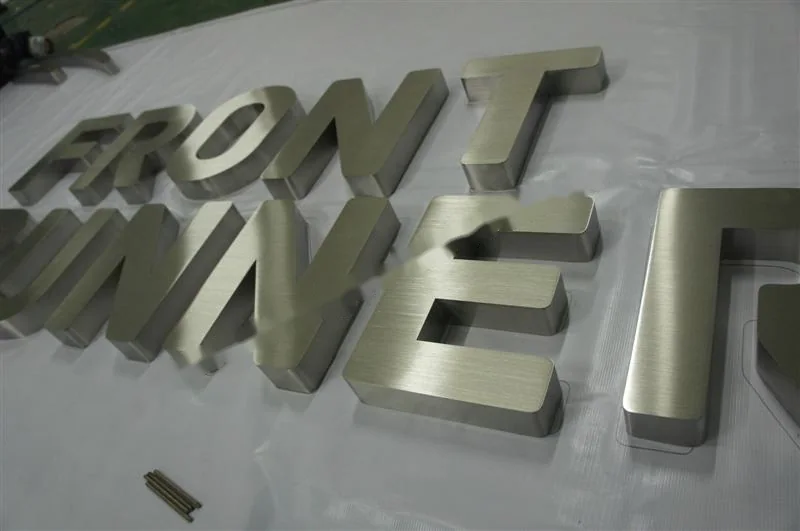
Brushed Stainless Steel Relief Letter Ref 130
Relief Letter in brushed stainless steel
View reference →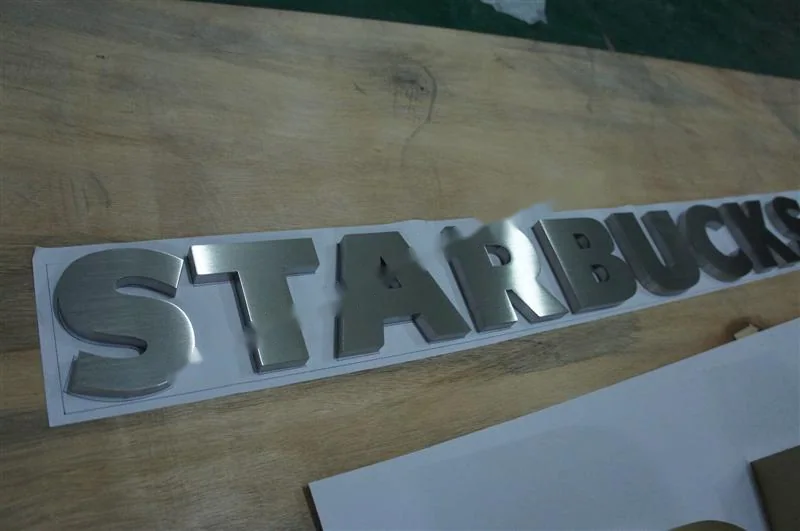 Ref 129
Brushed Stainless Steel Relief Letter Ref 129
Relief Letter in brushed stainless steel
View reference →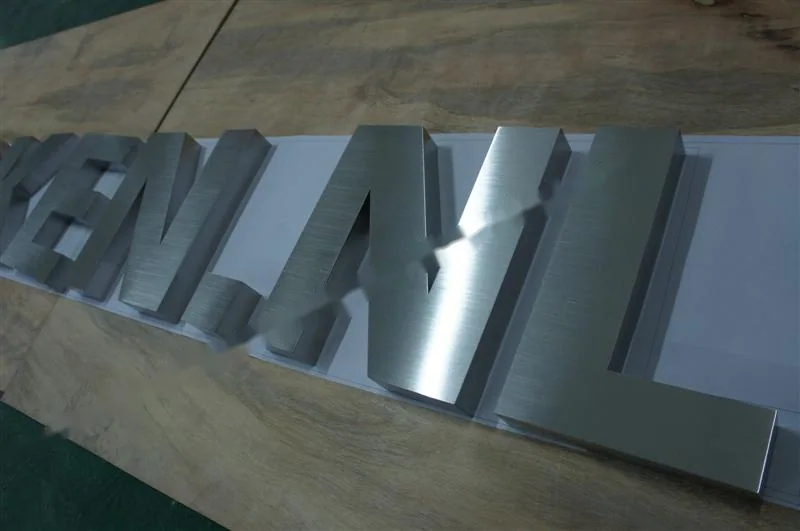 Ref 128
Brushed Stainless Steel Relief Lettering Ref 128
Relief Lettering in brushed stainless steel
View reference →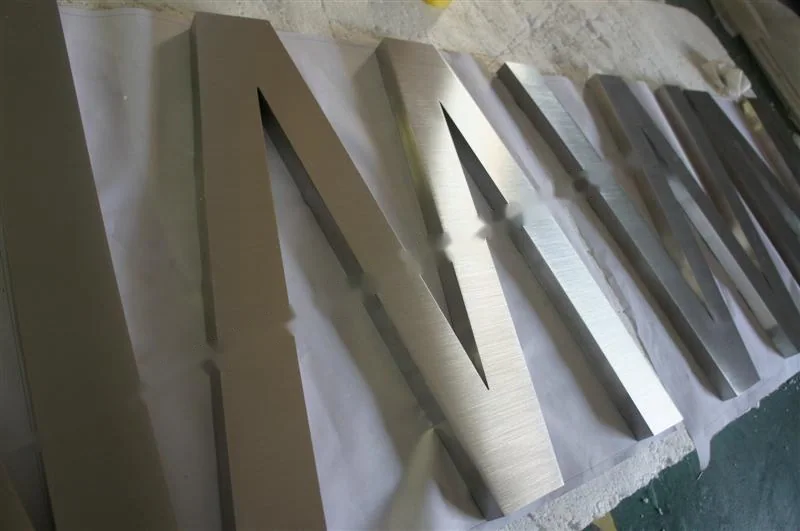 Ref 127
Brushed Stainless Steel Box Letter Ref 127
Box Letter in brushed stainless steel
View reference →Keep Reading
Other Guides
How to Start a Metal Sign Business
Market research, registration, workshop layout, equipment and the skills a metal sign shop actually needs.
Stainless Steel 304 vs 316 for Sign Letters
Which grade to specify, and the one question about the site that settles it.
Brushed vs Mirror Polished Stainless Steel Letters
How each finish behaves under daylight, spotlights and dirt — and where each one fails.
Answers
Related Questions
How is the set packed for export?
Letters are individually wrapped and packed flat. Mirror-polished faces keep their protective film until the moment of installation.
What is the smallest letter you can make?
Letter height starts at 40 mm. Below that the return depth and the fixing studs stop being practical.
Are the LED components certified?
The LED modules and power supplies we use in illuminated letters are CE, RoHS and UL approved.
What stainless grade do you use?
Stainless steel 304 or 316, chosen on request. 304 suits ordinary inland exposure; 316 is the better choice near the coast or anywhere with a high salt or chemical load.
Talk It Through With the Workshop
Send the drawing and the site details and we will tell you what we would build and why.