
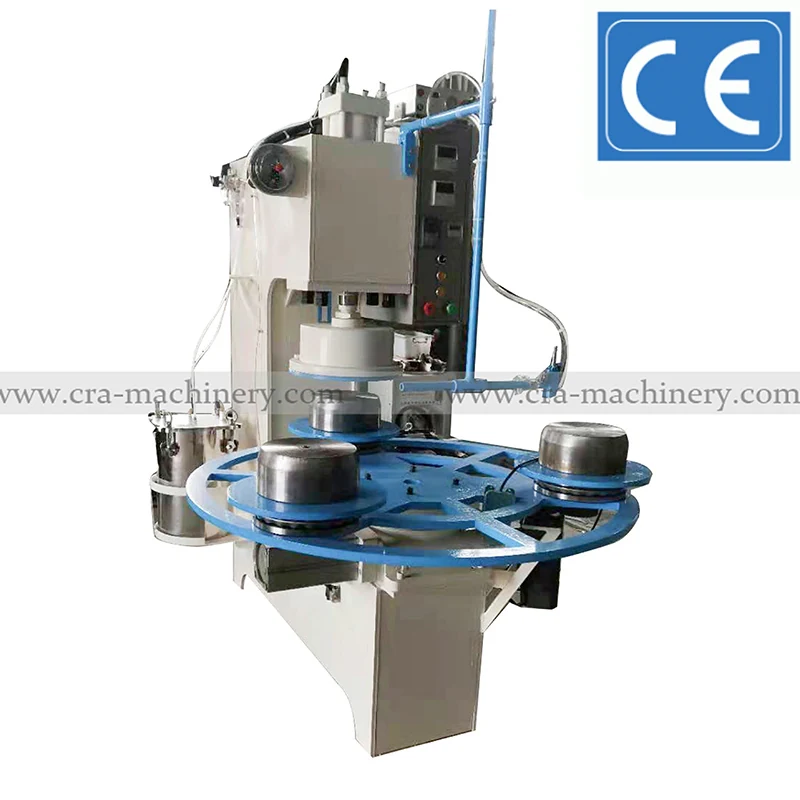
Roll Glue Press Machine for Pleated Buffs
The Roll Glue Press Machine for Pleated Buffs applies adhesive and presses fabric layers into a pleated wheel body. It handles outer diameters from 200 mm to 600 mm and uses a foot switch to control fabric rotation, glue application, and pressing speed. The machine is CE certified and designed for...
Product Overview
The Roll Glue Press Machine for Pleated Buffs applies adhesive and presses fabric layers into a pleated wheel body. It handles outer diameters from 200 mm to 600 mm and uses a foot switch to control fabric rotation, glue application, and pressing speed. The machine is CE certified and designed for one operator. It is used in the middle step of a four-machine line: after fabric pleating and before final pressing and trimming.


Key Benefits
- One operator runs the entire glue and press cycle with foot control
- Adjustable glue flow via valve on the glue tank for consistent bonding
- Variable speed control via frequency changer on the panel for different fabric types
- 30 tons of pressing force ensures dense, stable pleat structure
- Inner support molds included: 2 sets with 3 heads each, ready for immediate use
- CE certified for compliance with European safety and electrical standards
Application Scenarios
- A buffing wheel factory replacing manual glue application and pressing with a repeatable machine process
- An abrasive manufacturer adding pleated buffs to their product range with consistent quality
- A workshop that already uses a CRA-500 bias cutter and needs a glue and press machine next
- A production line upgrading from hand-pressed pleated wheels to machine-controlled pressure and timing
Who It Is For
- Buffing and polishing wheel manufacturers
- Abrasive product makers expanding into pleated buffing wheel production
- Metal finishing shops producing their own pleated buffs in volume
- Distributors in regions where imported pleated buffs have high freight and lead time
Problems It Solves
- Manual glue application leads to uneven bonding and inconsistent pleat density
- Hand pressing cannot maintain uniform pressure across multiple wheels or shifts
- Lack of speed control causes over-glue or under-glue on different fabric types
- No standardization in pleat alignment when pressing by hand leads to wheel imbalance
- Changing wheel size requires retooling and retraining, not just a dial setting
Technical Features
- Main body with hydraulic assembly and hydraulic piping system
- Pneumatic control components and pneumatic piping system integrated with electrical control box
- Foot switch controls fabric rotation, glue application, and pressing speed simultaneously
- Frequency changer on panel adjusts rotation and glue speed independently
- Glue flow regulated by valve on the glue tank for precise control
- Pressure, number of fabric circles, and rolling speed set directly on the control panel
Specifications
| Model | Roll Glue Press Machine for Pleated Buffs |
|---|---|
| Voltage | 380 V (transformer available for different countries) |
| Pressure | 30 tons |
| Machine Size | 1950 mm x 1350 mm x 1900 mm |
| Weight | 400 kg |
| Max Buff Diameter | 600 mm |
| Min Buff Diameter | 200 mm |
| Inner Support Mold | 2 sets (3 heads each set) included |
| Buffs ID | Customized |
Values taken from the manufacturer data for this model. Anything not listed is confirmed on request before order.
Materials
- Pleated fabric rolls prepared on a CRA-500 or equivalent
- Adhesive suitable for fabric bonding in buffing wheels
- Inner support molds with 3 heads per set, for 200 to 600 mm wheels
- Customized iron claw or iron plate centres for the wheel core
Manufacturing And Process
Step 1
Prepare pleated fabric rolls on a CRA-500 or equivalent bias cutting and rolling machine
Step 2
Load the fabric roll and select the inner support mold for the target wheel diameter
Step 3
Set the number of fabric circles, rotation speed, and glue flow on the control panel
Step 4
Use the foot switch to start fabric rotation, glue application, and pressing in sequence
Step 5
The machine applies adhesive and presses the pleated fabric into a solid wheel body
Step 6
Unload the finished wheel and send it to the final pressing or trimming stage
Quality Control
- Hydraulic pressure held at 30 tons to ensure consistent pleat density
- Sample wheels tested before shipment using the buyer’s fabric and glue
- Free sample testing available on the buyer’s own materials before purchase
- Installation and operation training provided to ensure correct setup and first run
Customization Options
- Voltage and phase configured for the destination market with a transformer
- Inner support molds supplied for the diameter bands the buyer actually produces
- Glue tank valve and frequency changer settings adjusted for the buyer’s fabric type
- Machine can be quoted as part of a CRA-500, CRA-800, CRA-600, CRA-700 line
Compared With The Alternatives
| Manual glue and press process | Hand application lacks consistent pressure and glue flow, leading to weak bonds and variable wheel quality |
|---|---|
| CRA-600 Pressing Machine | The CRA-600 presses pre-formed wheel bodies; this machine applies glue and presses during the forming stage |
| CRA-300 Iris Machine | The CRA-300 forms iris-style wheels; this machine is for pleated wheels with layered fabric and adhesive |
Use Guide
- Ensure fabric is properly pleated before loading; uneven pleating causes misalignment during pressing
- Adjust the glue flow valve to match fabric thickness and adhesive type to avoid over- or under-glue
- Use the frequency changer to match the foot switch speed to the fabric feed rate
- Keep the inner support mold set aligned with the wheel diameter to prevent misshapen wheels
- Contact us on WhatsApp for the English operation video if the operator is new to this machine
Roll Glue Press Machine for Pleated Buffs FAQ
What is the maximum and minimum wheel diameter this machine can make?
200 mm to 600 mm outer diameter. For smaller wheels, consider the CRA-300 iris machine.
How many people are needed to run it?
One operator. The foot switch controls rotation, glue, and pressing in sequence.
What is the pressing force?
30 tons of hydraulic pressure ensures consistent pleat density.
Can I use my own fabric and glue?
Yes. Free sample testing is available on your materials. You cover freight and supply the fabric and glue.
What is the lead time?
5 to 15 workdays if in stock, otherwise 15 to 60 workdays depending on quantity and model.
What are the payment terms?
Orders up to 10000 USD are 100% in advance. Above 10000 USD it is 30% T/T deposit with the balance before shipment.
Is the machine CE certified?
Yes, the machine is CE certified for compliance with European safety and electrical standards.
Related Products

Long Arm Heavy Duty 1 Meter Buffs Sewing Machine
View Details
High Speed Polish Compound Machine Polish Paste Mixer Tank
View Details
Sisal Rope Buffs Forming Machine
View Details
200A Mini Cloth Sisal Buffs Forming Machine for Angle Grinder Wheel
View DetailsLines Industries And Guides
Pleated and Sewn Buff Line
Pleated and sewn buffs are produced using a fold and stitch machine with a fabric feed rack, followed by a roll glue press for...
Abrasive and Buffing Wheel Manufacturing
Buffing wheel factories are the core customer for CRATOOLS machines. A complete airway buff line is CRA-500 bias fabric cutting...
Get A Price On The Roll Glue Press Machine for Pleated Buffs
Send the quantity, the diameters and the material you run. We answer with price, lead time and packing within 24 hours.