
How to Choose Wall Thickness for a Stainless Steel Sphere
What 1 mm, 2 mm and 6 mm walls actually change, and why thickness is a handling decision more than a strength one.
Why Thickness Is a Real Decision
Our hollow spheres are offered in wall thicknesses from 1 mm to 6 mm, and the difference is not academic. Wall thickness sets the weight, the cost, how the sphere behaves during installation, and how it survives being leaned on. A sphere that is correctly specified in a private garden can be badly under specified in the middle of a plaza at exactly the same diameter.
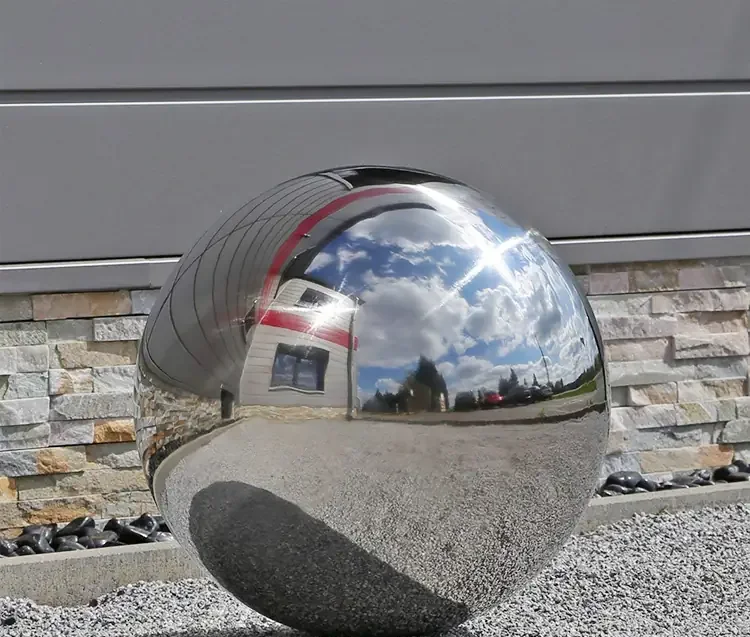
See Hollow Stainless Steel Balls Diameter 19 mm to 3000 mm
1 mm and 2 mm
1 mm suits small decorative balls, handrail infill and interior pieces that nobody handles roughly. 2 mm is the general default across the catalogue and covers most garden spheres, interior pieces and mid size decorative work. At 2 mm a sphere is stiff enough to survive careful handling and light enough to place without lifting plant.
4 mm to 6 mm
Heavier walls are for pieces that are large, publicly accessible, or handled by people who did not commission them. If a sphere sits where people will lean on it, sit on it or climb it, the wall goes up. Heavier walls also make it easier to weld substantial pedestals and anchors without distorting the surface during the weld.
Diameter Does Not Set Thickness by Itself
It is tempting to assume that a bigger sphere simply needs a thicker wall, but exposure and access matter as much. A three metre sphere on a private lawn behind a gate is a different problem from a one metre sphere at a station entrance. Tell us where the piece stands and who reaches it, and the thickness recommendation follows from that.
Thickness and Installation
Weight scales with wall thickness, and weight is what decides whether two people with a padded cradle can place a piece or whether a crane day has to be booked. For large diameters we supply shop drawings with the weight and the lift points so the installer can plan before the crate arrives.
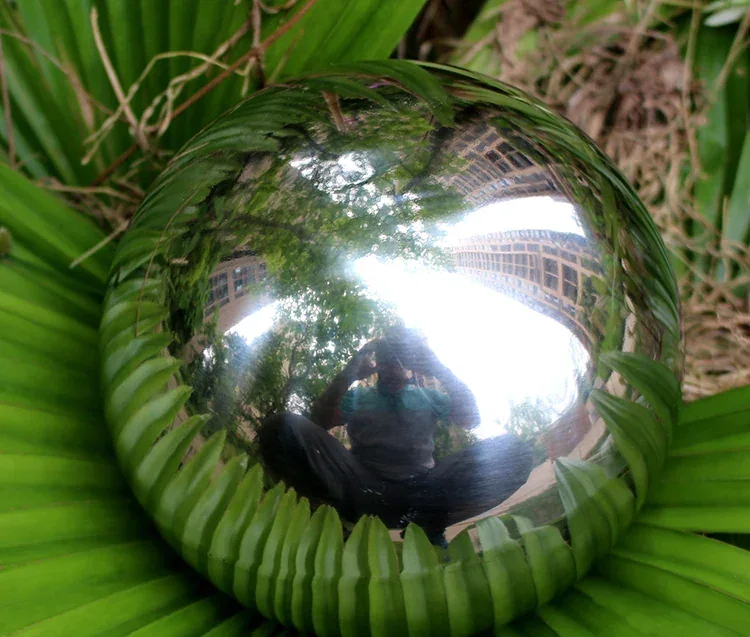
See 1100mm Mirror Polished Large Stainless Steel Hollow Sphere
What to Tell Us
Diameter, where the sphere will stand, whether the public can reach it, and the fixing you already have. From those four answers we can recommend a wall between 1 mm and 6 mm and quote it. Diameters run from 19 mm to 3000 mm with no fixed steps, so an intermediate size costs the same as a round number.
Products Covered in This Guide
 Stainless Steel Spheres
Hollow Stainless Steel Balls Diameter 19 mm to 3000 mm
View Details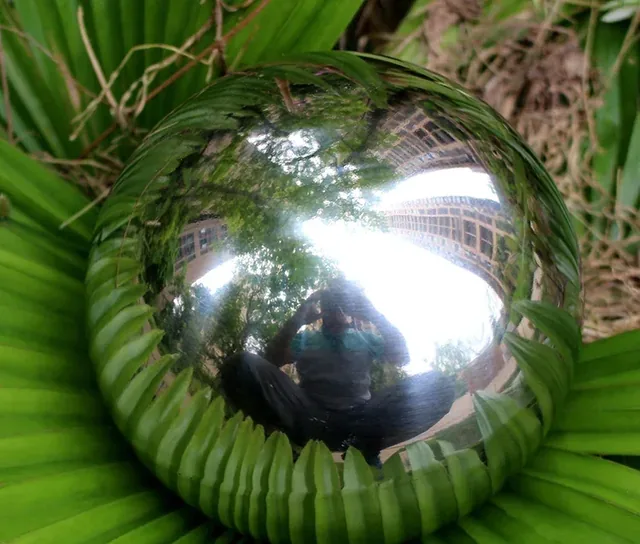 Stainless Steel Spheres
1100mm Mirror Polished Large Stainless Steel Hollow Sphere
View Details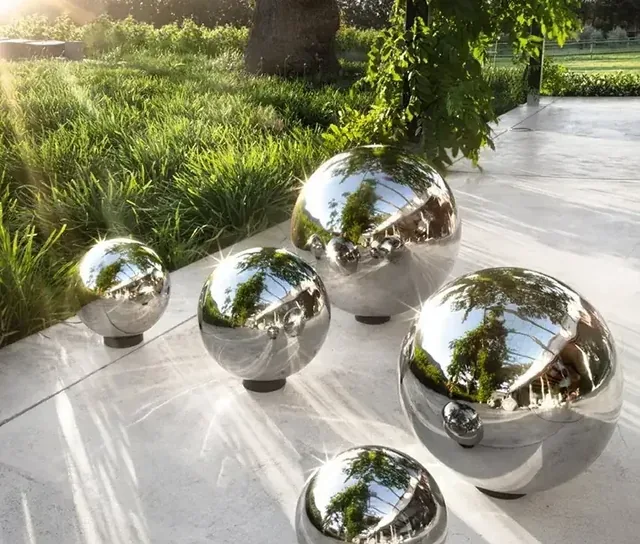 Stainless Steel Spheres
Stainless Steel Gazing Ball
View Details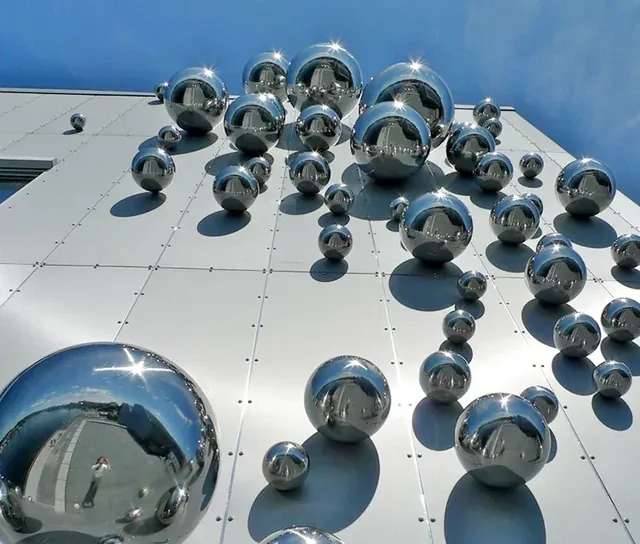 Stainless Steel Spheres
Garden Stainless Steel Ball Sculpture
View DetailsQuestions on This Topic
What is the standard wall thickness?
2 mm is the general default. The full range offered is 1 mm to 6 mm and the right answer depends on size, exposure and handling.
Does a thicker wall make the sphere more corrosion resistant?
No. Corrosion resistance comes from the grade, not the thickness. Choose 316 for chloride exposure and set thickness separately.
Can a thin sphere be repaired if it dents?
A dent in a mirror polished surface is effectively permanent. Where dents are a realistic risk, specify a heavier wall instead.
Is there a diameter above which you always recommend heavier walls?
There is no single cut off. Large public pieces get heavier walls; large pieces in private gardens often do not need them.
Do you supply weights before delivery?
Yes, on the shop drawings for large pieces, together with lift points.
Tell Us the Diameter and the Site
We will recommend a wall thickness between 1 mm and 6 mm and quote the sphere with the right fixing.