
How to Calculate Thread Consumption and Order the Right Kilos per Colour
Estimate thread use per garment, convert it to kilos per colour, and plan against 15 KG minimum on 40/2 and 25 KG on 20/2 thread.
Start With Consumption Per Garment
Work from one operation at a time rather than guessing a flat number for the whole garment. Count the seams, note the stitch length each one uses, and multiply seam length by a stitch factor to get thread length per seam. Adding the operations together gives you grams of thread per garment per colour. A thobe line and a uniform line will land on very different figures even at the same garment weight, because topstitching eats far more thread than a plain closing seam.
Convert Grams Into Kilos Per Colour
Once you have consumption per garment, multiply by the quantity you plan to cut per colour and divide by a thousand. Add a margin for setup runs, colour changes and rejected panels so the line does not stop waiting for thread. This is the figure you quote against, not the figure on your cutting order. Sourcing thread by kilos per colour also matches how suppliers price it, so your estimate and your quotation end up in the same unit.
Plan Against the Minimum Order Per Colour
The minimum order is 15 KG per colour on 40/2 thread and 25 KG per colour on 20/2 thread. Check your calculated kilos against these floors before you commit to a colour. If a trim colour needs only a few kilos, either group it with another style running the same colour, or accept that you will carry stock forward to the next order. Planning this before cutting starts is cheaper than discovering it when the line is already running.
100% Polyester Sewing Thread 40/2 X 3000 Yards
Break the Kilos Down Into Cones
Kilos on a purchase order still have to reach the machines as cones. Divide the kilos per colour by the net thread weight of the put-up you plan to run, and round up to whole cones. A lighter put-up gives finer steps between orders and suits sampling or short colour runs; a heavier put-up means fewer cone changes on a long programme.
Polyester Sewing Thread 20S/2 x 2370 Yards
Order Early for Special Colours
Standard shades can usually be pulled from stock, but a matched shade for a specific fabric has to be dyed to order, and dyeing runs in batch minimums. Send your consumption calculation and shade standard together with the enquiry so the supplier can confirm the batch size against your kilos before you plan the cutting date. Getting the count, colour and kilos confirmed in one message avoids a second sampling round.
Items Mentioned Above
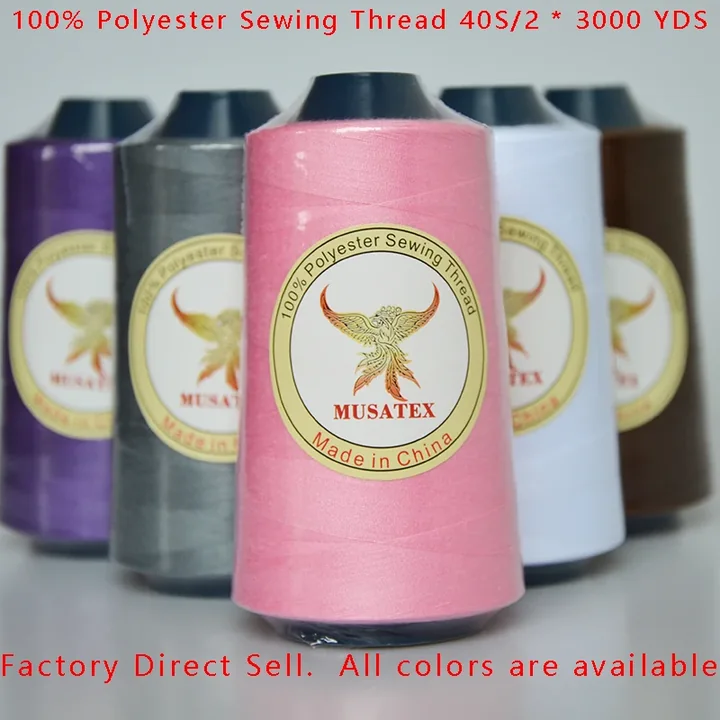
100% Polyester Sewing Thread 40/2 X 3000 Yards
A 40S/2 spun polyester sewing thread wound to an exact 3000 yards per cone, made in our own thread factory in Yiwu.
View details
100% Polyester Sewing Thread 20S/2
A 20S/2 spun polyester sewing thread wound to a net weight of 132 g per cone, made in our own thread factory in Yiwu.
View details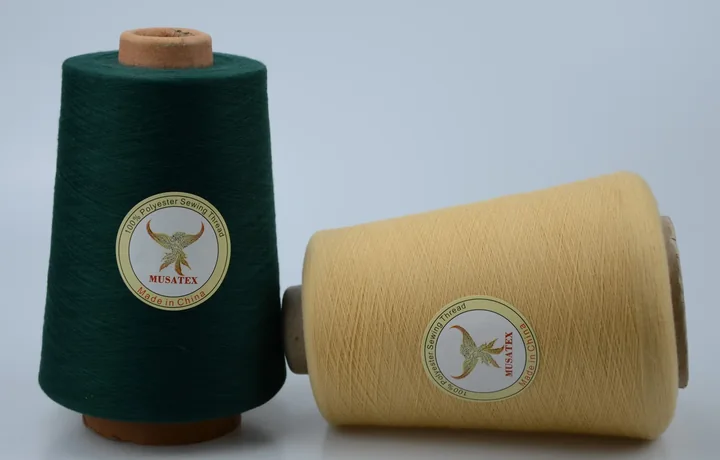
100% Polyester Yarn 32S/1 400G
A 32S/1 single-ply spun polyester yarn wound to a net weight of 400 grams per big paper cone, made in our own thread factory in Yiwu.
View details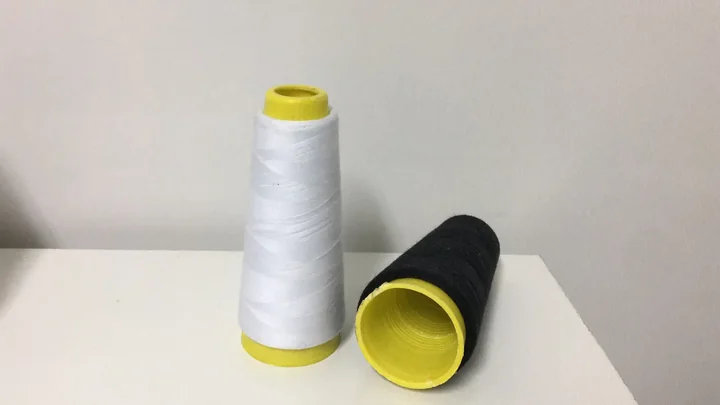
100% Polyester Sewing Thread 950 YDS
A 40S/2 spun polyester sewing thread wound to an exact 950 yards per cone, made in our own thread factory in Yiwu.
View detailsQuestions On This Topic
How do I estimate thread consumption for a new style?
List every seam operation, take the seam length for each, apply a stitch factor, and total the result. That gives grams of thread per garment, which you multiply by cutting quantity per colour.
What is your minimum order per colour?
15 KG per colour on 40/2 sewing thread and 25 KG per colour on 20/2 sewing thread.
My colour needs less than the minimum. What can I do?
Combine it with another style running the same colour, choose the closest standard shade, or plan to carry the surplus into your next order of that colour.
How many cones will my kilos turn into?
Divide kilos per colour by the net thread weight of the cone put-up you plan to run and round up. Ask us to quote net thread weight per cone so the calculation is based on thread only.
Which count should I calculate separately?
Calculate 40/2 and 20/2 consumption separately. They go to different operations, they carry different minimums per colour, and mixing them into one figure hides both problems.
What information should I send for a thread quotation?
Count, colour or shade standard, calculated kilos per colour, and the cone put-up you want. We quote per colour and per carton by email or WhatsApp.