
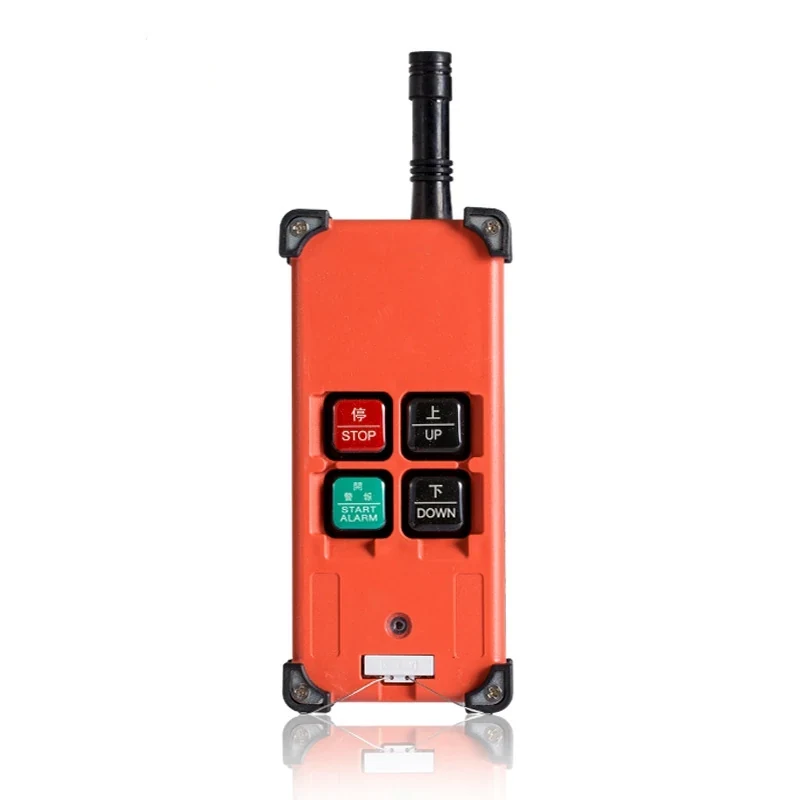
Electric Hoist Remote Control
The AR1-2S is a radio remote control set for electric hoists, monorails and single speed hoist cranes, supplied as a matched transmitter and receiver pair. It features two single speed function buttons and an emergency stop, allow
What The Electric Hoist Remote Control Is For
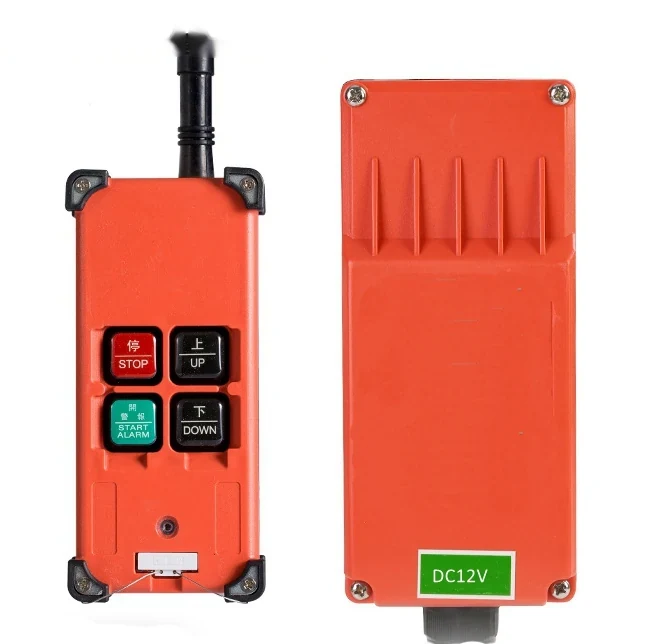
The AR1-2S is a radio remote control set for electric hoists, monorails and single speed hoist cranes, supplied as a matched transmitter and receiver pair. It features two single speed function buttons and an emergency stop, allowing precise control of hoist and travel motions from up to 100 metres away. Both units are rated IP65 and built with glass fibre-reinforced nylon for durability in harsh industrial environments. The receiver is available in multiple voltages including DC12V, DC24V, AC36V, AC220V, AC380V or 12-72V, so it can be installed directly on existing control panels without a transformer.
What You Get From This Unit
- Operator can control the hoist from a safe distance without being tethered to the machine by a pendant cable
- Single speed control on two motions allows fast travel and slow, precise positioning without extra hardware
- IP65 protection on transmitter and receiver ensures reliable operation in dusty, wet or wash-down environments
- Receiver voltage built to order avoids adding a control transformer to the panel
- Over 4.3 billion unique ID codes prevent interference between nearby hoists or cranes
Electric Hoist Remote Control As Supplied
Where This Model Is Used
- Single hook electric cable hoists in fabrication and assembly shops
- Monorail systems where the operator needs to move alongside the load
- Single speed hoist cranes in maintenance bays exposed to moisture and debris
- Retrofit of an existing pendant-controlled hoist without rewiring the panel
- One-person operation of a hoist where the operator must stay near the load for safety
Buyers This Model Suits
- Electric hoist and monorail OEMs specifying controls into new machine builds
- Maintenance teams replacing a failed or worn pendant station
- Equipment dealers stocking a control unit that fits multiple voltage systems
- Traders sourcing a radio control set from China at low MOQ for quick delivery
What Goes Wrong Without It
- Operator must walk with the hoist while holding a pendant cable that drags on the floor or gets caught on obstacles
- Operator cannot see the hook and must rely on a second person to signal during lifting
- Existing panel runs AC220V and a standard 12V receiver would need an extra transformer
- Two hoists in the same bay respond to the same transmitter due to shared frequency
- Pendant cable and plug fail repeatedly in a wet or dusty environment
How The Unit Is Built
- 2 single speed function buttons, 1 emergency stop, 1 on/off switch
- 14 control motions from the two single speed buttons
- Full sealed relay outputs rated 5 amperes
- Transmitter LED flashes green when battery is sufficient and red when low
- Glass fibre-reinforced nylon housing on both transmitter and receiver
- Operating temperature range from -35 C to +85 C
- Control distance up to 100 metres in all directions
Data From The Original Product Sheet
| Model | AR1-2S |
|---|---|
| Configuration | 1 transmitter with 1 receiver |
| Speed | Single speed |
| Function buttons | 2 |
| Control distance | Up to 100 m |
| Channels | 80 |
| Unique ID codes | Over 4.3 billion |
| Enclosure protection | IP65 |
| Working temperature | -35 C to +85 C |
| Transmitter voltage | DC3V (2 AA batteries) |
| Receiver power | DC12V, DC24V, AC36V, AC220V, AC380V, 12-72V or as specified |
| Output capacity | Full sealed relay output, 5 A |
| Housing material | Glass fibre-reinforced nylon |
| Colour | Orange |
| Warranty | 1 year |
What The Housing And Contacts Are Made Of
- Glass fibre-reinforced nylon transmitter and receiver housings for impact resistance on a shop floor
- Sealed relay contacts rated 5 A so the receiver switches contactor coils directly
How This Unit Is Made
Step 1
Boards are populated on the SMT line and soldered on the automatic wave soldering machine
Step 2
Transmitter and receiver are paired to a unique ID code and channel before assembly
Step 3
Each set is function tested against the ordered receiver voltage before packing
Step 4
S/N and channel are printed on the back of both units so a replacement can be matched later
What Is Checked Before It Ships
- Raw material through finished product is inspected step by step on the production line
- Working process follows ISO9001:2008
- Every set is powered up and each motion is checked before it leaves the line
- 12 month warranty from delivery
What Can Be Changed On Your Order
- Receiver voltage selected from the listed range at order time
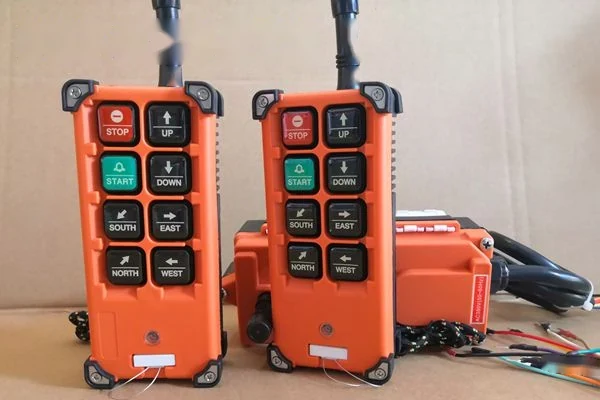
- Button text supplied as arrow tips or as your own English labels
- Two transmitters paired to one receiver, or a spare transmitter added to the set
- Own brand and label printing accepted on OEM orders
How It Compares With The Alternatives
| Wired pendant control station | Radio removes the trailing cable but adds batteries to change and a receiver to wire in; a pendant is cheaper and never needs pairing |
|---|---|
| F21-4S with four buttons | The 2S has fewer motions; if the machine needs more than two single speed functions, the 4S is the better fit |
| Joystick sets such as F24-60 | Push buttons are faster to train an operator on; a joystick gives proportional control that push buttons cannot |
Getting It Onto The Machine
- Confirm the control voltage on the existing hoist panel before ordering the receiver
- Count the motions the machine actually needs, then choose the button count with one spare
- Mount the receiver inside the panel with the 1 m cable running to the contactor terminals
- Watch the transmitter LED: slow red flashing means change the two batteries
- Record the S/N and channel from the back of both units so a lost transmitter can be replaced without changing the receiver
Other Models In This Series
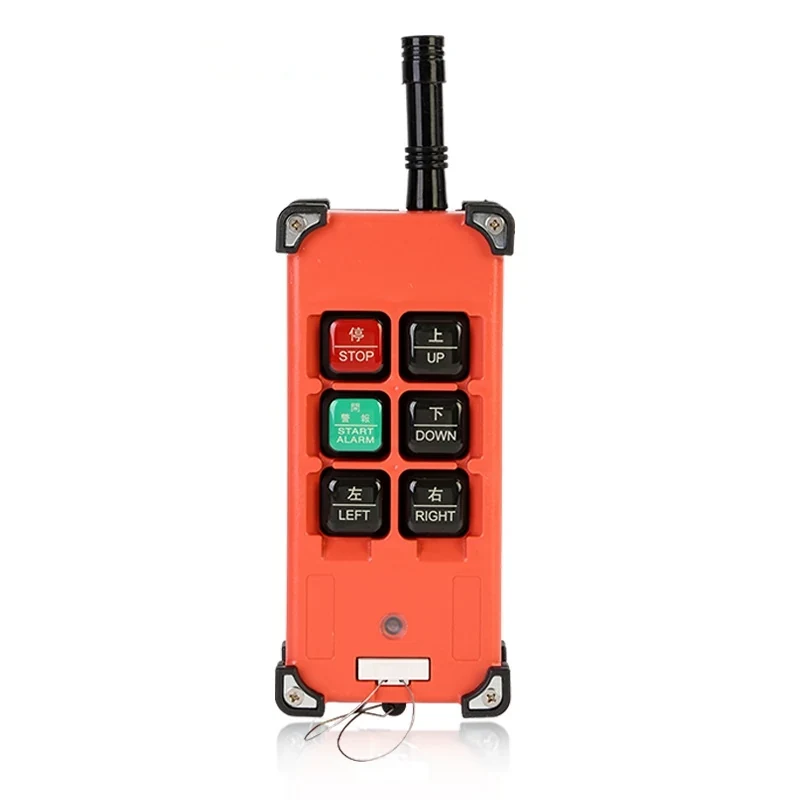
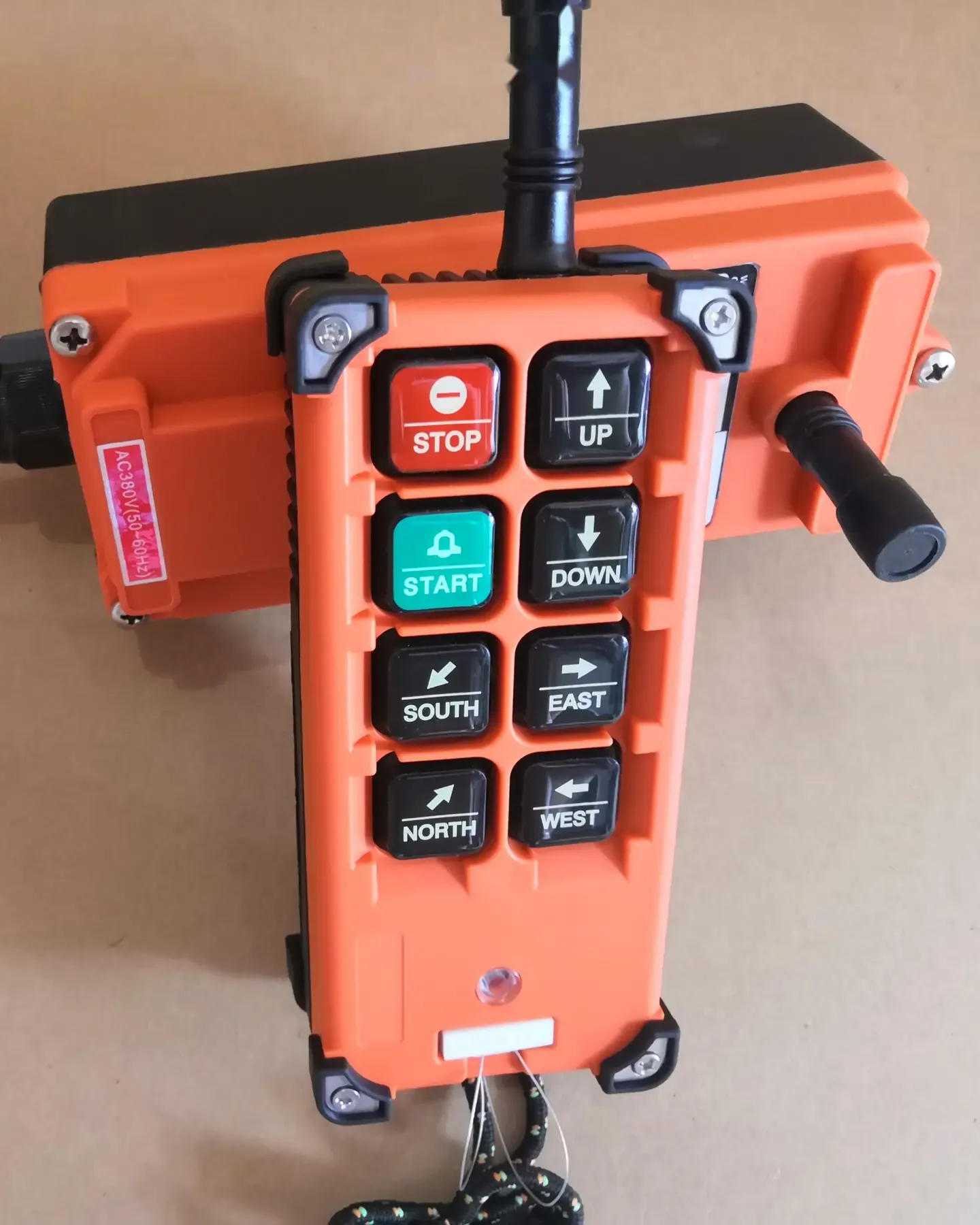
Industries Cases And Guides For This Model
Overhead and Bridge Cranes
Industry application
Electric Hoists and Winches
Industry application
Construction Equipment
Industry application
DC24V F24-12S Truck Wireless Remote Control For An Australian Buyer
Case study
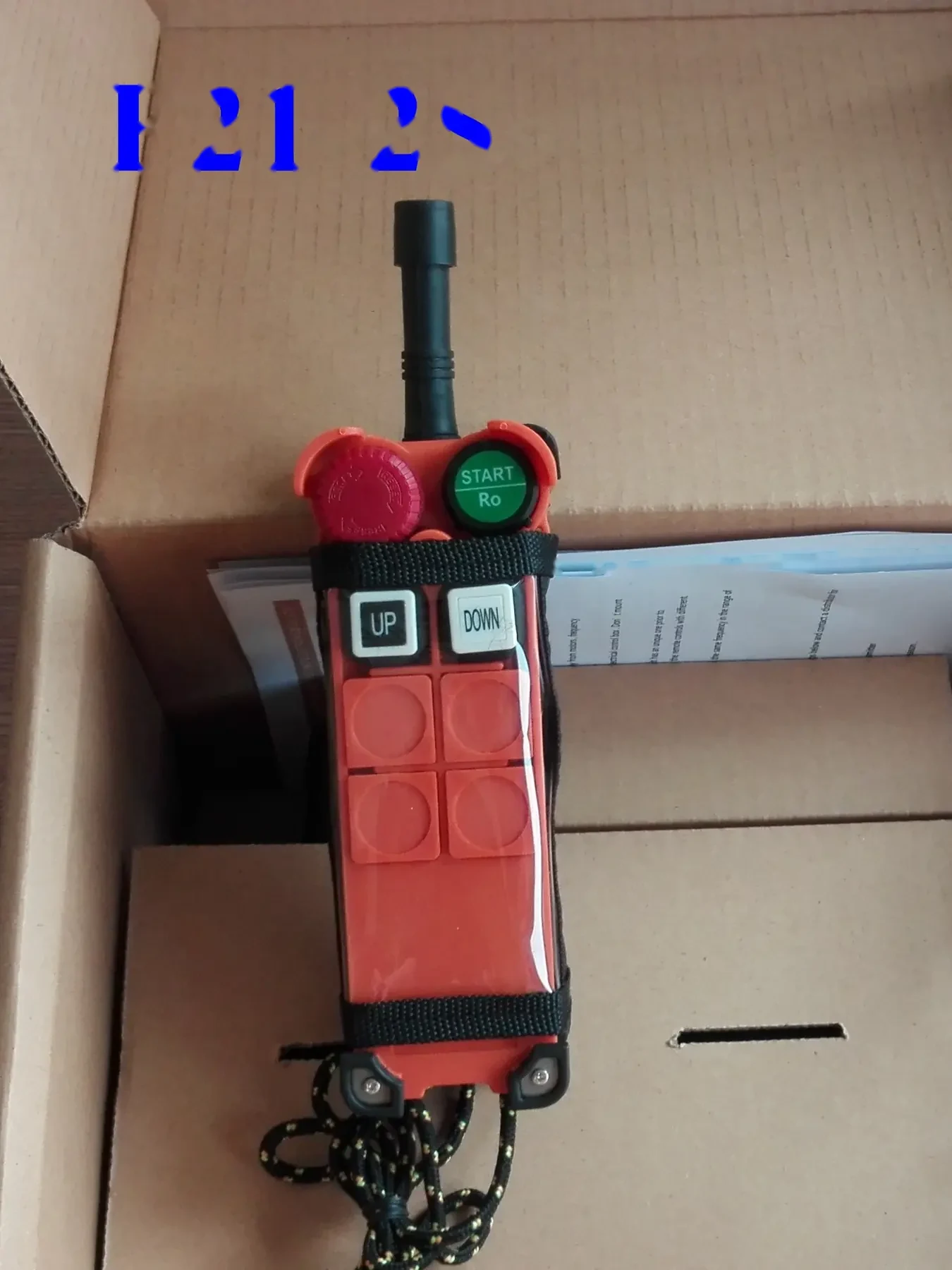
F21-2S Up and Down Remote Control For Chain Hoists
Case study
Four Advantages Of Using A Wireless Controller
Technical guide
How To Choose The Receiver Voltage For A Crane Radio Control
Technical guide
What Does IP65 Mean On A Crane Remote Control
Technical guide
Retrofit A Pendant Crane To Radio Control
Solution
Replace A Lost Or Broken Transmitter
Solution
Catalogue And Datasheets
Download center
Frequently Asked Questions
What is the minimum order quantity?
One set. A single sample is available so you can test it on the machine before committing to volume.
How long is delivery?
3-7 working days after full payment is received, then 3-8 days by FedEx or DHL.
Which receiver voltage should I order?
Match the control voltage on the hoist panel. The receiver is built for DC12V, DC24V, AC36V, AC220V, AC380V or 12-72V, so tell us the panel voltage with the order.
Can I get a replacement transmitter only?
Yes. Send the S/N and CH printed on the back of your receiver and we build a new transmitter on the same channel, so the receiver stays in place.
Will two hoists in the same bay interfere?
Each set is coded with one of over 4.3 billion unique ID codes and runs on 80 channels, so a transmitter only answers its own paired receiver.
Can the button text be changed?
Yes. Arrow tips are standard and your own English button text and brand can be printed on OEM orders.
How is it packed?
One set per box at 46 x 24.4 x 14.8 cm, six sets per carton at 76.3 x 49.3 x 33 cm.
Quote The Electric Hoist Remote Control
Send the control voltage on your panel and the motion list. A price, a lead time and the matching receiver build come back the same working day.