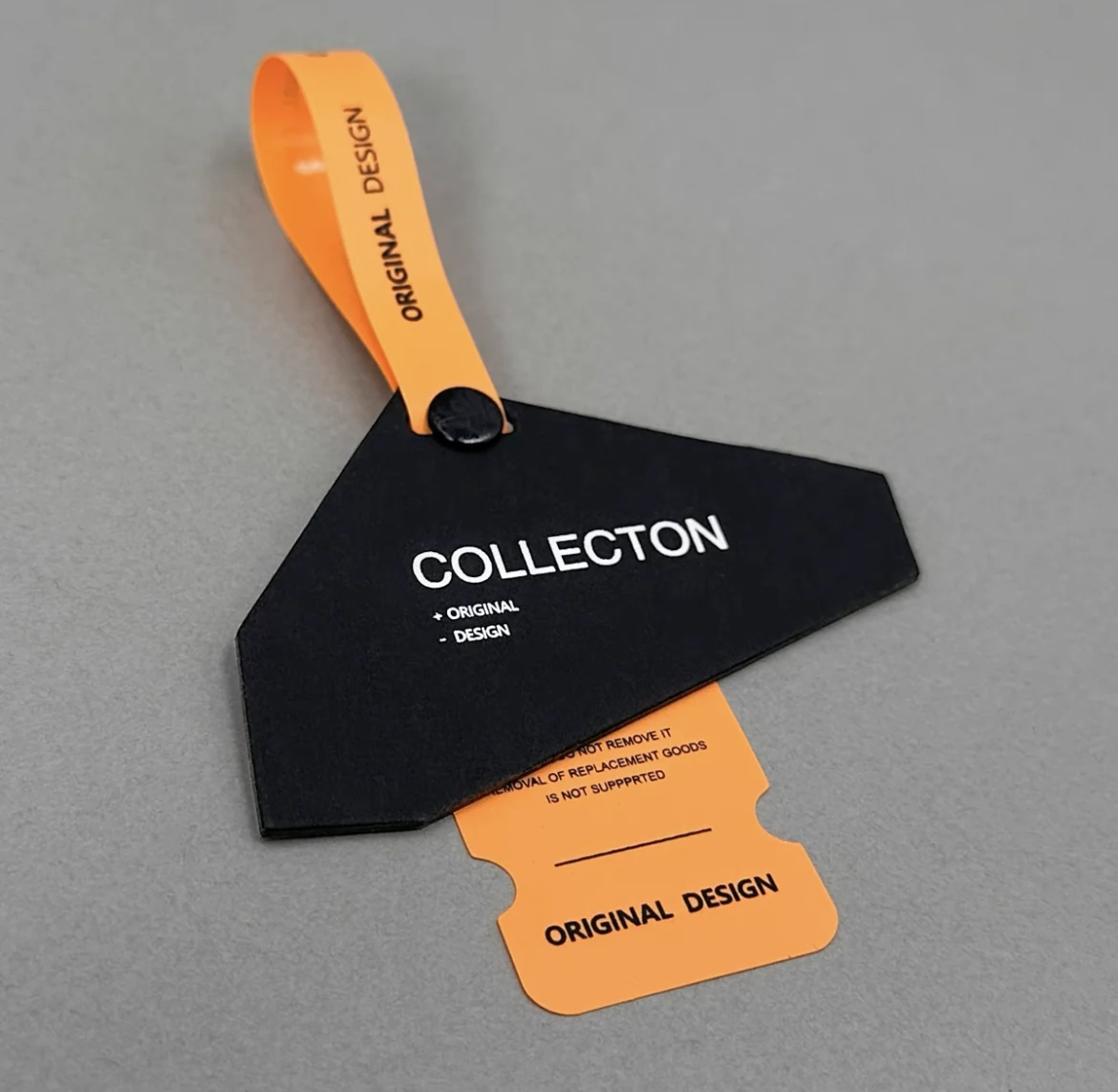
Start With What The Tag Has To Do
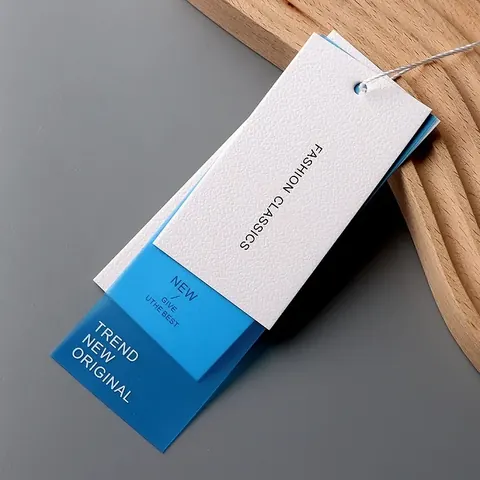
A tag usually carries four things: the brand, the price, a barcode and sometimes care or origin information. Write them down in order of importance before any design work starts. Almost every cramped, unreadable tag comes from trying to fit all four at full size onto a piece of card the size of a business card.
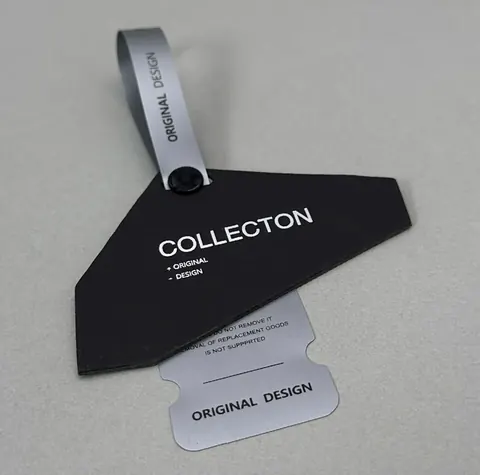
Stock Weight Decides Whether You Need An Eyelet
Light card tears at the cord hole, usually after being handled a few dozen times on a busy rail. There are two fixes: a heavier board, or a metal eyelet in a lighter one. A heavier board is simpler and often cheaper at volume. An eyelet adds a visible detail that some brands want anyway. What does not work is a light stock with a plain punched hole.
Barcode Contrast Is Not Negotiable
Scanners read contrast, not colour. A dark barcode on a dark kraft stock, or a coloured barcode on a textured speciality paper, will read intermittently and then fail in the middle of a busy Saturday. Keep the barcode in a clean, light panel with a quiet zone around it. If the design will not allow that, move the barcode to a separate adhesive label and leave the tag for the brand.
The Cord Is Part Of The Tag
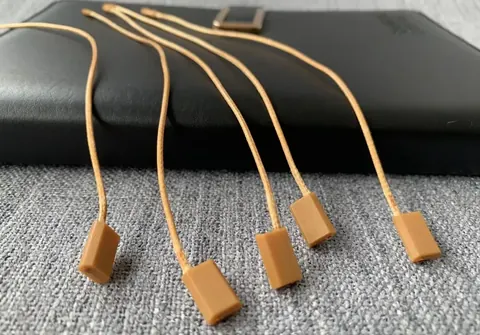
A cord that does not match the tag undoes the work the tag is doing. Match colour to the printed tag rather than to the garment, keep the diameter within what the eyelet will take, and specify sealed ends so the cord does not fray. If the tag must not be removed and refitted, an anti-return tie does that job.
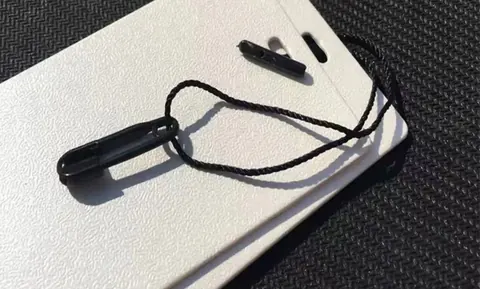
Decide Strung Or Loose Before You Order
Tags supplied already strung save labour at the point of tagging but cost more per piece and take longer to produce. Tags supplied loose are cheaper and faster but somebody has to thread them. Which is right depends entirely on whether your tagging happens in a factory or in a stockroom.
Finishes Worth Paying For And Finishes That Are Not
Foil and blind emboss both read clearly at tag size and survive handling. Heavy spot varnish is often lost on a small tag and adds cost without adding much. Painted edges work on thick board and look wrong on thin. If the budget only stretches to one finish, put it on the brand side and leave the price side plain.