
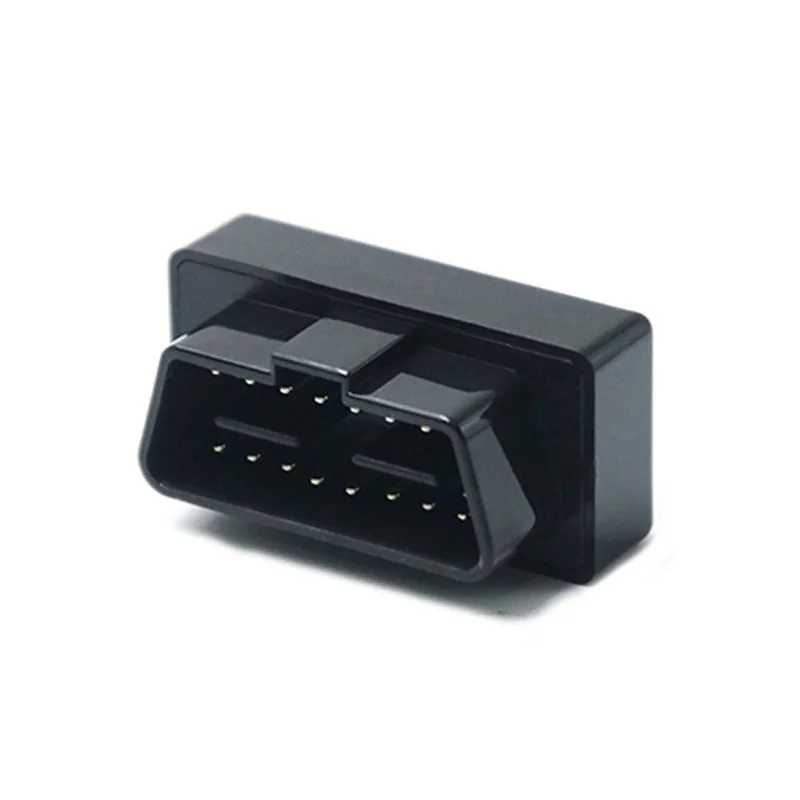
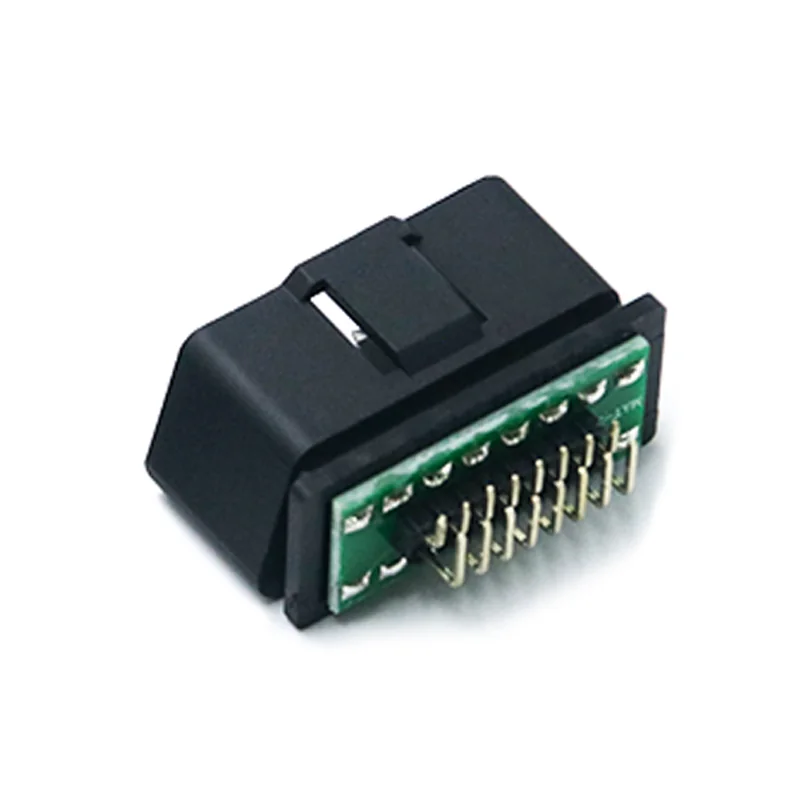
ST-SOM-014B Series
Right Angle OBD Connector Male 16 Pin ST-SOM-014B
J1962 OBD Connector Male with 16 Pin Right Angle Nickel Plated
OBDII ConnectorSpecs & quote →

Scan tools, code readers and workshop testers live on the end of an OBD cable. The port is the part of the tool the technician actually handles, and it is the part that fails first.
A workshop tool is plugged in and pulled out dozens of times a day, dropped onto concrete, and left hanging from the vehicle port under its own weight. What kills it is rarely the electronics: it is a terminal that has lost its spring after a few thousand insertions, or a cable that has cracked where it leaves the connector.
We build for the mating cycle and the bend. Gold-flashed contacts over nickel plating hold contact resistance stable after repeated insertion, and overmoulded strain relief is engineered as part of the connector rather than added to it afterwards.

Terminal material and plating chosen for mating-cycle durability, not just first-fit contact.
Housings moulded in ABS, PC or POM depending on whether the priority is impact, temperature or low friction.
Shielding specified against the electrically noisy environment of a running engine bay.
These ranges carry the parts most often specified for this application. Anything in them can be modified on your drawing.
J1962 OBD Connector Male with 16 Pin Right Angle Nickel Plated
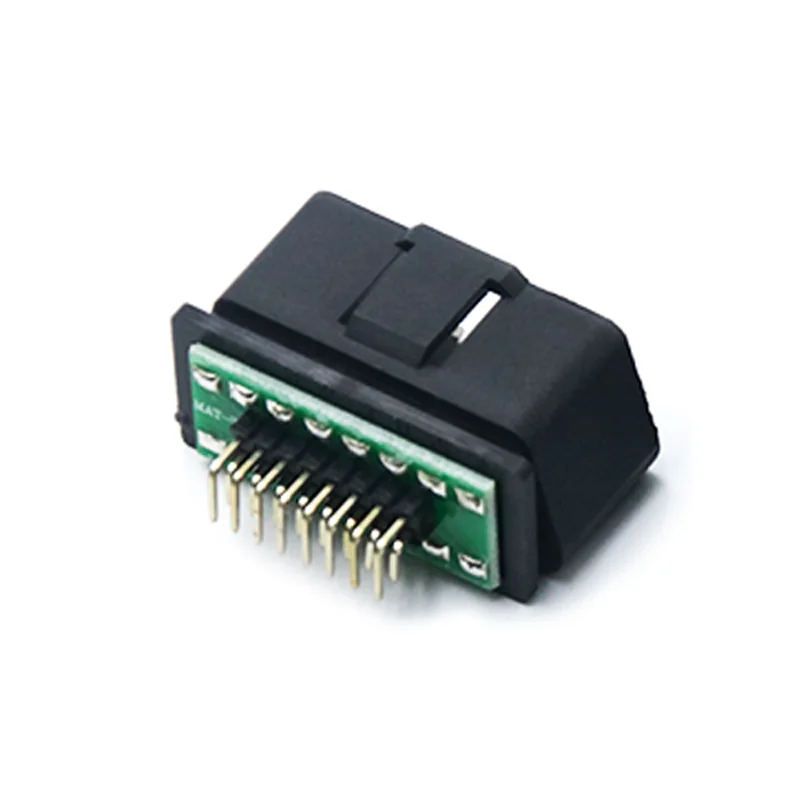
J1962 OBD Connector Male with 16 Pin Right Angle Nickel Plated
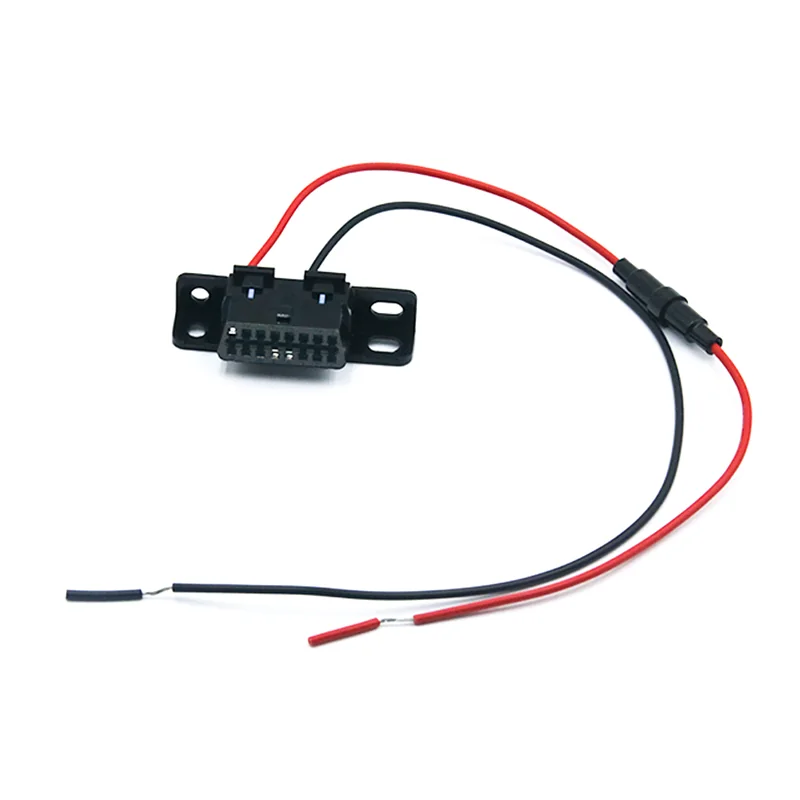
Name: Red and Black Wires GPS OBD Cable
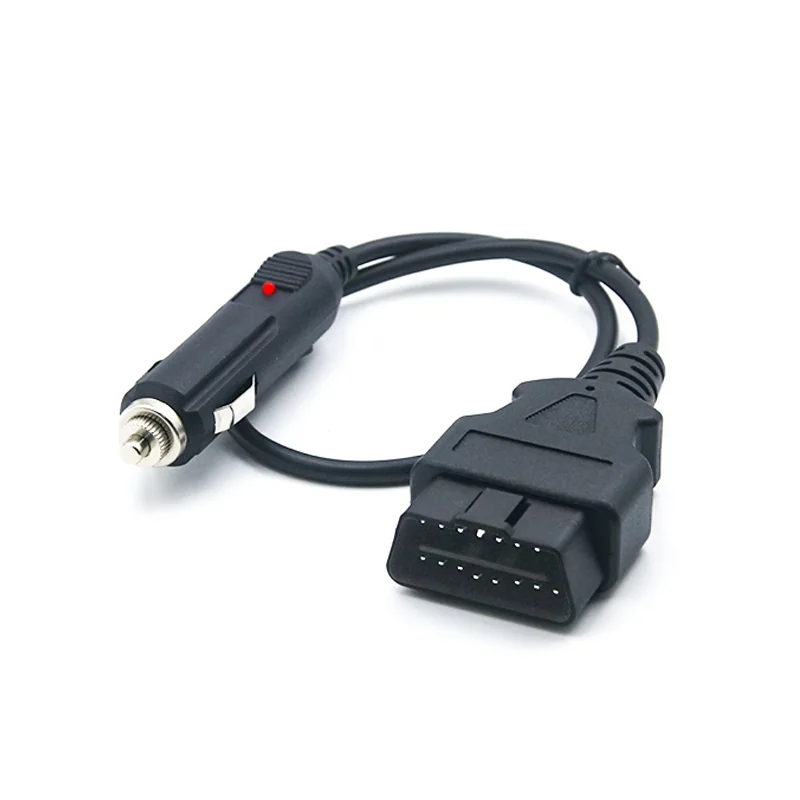
Name: Male OBDII Connector to Cigarette Lighter OBD Cable
Tell us the vehicle, the protocol and the duty cycle. We answer with a catalogue part number, or a tooling proposal if nothing standard survives your application.