
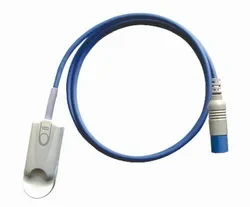
SpO2 Sensor Compatibility Guide for 23 Monitor Brands
Pulse oximetry is the accessory line where the wrong order costs the most, because a sensor that does not seat in the monitor socket is useless the moment it arrives. This guide sets out how Ronseda organises its SpO2 range so that a buyer can confirm fit before purchase rather than after delivery.
The range is organised by monitor brand, not by sensor style
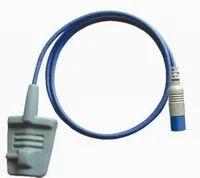
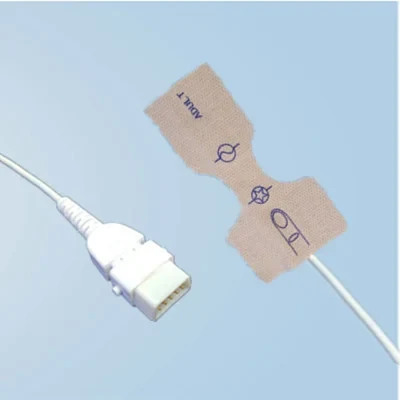
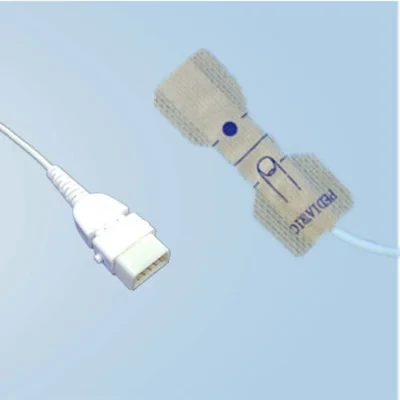
Ronseda lists 81 reusable SpO2 sensors and adapter cables, grouped under the 23 monitor brands whose connector standards they mate with, plus 20 single-patient adhesive sensors. The brand grouping matters more than the sensor style: a finger clip and a silicone soft-tip for the same monitor share a connector, while two finger clips for different monitors do not.
Start from the brand page for the monitor you are running. Everything listed there is terminated for that brand's socket; the remaining choice is probe geometry and patient size.
Three checks before you order
First, read the socket. The monitor's SpO2 input is marked with a pin count and a shell style, and that marking is what the sensor has to match — not the model name on the front of the monitor.
Second, check the signal path. Some monitor families exist in both Oximax and non-Oximax versions, and the two are not interchangeable even where the connector looks identical. Ronseda lists these as separate part numbers.
Third, decide between a direct sensor cable and a short sensor plus an extension cable. Where the monitor sits in a rack or on a wall bracket, an extension cable takes the wear instead of the sensor, and the extension is the cheaper part to replace.
Connector types in the catalogue
Across the SpO2 and monitoring accessory range Ronseda uses around 40 distinct connector designations, the most common being 9 pin, DB9 pin, 7 pin, 11 pin, round 10 pin and 14 pin. Pin counts repeat across brands with different shell shapes, which is why a pin count alone is not enough to confirm a match.
If the marking on your monitor socket is worn, send a photograph. A photograph of the socket and of the failed part identifies the match faster than a model number in almost every case.
Cable length is a wear decision, not a preference
Standard builds in the range run 0.9 m, 2.4 m, 2.7 m and 3.8 m. A cable that is too short is pulled every time the patient turns, and the failure appears at the strain relief within months. A cable that is much too long is trapped in bed rails and trolley wheels.
Measure from where the sensor sits on the patient to the monitor socket, then choose the next standard length above that. Non-standard lengths are available as OEM builds.
Categories Referenced
Questions About This Guide
Can I use a universal SpO2 sensor instead of a brand-matched one?
My monitor is not on the compatibility list. What now?
What warranty applies to SpO2 sensors?
Can these be supplied under our own brand?
Ask us to confirm the part before you order
Send the monitor model, or a photograph of the socket and the part being replaced. We reply with the part number and the price basis.