HomeAll Products
How frame angle capacity footprint and mirror placement decide whether an eyewear display actually sells frames.
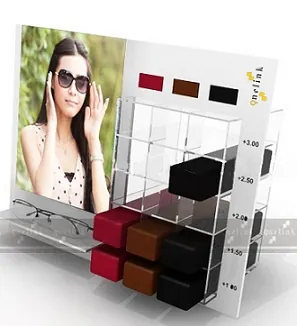
A frame lying flat shows its temples. A frame tilted toward the shopper shows its front, which is what the buying decision is actually made on. Every capable eyewear display is really a device for holding a frame at a readable angle.
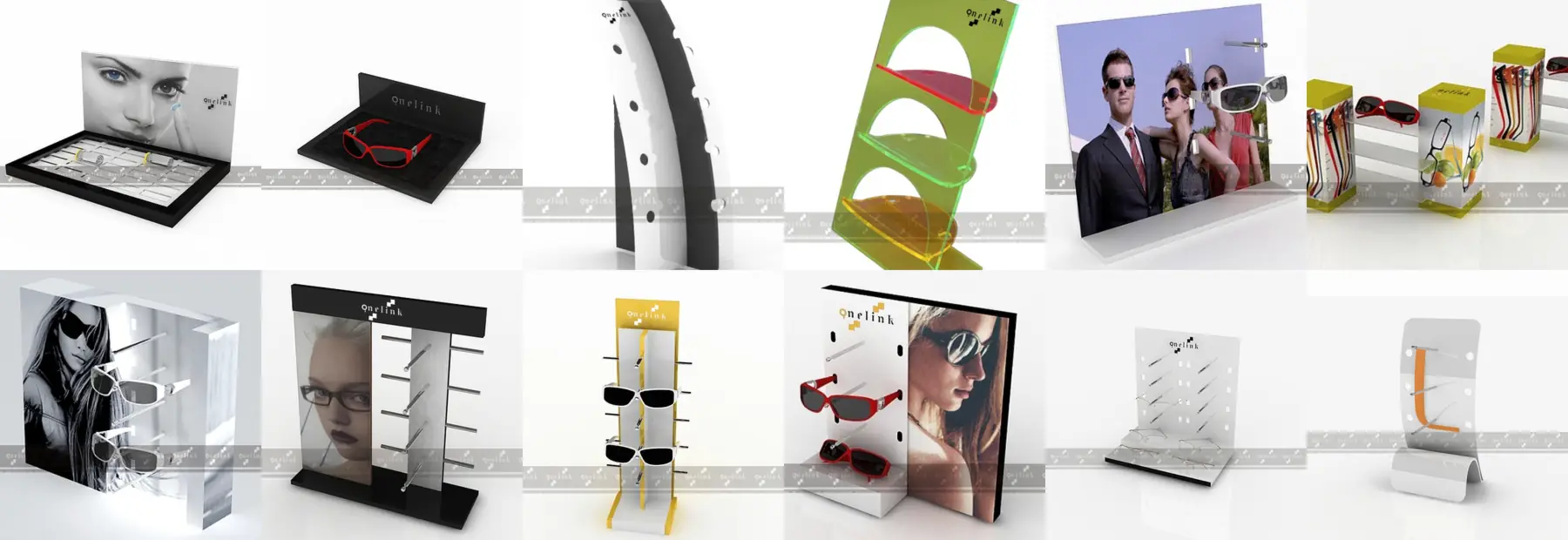
Counter space is the scarcest resource in an optical store. A tall tower holds more frames on the same footprint than a wide stepped unit, but only works where there is clearance above the counter. Measure the available height before deciding between a counter unit and a tower.
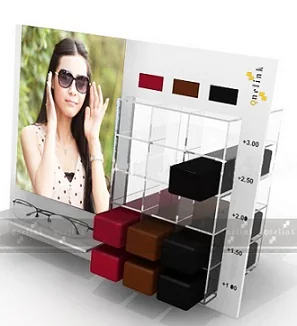
Captive slots and shelf lips hold each frame in a fixed position. That does two things: stock stops sliding forward through the day, and store staff can see instantly which position is empty.
On acrylic the brand is UV printed onto the body, so there is nothing to peel. On printed board the brand runs across the whole structure. The mistake to avoid is branding so heavy that it competes with the frames themselves.
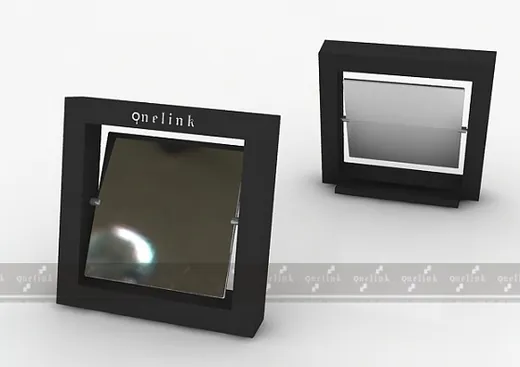
If the shopper has to walk to a wall mirror the sale slows down. A framed counter mirror beside the display keeps the decision at the counter.
Send the width of your widest frame by email with the model you are considering so the fit can be checked before you order.
A tower holds more on the same footprint but needs clear height above the counter. Measure the height first.
It usually should. Ordering it together keeps the finish consistent and keeps the decision point at the counter.
Send your product dimensions and counter space and the team will point you at the range that fits.