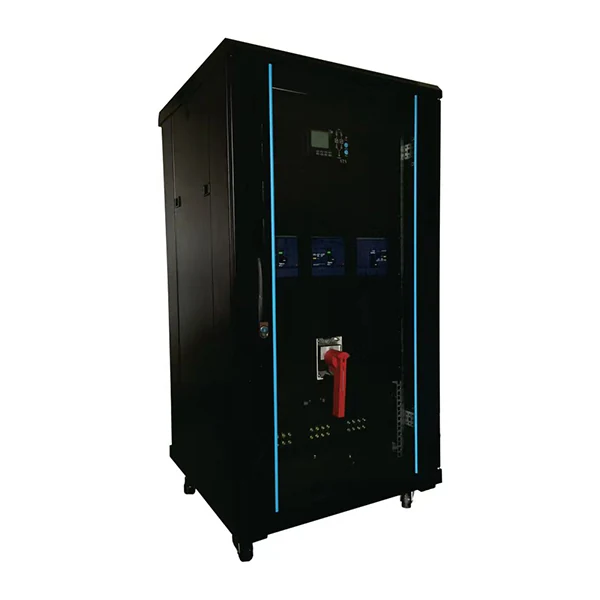
3 Phase Static Transfer Switch
The STS is built with two independent power inlets. The load normally runs from the primary source. If the primary source fails, the secondary source...
View Specifications
A static transfer switch moves a load between two independent supplies in milliseconds, fast enough that connected equipment does not restart.
Many sites already pay for two supplies. Without an automatic switch the load sits on one of them, and a fault on that feed takes the load down while the second supply sits idle a few metres away.
The switch has two independent inlets. Source A is the priority input. When source A fails, SCR devices disconnect it and connect source B, first disconnect then connect, so the two sources are never bridged. Typical transfer time is 6 ms or less.
3 Phase Static Transfer Switch
A switch mode power supply of the kind used in servers and controllers holds its output through a short interruption. A transfer inside that window is invisible to the load. A mechanical changeover taking tens or hundreds of milliseconds is not.
Ratings run from 63 A to 400 A per phase at 3 phase 380 V. Select on measured per phase current. Above 45 degrees C ambient or 1500 m altitude the unit has to be derated.
A transfer switch selects between sources. If both sources fail there is no energy left to switch to, so a site that needs ride through still needs a UPS or generator behind it.
The STS is built with two independent power inlets. The load normally runs from the primary source. If the primary source fails, the secondary source...
View SpecificationsNo. A mechanical ATS uses moving contacts and transfers in tens or hundreds of milliseconds. A static transfer switch uses SCR devices and transfers in 6 ms or less.
It selects a source. Voltage and frequency conditioning is the job of a converter or a UPS.
Send the numbers from your own site and we will tell you which model the guide points to.