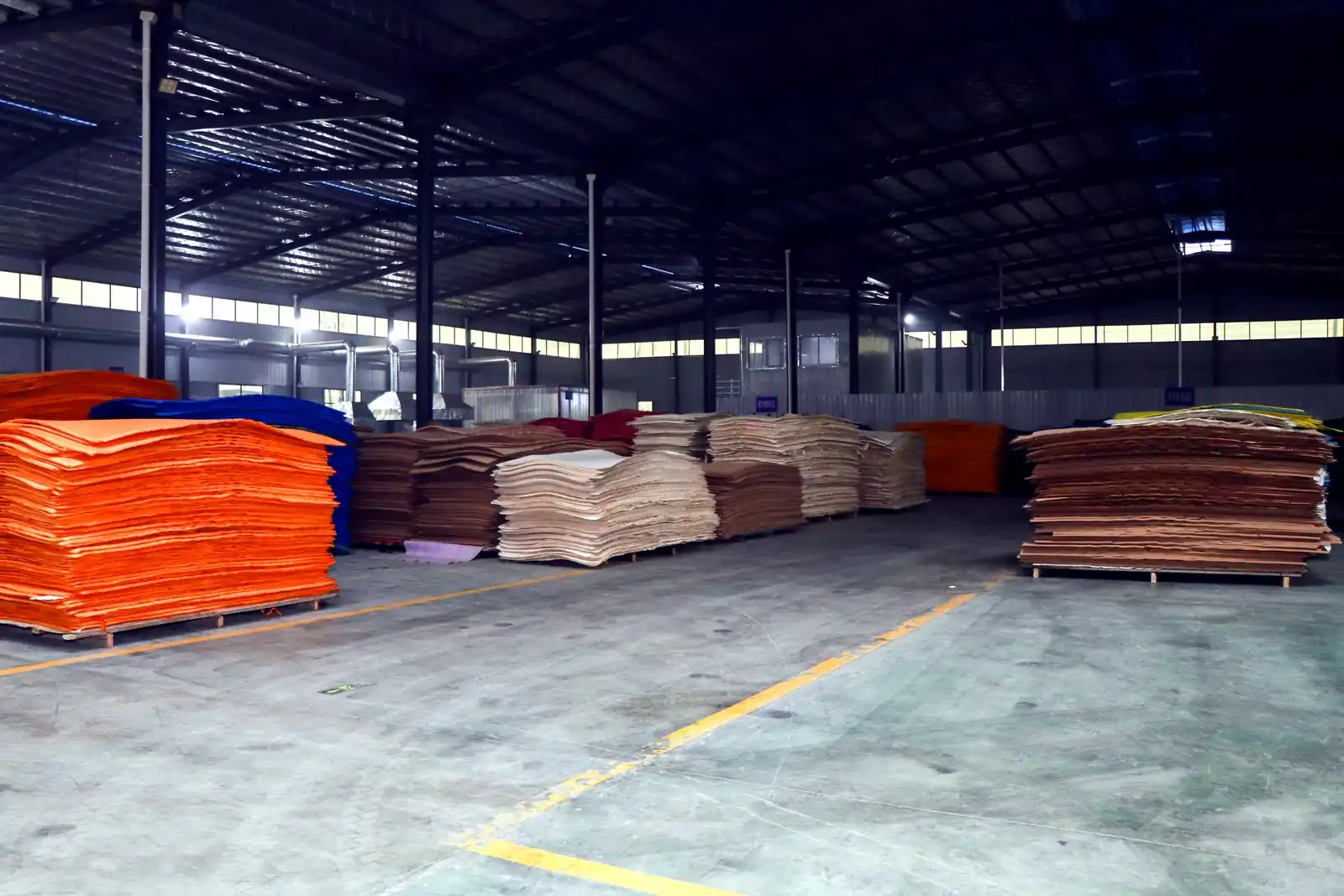
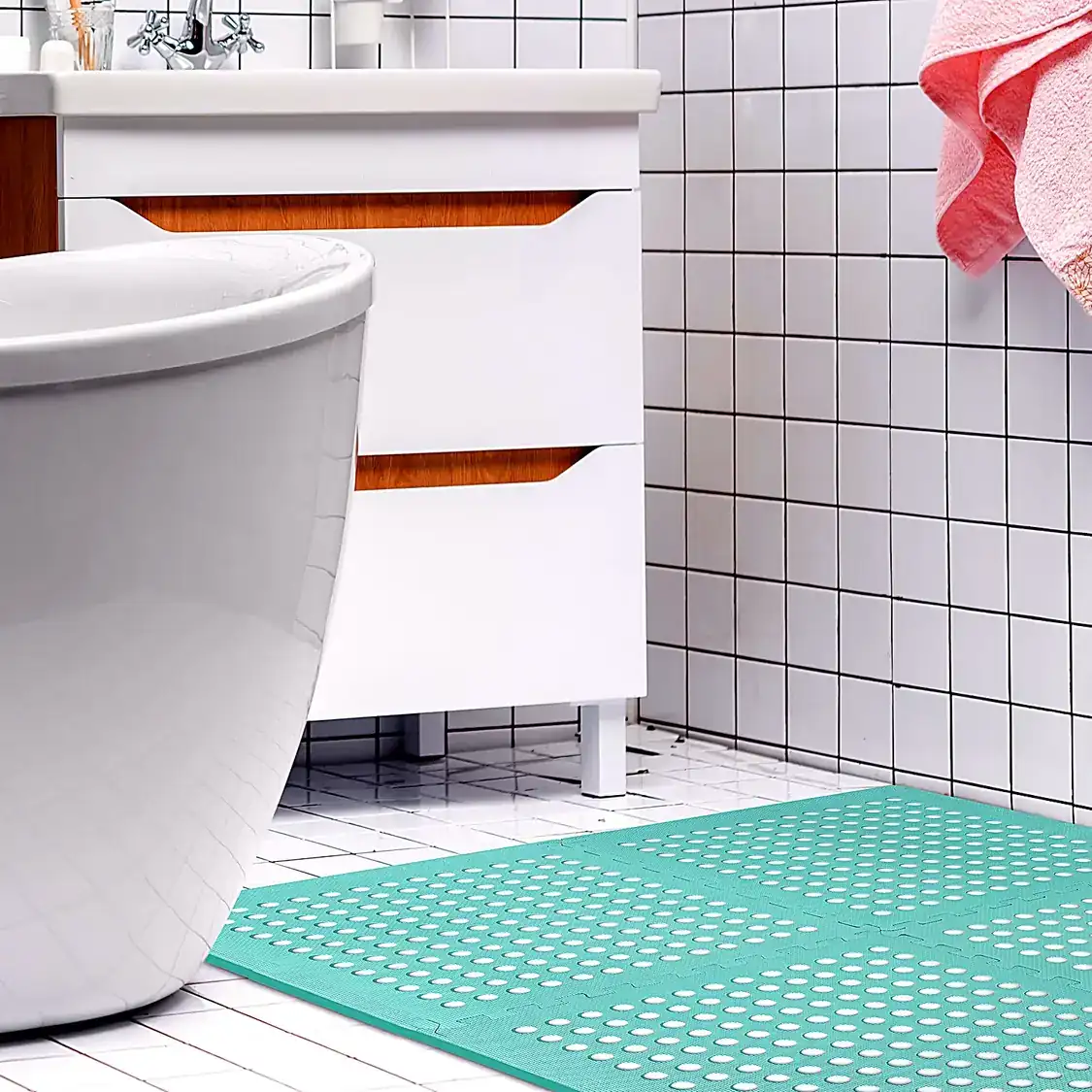
Trade-show exhibitors, seasonal gym operators and martial arts clubs all face the same problem: the mats come up for months at a time, and how they spend those months determines whether they come back down flat - or curled, yellowed and smelling of the box. EVA foam is robust in use but has three specific enemies in storage. Here is the full protocol.
Clean and dry first - always
Sweat, chalk and dust left on mats go into storage damp and organic. Wipe tiles with a mild soap solution, rinse, and let them dry completely - standing them on edge speeds drying. Never pack even slightly damp tiles: closed-cell EVA doesn't absorb water, but moisture trapped between tiles and in the texture supports surface mold and odor. Our cleaning guide covers the daily routine; for storage, the key is completely dry.
Flat beats rolled for interlocking tiles
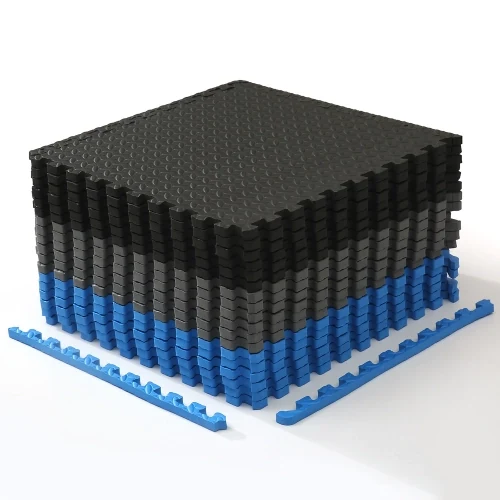
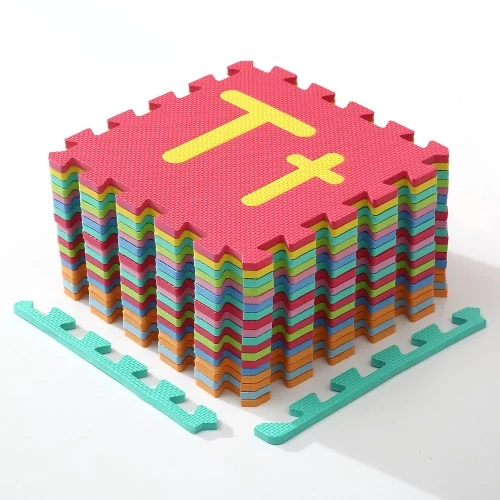
Interlocking tiles with tabs store best flat, stacked, out of direct sun . Rolling puts a set into the foam and the tabs; a tile stored rolled tight for a season can take weeks to lie flat again. If space forces rolling, roll loosely with the tab side outward, and accept a few days of acclimation when relaying. Sheet-style EVA (non-interlocking) rolls naturally and is the exception.
The three enemies: heat, UV, and compression
- Heat. Store between roughly 0-35 °C. A metal shipping container in summer sun can exceed 60 °C - enough to permanently soften and deform EVA foam. Never store mats near radiators or in hot attics.
- UV. Sunlight yellows and embrittles the surface laminate. Even indoor storage near a bright window fades one side of a stack over months. Opaque covers or a closed cabinet solve it.
- Compression. Long-term heavy stacking squeezes the bottom layers permanently. Keep stacks moderate and rotate the load if tiles sit for a year.
Fixing common problems
Curling tiles: lay them flat in a warm room with weight on the corners for a few days - gentle heat restores memory. Yellowing: surface UV damage is largely irreversible; it is cosmetic but a reminder to cover the next batch. Odor: EVA's faint new-foam smell dissipates with airflow; box odor from improper storage washes out with the soap-and-dry routine. Persistent chemical odor is a compound question - a reason to buy from producers who publish REACH test reports .
Sourcing mats for seasonal or touring use? Tell us your cycle - we supply tiles whose compound and lamination are chosen for repeated assembly and storage.
Ask about tour-grade mats More guides
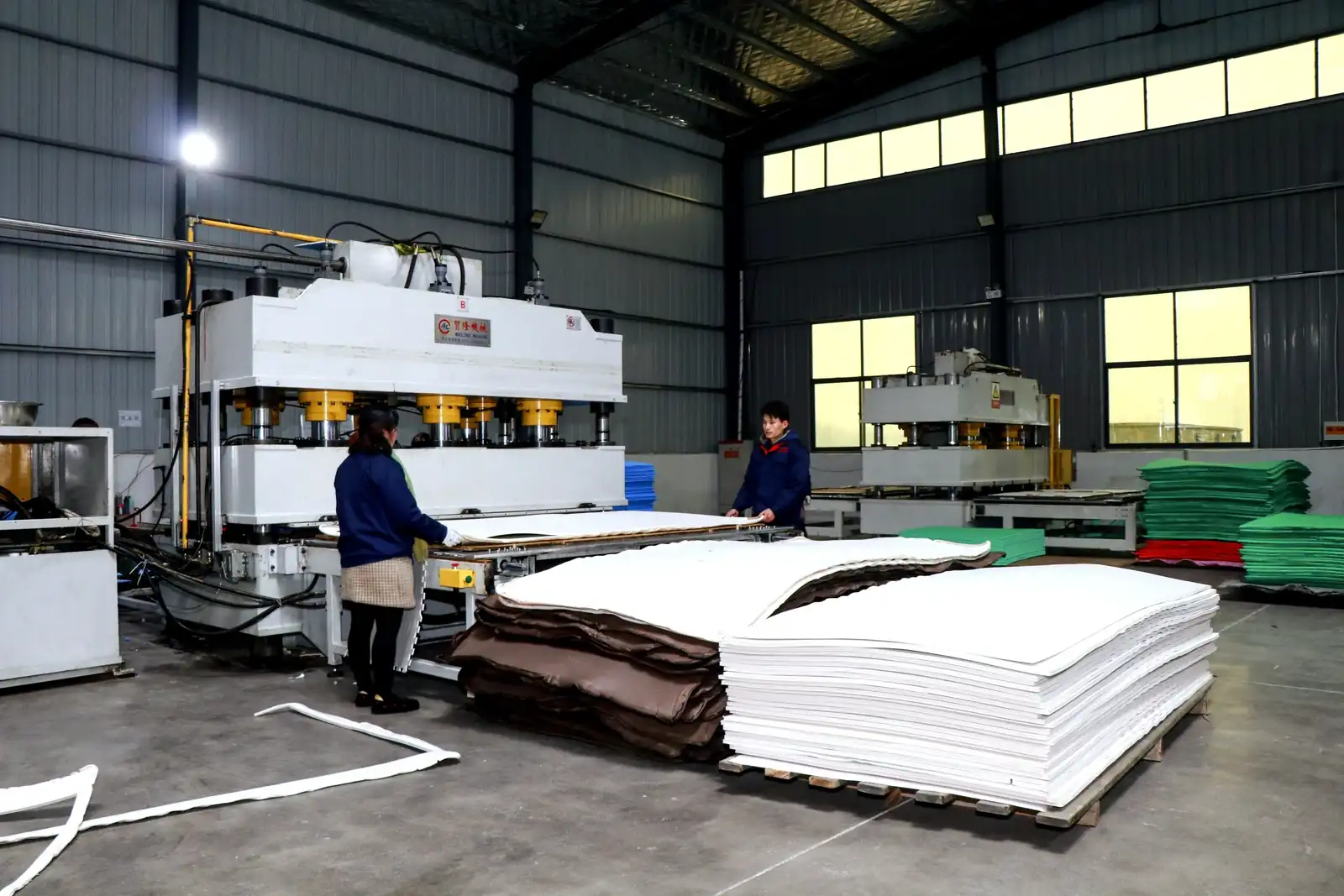
Written by the Newin Best technical sales team. We manufacture the mats described here in our own factory in Suqian, Jiangsu - if a figure on this page matters to your order, ask us for the test report behind it.