
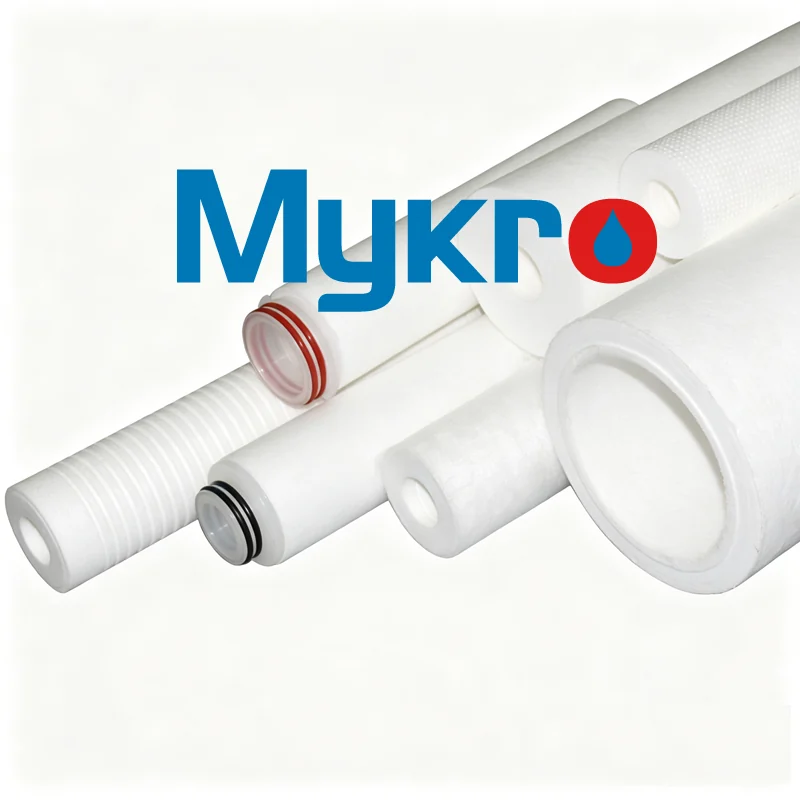
Home/Knowledge Center/Melt Blown Compared With String Wound Depth Cartridges
Comparison GuideMelt Blown Compared With String Wound Depth Cartridges
Compare graded density, media migration, dirt holding capacity, and suitable duties for melt blown and string wound depth cartridges. Both handle 80℃ and 100μm
Melt blown cartridges use a three dimensional fiber network with graded density, while string wound cartridges use continuous yarn wound in layers to form a graded structure. The melt blown matrix is formed by spinning fibers directly into a web, creating a uniform and stable structure. String wound cartridges rely on the winding pattern to create depth, with the outer layers finer than the inner ones.
- Melt blown media has a consistent fiber matrix throughout the life of the cartridge
- String wound media relies on the winding pattern to maintain graded density
- Melt blown construction resists changes in fiber structure under pressure
- String wound cartridges may experience fiber release if the winding is disrupted
Related product: PP Melt Blown Depth Filter Cartridges
Melt blown cartridges are designed to prevent media migration and contaminant unloading, even under high differential pressure. The bonded fiber network holds particles in place. String wound cartridges can release fibers if the winding is compromised, especially during backwashing or high-pressure operation.
- Melt blown cartridges maintain integrity under forward and reverse flow
- String wound cartridges may release fibers if the core or winding fails
- Contaminant unloading is more likely in string wound elements under stress
- Melt blown media resists shedding even at elevated differential pressure
Related product: PP Melt Blown Sediment Filter Cartridges
Melt blown cartridges offer high dirt holding capacity due to their three dimensional structure and uniform fiber distribution. String wound cartridges also provide good capacity, but the capacity depends on the winding density and core strength. Both types can be backwashed, but melt blown elements are more resistant to structural degradation during cleaning.
- Melt blown cartridges have high dirt holding capacity from uniform media distribution
- String wound cartridges depend on winding density for capacity
- Melt blown elements maintain performance over multiple backwashes
- String wound cartridges may degrade faster if backwashed frequently
Related product: String Wound Depth Filter Cartridges
Melt blown cartridges are ideal for applications requiring consistent performance and resistance to pressure changes, such as in power plant condensate, chemical processing, and water treatment. String wound cartridges are suited for high flow, high dirt load duties like steel plant cooling water, desalination, and power station condensate, especially when backwashing is used.
- Melt blown cartridges are preferred for sensitive downstream stages
- String wound cartridges are used in high flow, high load environments
- Backwashing is more effective with string wound cartridges
- Melt blown elements are better for applications where media integrity is critical
Related product: HFPP Series String Wound High Flow Filter Cartridges
Cartridges Mentioned Above
PP Melt Blown Depth Filter Cartridges
PP Melt Blown Depth Filter Cartridges are made from polypropylene fibers spun into a three dimensional network that captures particles throughout the
View Specifications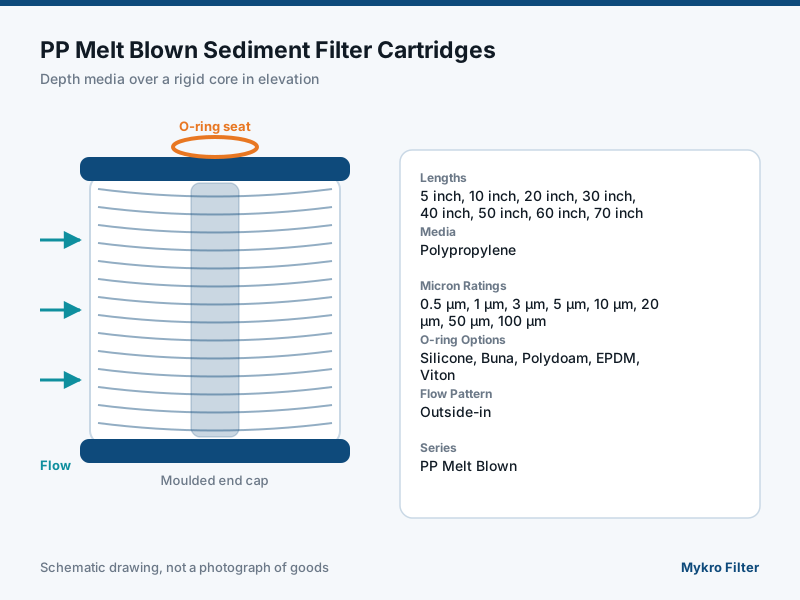
PP Melt Blown Sediment Filter Cartridges
PP Melt Blown is a depth filter cartridge with a polypropylene melt blown media pack, an inner core, and thermally bonded end caps.
View Specifications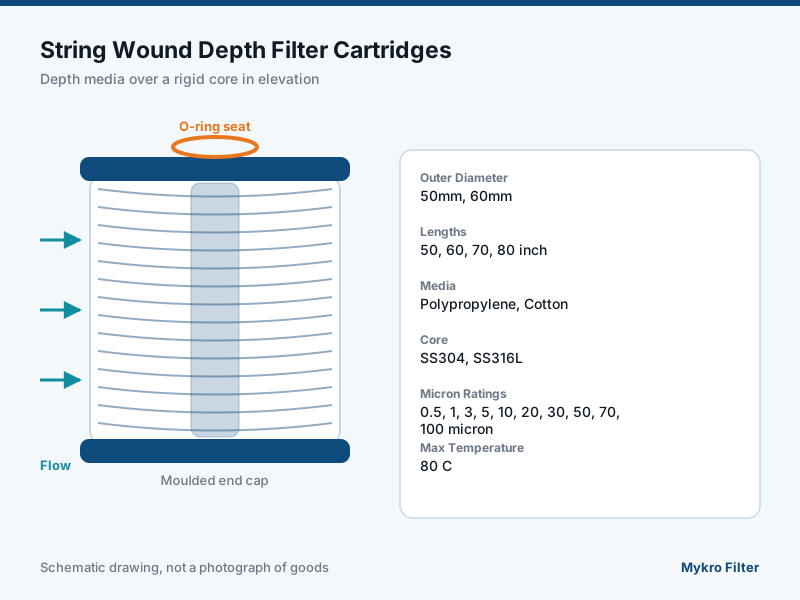
String Wound Depth Filter Cartridges
HFSW is a string wound depth filter cartridge with a continuous yarn structure that forms a graded density media pack.
View Specifications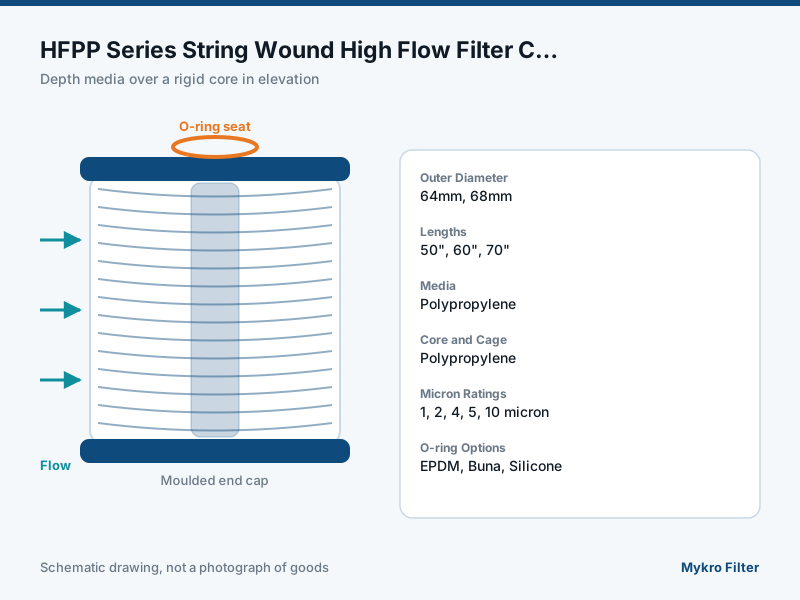
HFPP Series String Wound High Flow Filter Cartridges
HFPP series high flow string wound cartridges are designed for power station condensation water filtration.
View SpecificationsQuestions On This Topic
Can melt blown and string wound cartridges be used interchangeably?
What micron ratings are available for melt blown and string wound cartridges?
Are these cartridges backwashable?
What materials are used in the construction?
Still Deciding Between Two Options
Send your housing model, the fluid and what sits downstream. We will tell you which of the two we would fit and why.