
Single-Phase to Three-Phase Power
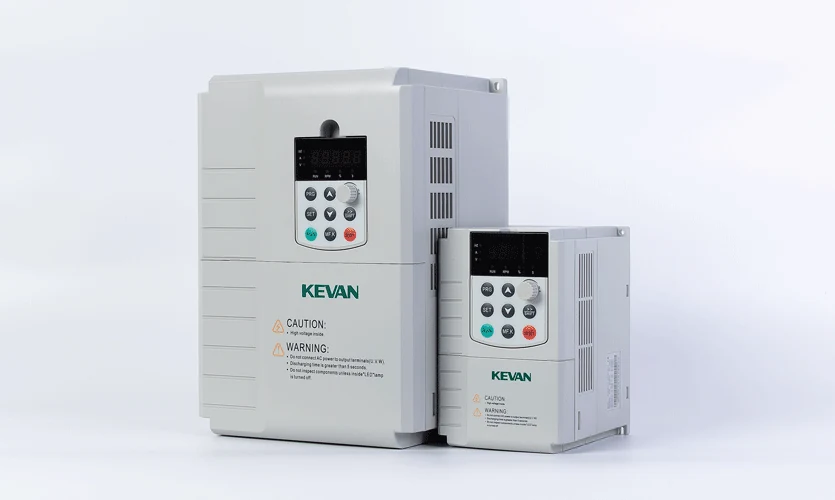
The site has single-phase 220V. The machine wants three-phase 380V. The KV500 closes that gap inside the drive.
How KEVAN Works Through It
The Usual Answers and What They Cost
A step-up transformer adds weight, losses and cost. A rotary phase converter adds a second rotating machine to maintain. Both need somewhere to live in an already small pump house.
What the KV500 Does Instead
It accepts single-phase 220VAC (plus or minus 15%) at 50/60Hz and outputs three-phase 380VAC from 0Hz up to input voltage, across 2.2kW to 18kW.
Check the Motor, Not the Machine
Size against motor nameplate power and current. A pump badged 7.5kW with a 15kW motor needs the drive sized for the motor.
Supply Capacity Is the Real Limit
Single-phase service current is usually the binding constraint on a rural line. Confirm the incoming supply can deliver the equivalent kVA before ordering.
Add PV If It Is There
The same unit accepts DC photovoltaic input on PV+/PV- with the F14 parameter group, so a retrofit can move to solar later without changing the drive.
Protection for Unattended Duty
Dry-run protection, over-current, over-voltage suppression, low-frequency protection and tank-full detection cover the failure modes of an unwatched pump.
Commission and Monitor
Set motor parameters from the nameplate, then bring status back over RS485 Modbus RTU if a controller exists on site.
Drives We Use to Build It
Related Products
Related Articles
- KEVAN VFD vs Traditional Motor Control: What’s the Difference and Why It Matters for Your Application
- Choosing Solar Water Pump Inverters for Sustainable Land Management
- The Application of Solar Water Pump Inverters in Automated Irrigation District Management Part Two
- The Application of Solar Water Pump Inverters in Automated Irrigation District Management
Single-Phase to Three-Phase Power Questions
Can the KV500 really run a three-phase 380V pump from a single-phase 220V supply?
What power range does it cover?
Design Your Single-Phase to Three-Phase Power With Us
Send site details - head, flow, supply, motor - and our engineers will size the system.