Fiber Laser Cutting Machines
Glass Laser Cutting Machine
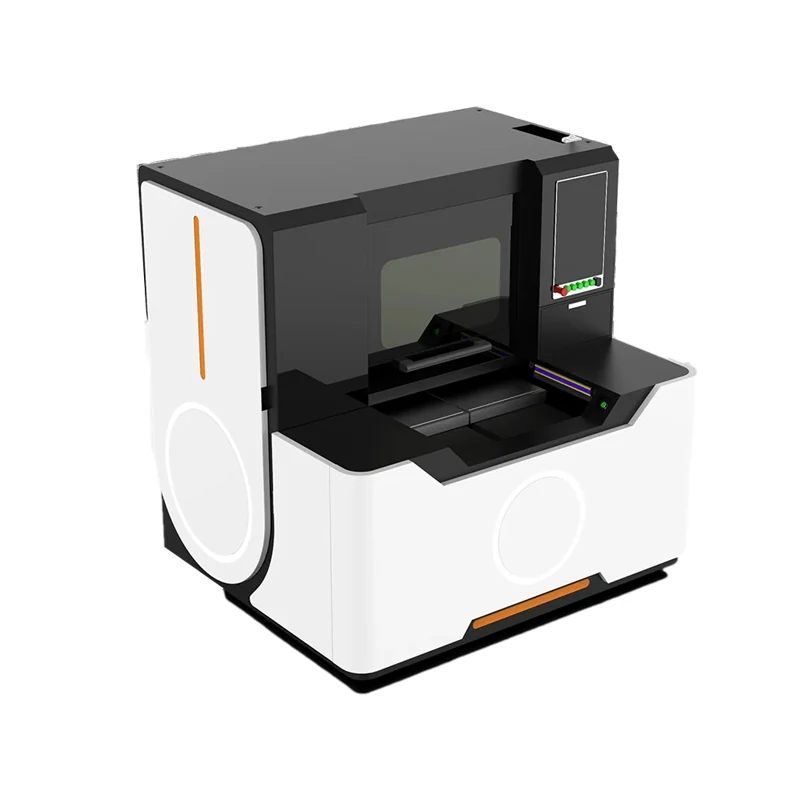
The Glass Laser Cutting Machine uses a Wuhan Huaray picosecond laser source at 30w, 50w or 70w to cut glass on a 500 x 400 mm marble work table.
Published 2017-04-26 by the Weihua Laser engineering desk.
A MOPA fiber laser marking machine adjusts color on stainless steel by varying frequency and power independently. Pulse width remains fixed during this specific adjustment, allowing the operator to target specific hues. This control method relies on the interaction between single pulse energy and spot overlap rate on the steel surface. The result is a predictable color shift that can be calibrated for consistent production runs.
In dense fill spacing with medium pulse width, increasing frequency and power produces a regular color change. For example, at 60 ns pulse width and 0.001 mm bow fill, raising power from 25% to 65% at frequencies above 300 kHz shifts the color from yellow to red, then blue, green, and finally a deeper green. This progression occurs because higher energy inputs alter the oxidation layer thickness on the stainless surface.
When the filling pitch is increased to 0.005 mm under similar conditions, the color change becomes less pronounced. At this wider spacing, variations in frequency and power still drive the hue, but the overall shift is smaller compared to tighter pitches. This indicates that spot overlap rate significantly influences how the laser energy interacts with the material. Operators must balance pitch and power to achieve the desired saturation.
MOPA lasers distinguish themselves by allowing pulse width and frequency to be controlled separately. In standard Q-switched lasers, these parameters are often linked. This independence is critical for stainless steel marking because it provides a wider range of thermal inputs. While pulse width has a stronger effect on color generation, frequency and power adjustments fine-tune the result. This flexibility allows for precise control over the final appearance of the mark.
To reproduce a specific color, you must lock in the pulse width, frequency, and power settings. The provided data shows that color changes follow a law based on single pulse energy and spot overlap. Without a controlled environment and consistent parameters, the oxidation process can vary. Testing on scrap material is recommended before full production. This ensures that the chosen settings yield the intended yellow, red, blue, or green tones reliably.
Fiber Laser Cutting Machines
The Glass Laser Cutting Machine uses a Wuhan Huaray picosecond laser source at 30w, 50w or 70w to cut glass on a 500 x 400 mm marble work table.
Fiber Laser Cutting Machines
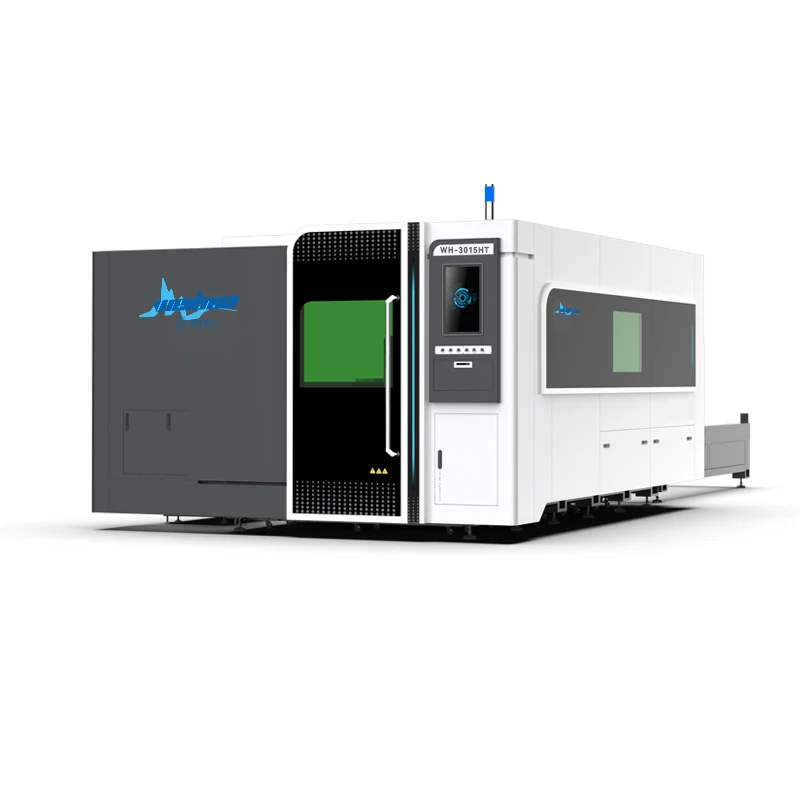
The HT Series is a fully enclosed fiber laser cutter designed to process both metal sheet and pipe on a single machine.
Fiber Laser Cutting Machines
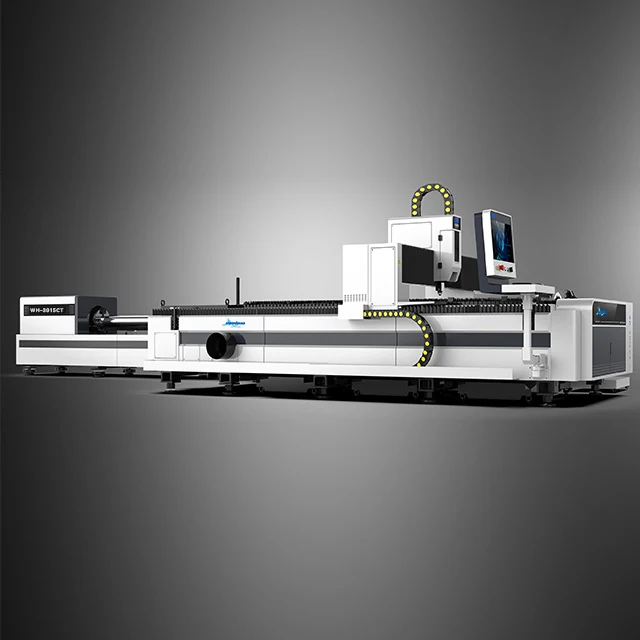
The ET series is a fiber laser cutter for metal sheet and tube in one machine, offered as WH-3015ET, WH-4020ET and WH-6020ET.
Send the material and the thickness. We answer with a model and the settings that go with it, not a catalogue.