Fiber Laser Cutting Machines
Glass Laser Cutting Machine
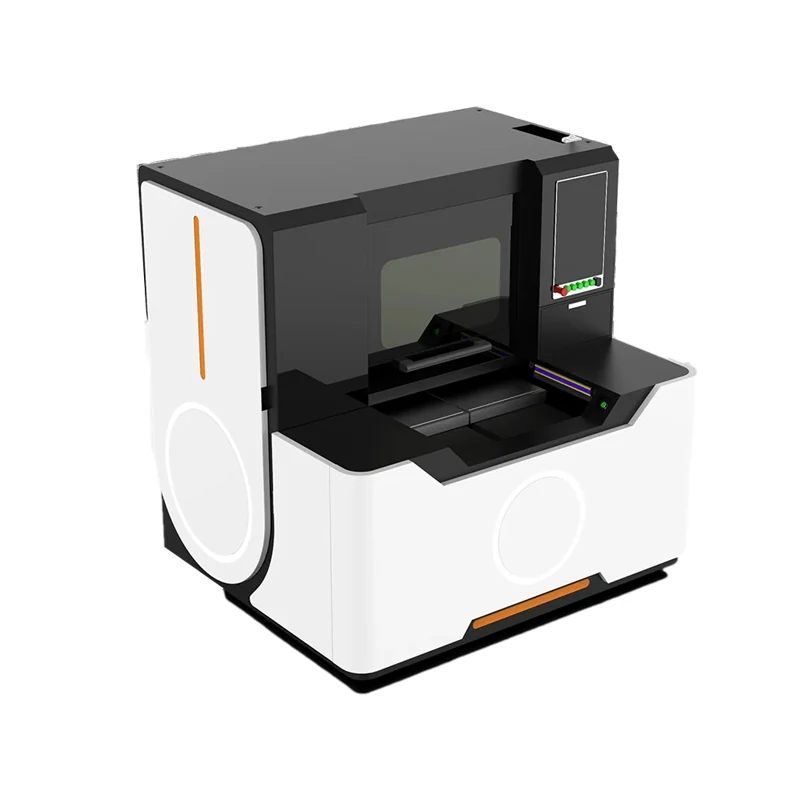
The Glass Laser Cutting Machine uses a Wuhan Huaray picosecond laser source at 30w, 50w or 70w to cut glass on a 500 x 400 mm marble work table.
Published 2025-06-30 by the Weihua Laser engineering desk.
Dye-sublimation textiles stretch and distort during printing and handling. A standard gantry cutter relies on fixed coordinates, which fails when the pattern moves. Vision systems use high-resolution CCD cameras or laser scanners to detect printed contours and fiducial marks, adjusting the cutting path in real time to match the actual position of the design on the fabric.
High-volume production requires continuous material handling. Conveyor systems, auto-feeders, and roll-to-roll capabilities allow the machine to process fabric without stopping for manual loading. This automation supports outputs such as 500 or more jerseys per shift, making it suitable for sportswear manufacturers and large-format signage workshops that need to maintain tight delivery schedules.
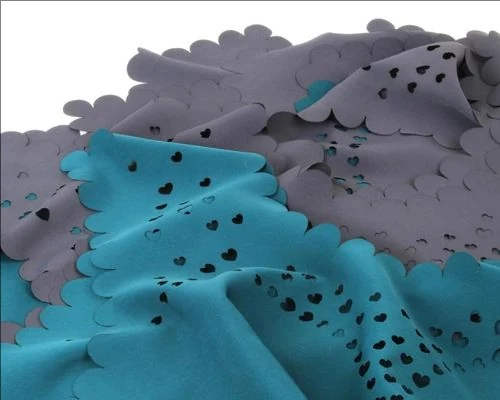
CO2 laser sources ranging from 150W to 800W handle thick or multi-layered fabrics. The heat seals the edges as it cuts, preventing fraying in materials like polyester, spandex, and microfiber. This eliminates the need for additional finishing steps, ensuring that the cut parts are ready for assembly or packaging immediately after processing.
The control software automatically generates cutting paths from scanned designs, supporting common image formats like JPG and PNG as well as vector files. This streamlines the workflow from design to production, reducing setup time and minimizing errors. Intelligent nesting features further optimize material usage, which is critical when working with expensive printed textiles.
Vision systems perform best on high-contrast printed fabrics where fiducial marks or contours are clearly distinguishable. Ensure your design files and printing process provide sufficient contrast for the cameras to detect. Additionally, verify that the machine's working area matches your largest roll dimensions, with options ranging from 1600mm x 2000mm up to 3200mm x 8000mm.
Fiber Laser Cutting Machines
The Glass Laser Cutting Machine uses a Wuhan Huaray picosecond laser source at 30w, 50w or 70w to cut glass on a 500 x 400 mm marble work table.
Fiber Laser Cutting Machines
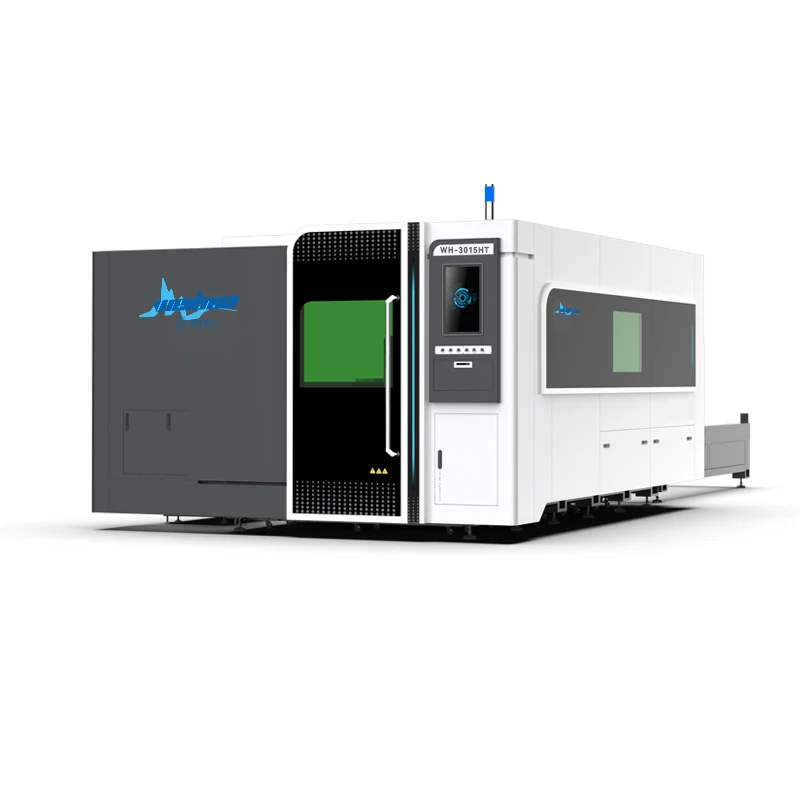
The HT Series is a fully enclosed fiber laser cutter designed to process both metal sheet and pipe on a single machine.
Fiber Laser Cutting Machines
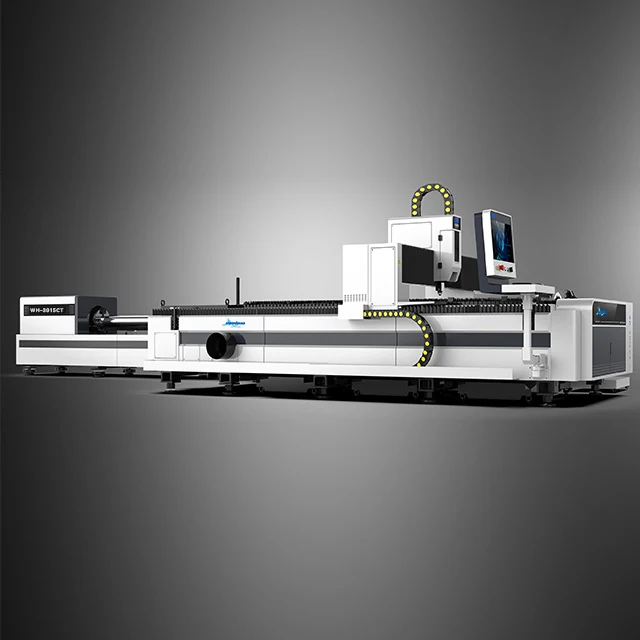
The ET series is a fiber laser cutter for metal sheet and tube in one machine, offered as WH-3015ET, WH-4020ET and WH-6020ET.
Send the material and the thickness. We answer with a model and the settings that go with it, not a catalogue.